


Free Shipping All Orders Over $95
There is no proven way to rapidly reverse THC intoxication. Smoking or vaping usually fades within roughly 2 to 3 hours, while edibles can remain active for 4 to 12 hours, so the practical goal is symptom relief while you wait.
You took one hit too many, or the edible finally arrived all at once, and now the room feels unfamiliar. Your thoughts are racing, time has slowed down, your mouth is dry, and every heartbeat seems louder than it should. You're not looking for a lecture. You want a safe plan that helps you get through the next stretch without making things worse.
The honest answer to how to get unstoned fast is frustrating but useful: there's no instant detox trick. Your body has to process the THC. What you can control is the setting, the stimulation around you, your breathing, your hydration, and whether you recognize a medical emergency early.
Start with three decisions, made in order.
Racing thoughts, dry mouth, dizziness, altered time perception, anxiety, and a pounding heartbeat can all occur during acute cannabis intoxication. They can feel alarming without automatically meaning that something catastrophic is happening. Clinical guidance emphasizes reassurance, reduced stimulation, hydration, and symptom-focused care because uncomplicated intoxication is usually self-limited and fades with time (clinical review of acute cannabis intoxication).
Practical rule: Make the room calmer before you try to make your mind calmer.
Don't keep checking the clock every minute. That habit makes the experience feel longer. Instead, focus on one small action at a time: feet on the floor, shoulders down, slow exhale, small sip of water, then rest.
The rest of this guide separates useful comfort measures from myths, explains why edibles behave differently, addresses CBD without overselling it, and gives you a clear emergency decision rule. You don't need to solve the entire night right now. You need to stop adding THC and create enough safety for the effects to recede.
You may be sitting in a familiar room while it suddenly feels strange, or watching a few minutes stretch into an hour. THC changes perception, attention, coordination, memory, and emotional intensity by interacting with cannabinoid receptors, including CB1 receptors in the brain. For a broader explanation of cannabinoid signaling, read this guide to the endocannabinoid system.
How you consumed THC sets the timeline. Inhaled THC usually begins within seconds to minutes, reaches its strongest point in about 15 to 30 minutes, and commonly subsides within roughly 2 to 3 hours. Oral cannabis usually begins in 30 to 90 minutes, peaks after 2 to 3 hours, and may remain active for 4 to 12 hours (medical guidance on cannabis timing and supportive care).
Edibles behave differently because your digestive system and liver process THC before it reaches circulation. That process produces active metabolites, including 11-hydroxy-THC, helping explain why oral products can arrive later and last longer. Taking more before the first serving peaks can stack the effects without warning. For a closer look at product formats, see this guide to the best way to consume CBD.
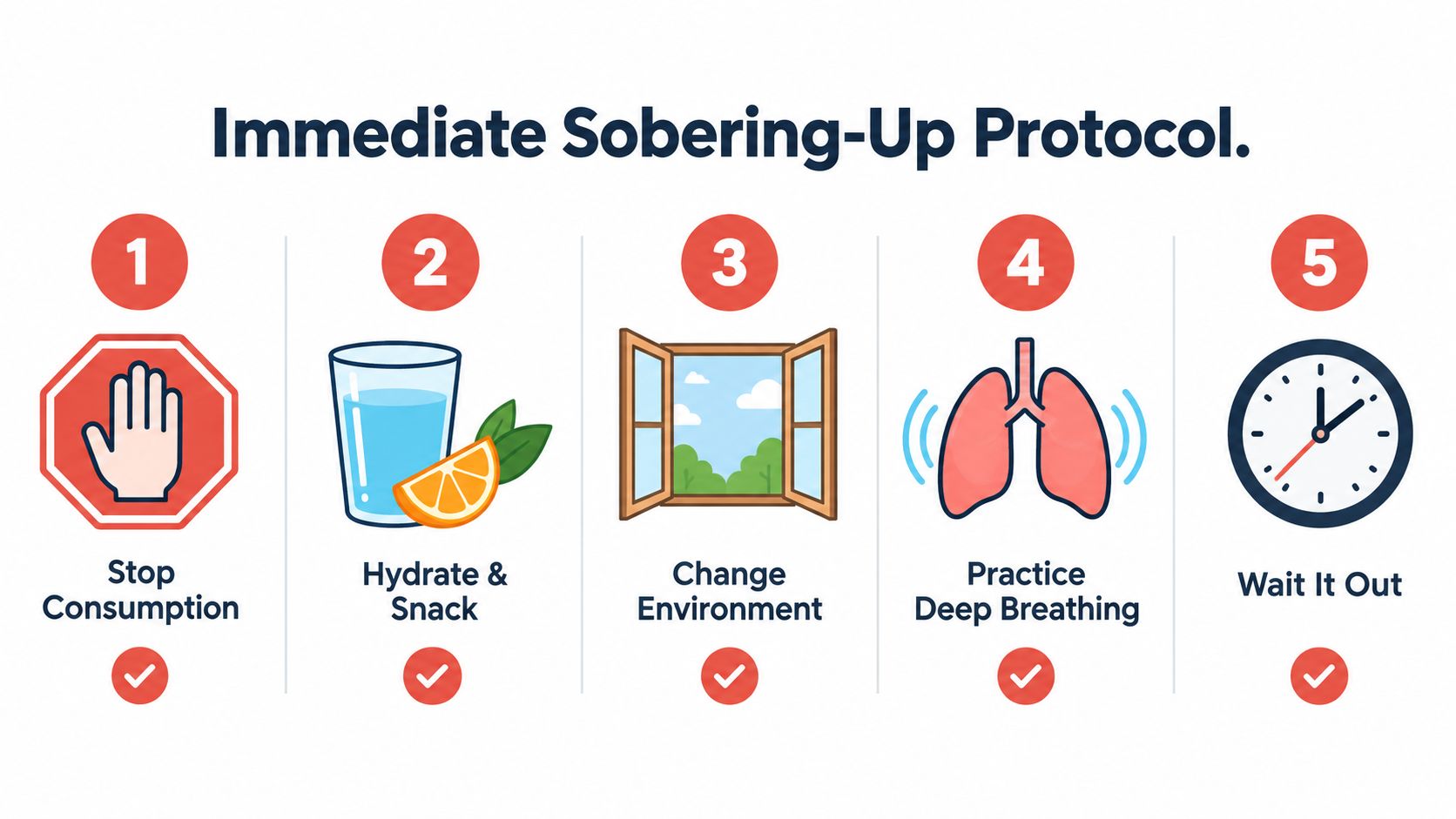
Water can ease dry mouth, food can feel grounding, and a shower may lower sensory intensity. None of these removes absorbed THC from your bloodstream or makes your liver process it faster. Coffee may increase alertness, but alertness does not restore judgment or coordination.
A controlled time-series study found that 10 mg of ingested THC began producing measurable intoxication at about 1 hour, peaked at 3 to 4 hours, and remained present at 6 hours (emergency medicine evidence review). There is no reliable shortcut. The effects rise, crest, and recede. Stop adding THC, manage discomfort, and wait safely.
Treat this as comfort care, not a cure. The sequence below reduces avoidable distress while your body handles the THC.
Move every cannabis product out of reach. Don't negotiate with yourself about a smaller hit or a second bite. If you're with friends, hand the product to someone sober and say that you're done for the night.
Go to a dim, quiet room. Turn down music, silence unnecessary notifications, and ask people not to crowd you with questions. High stimulation can give anxious thoughts more material to work with, while a familiar environment gives your attention fewer threats to scan.
Sit or lie down if you feel dizzy. Don't walk around outside alone, climb into a shower if you're unsteady, or try to “burn off” the feeling.
Take small sips of water. Hydration can help with cottonmouth and the general discomfort that comes with feeling overheated or unsettled, but excessive water won't flush THC out quickly. If nausea is present, an electrolyte drink may be easier to tolerate than a large glass of plain water.
Choose toast, crackers, fruit, or another light snack if you're hungry or shaky. A familiar taste can ground you, and a small amount of food may be gentler on your stomach than a heavy meal. Stop if eating makes nausea worse.
Try a gentle breathing pattern. Inhale comfortably for about four counts, then exhale for about six. Don't force huge breaths. The longer exhale gives you a simple physical task and can interrupt the cycle of noticing a sensation, fearing it, and making the sensation feel stronger.
Close your eyes, lie on your side or back, and let a calm show or quiet music occupy the background. Sleep doesn't speed up THC metabolism, but rest removes stimulation and lets the clock move without constant effort.
The central clinical recommendation is supportive care in a calm environment, with monitoring for worsening symptoms (supportive-care guidance for acute cannabis intoxication). If you're awake, oriented, and improving, keep the plan boring. Boring is exactly what you want.
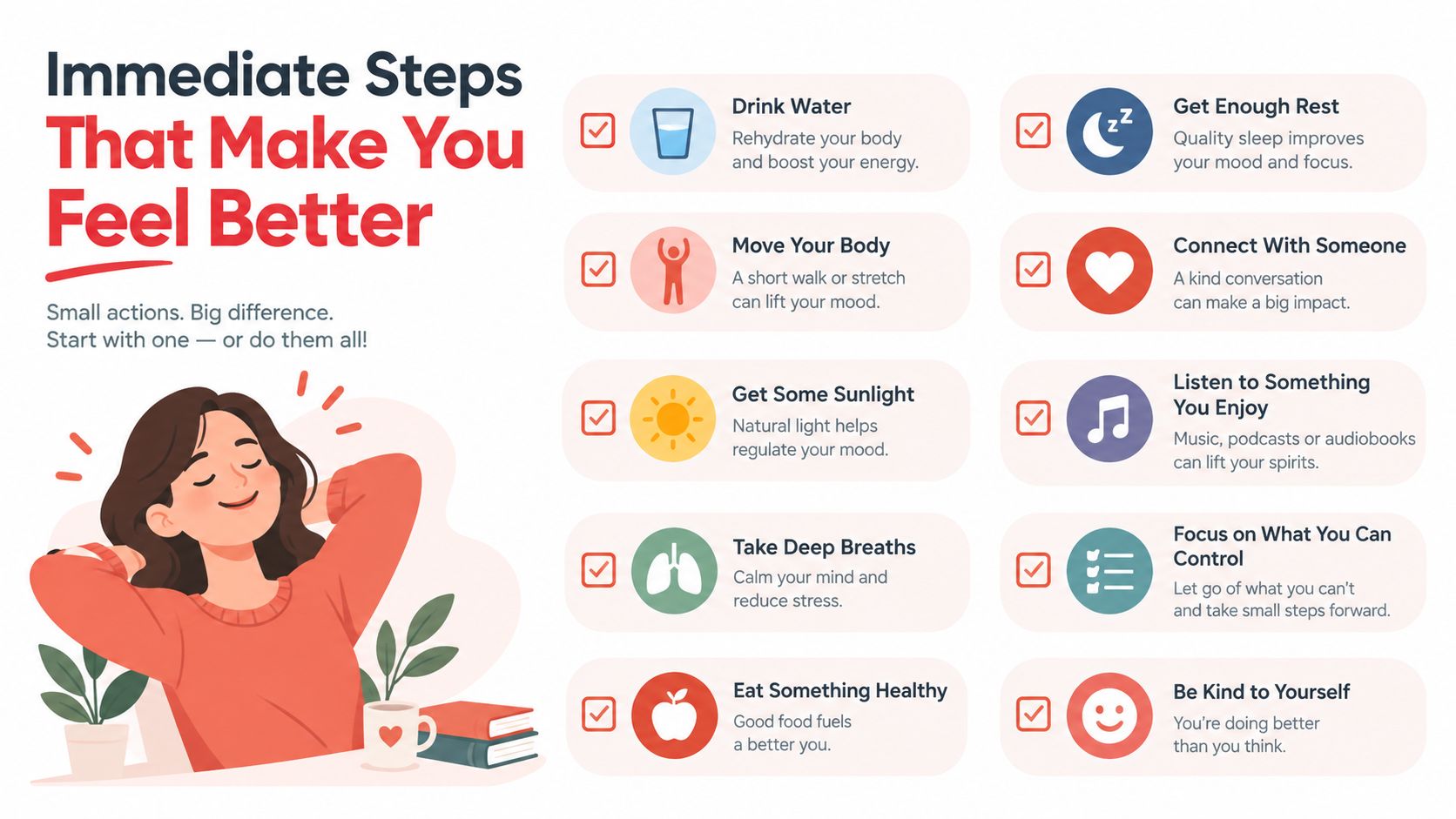
A short grounding video can also give your mind something neutral to follow, as long as screens don't increase your anxiety.
When you are waiting for a high to pass, choose comfort measures that lower stimulation and avoid anything that adds risk. None of these methods removes THC quickly. The goal is symptom relief and informed waiting, not a detox trick.
Sleep or quiet rest is the best option when you are responsive, safe, and have no red flags. Rest does not speed THC clearance, but it reduces sensory input and gives panic fewer opportunities to build.
A comfortable shower may reset your senses. Keep the water mild, avoid sudden temperature changes, and sit down if you feel dizzy. It can change how you feel, not how quickly your body processes THC.
Black pepper, citrus, or pine scents can give some people a familiar sensory anchor. Research does not establish them as THC antidotes, so use them only when the smell feels pleasant. Do not chew peppercorns while nauseated, and do not turn a scent into a test you need to pass.
Fresh air and gentle movement are reasonable only when your balance is steady. Open a window or sit somewhere comfortable. Skip walks, workouts, and stairs if coordination feels impaired.
Forcing vomiting cannot remove THC that has already been absorbed. Hard exercise will not sweat intoxication out of your body and may worsen lightheadedness or panic. Coffee and energy drinks can make you feel stimulated while judgment and coordination remain impaired. Caffeine can also make a racing heart feel more threatening. Mixing cannabis with energy drinks is a poor response to feeling slow or foggy (information on energy drinks and cannabis).
Activated charcoal belongs in a poison-control or medical discussion, not a home detox routine. Ice-cold showers can increase discomfort and create a fall risk. Chugging water is another mistake. Sip enough to ease thirst, then stop trying to overpower the biology.
Use this quick filter:
| Strategy | Reality | Verdict |
|---|---|---|
| Quiet rest | Reduces stimulation while time passes | Use it |
| Gentle shower | May improve comfort and orientation | Optional |
| Black pepper or citrus scent | Sensory comfort, not a proven reversal | Optional |
| Coffee or energy drinks | Can mask fatigue and intensify anxiety | Skip |
| Hard exercise | Won't clear THC and may worsen dizziness | Skip |
| Forced vomiting or charcoal | Doesn't reliably remove absorbed THC at home | Skip |
Fast sobriety is not available on demand. If a tactic promises to flush, sweat, or reverse THC immediately, treat that promise as a warning and return to calm surroundings, basic comfort, and time.
CBD may ease anxiety or the feeling of being overwhelmed for some people during a strong THC experience. That can make the waiting period easier to manage, reduce spiraling, and discourage taking more substances in an attempt to cancel the high. It is a comfort option, not a fast route back to sobriety.
CBD does not reliably reverse THC already affecting the brain, and it has not been established as a rapid way to clear THC. Do not treat it as an antidote or a detox method.
Before THC: Some people include CBD in their regular cannabinoid routine, hoping it will soften the experience. That may make more sense than adding it during a peak high, but it cannot guarantee a comfortable result.
During the high: A new CBD product adds uncertainty when anxiety is already high. The label may not reflect the product's actual cannabinoid content, and worrying about what you took can intensify the experience.
After the peak: CBD may help some people settle during the comedown. It will not erase impairment or make driving safe.
People commonly discuss amounts in the 25 to 100 mg range, but effects vary with the product, the person, the THC dose, and prior experience. Isolate products center on CBD without the broader cannabinoid profile of full-spectrum products. Full-spectrum products may contain other cannabinoids and trace THC. Read the label carefully, especially if you want to avoid additional intoxication.
Higher amounts can add drowsiness. Do not combine CBD with alcohol, sedating medication, or other drugs unless a clinician has confirmed that the combination is appropriate. If you are weighing formats, this guide to the best way to consume CBD explains the practical differences.
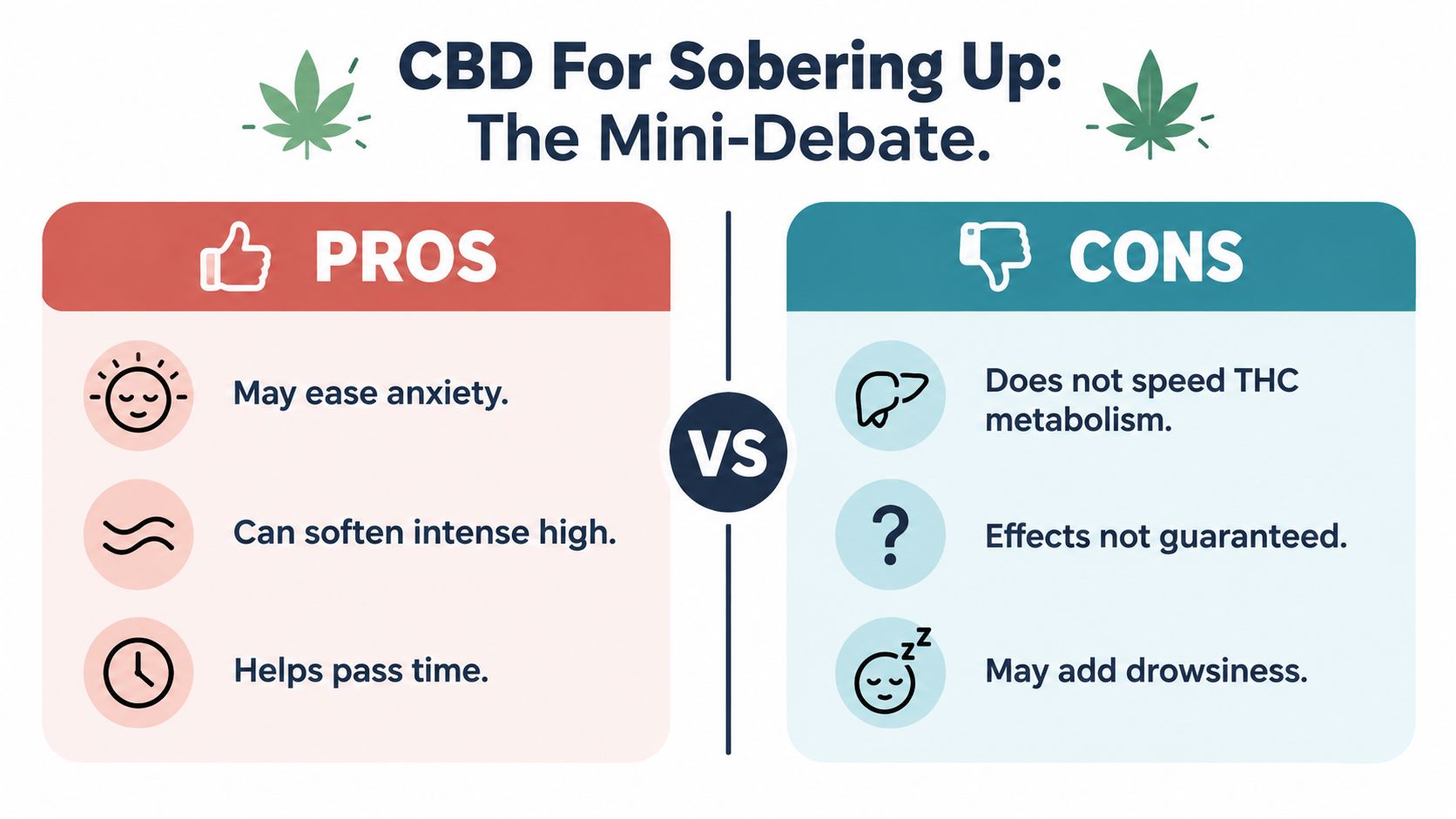
My advice is straightforward: CBD is a reasonable comfort tool for some adults, but it isn't a fast sobering method. If you are already overwhelmed, choose calm surroundings and a sober support person first. Time remains the dependable answer.
Feeling calmer is useful, but it does not confirm that your attention, reaction time, balance, or judgment are back to normal. People get into trouble when they mistake reduced anxiety for clearance to drive, work, operate equipment, care for someone, or make an important decision.
Inhaled cannabis effects often last for 2 to 3 hours, while oral products may remain active for 4 to 12 hours. Recovery can take longer than the strongest sensations suggest. One emergency department study reported an average stay of 5.39 hours for discharged patients treated for acute cannabis intoxication.
Feeling calmer is a good sign. It isn't a clearance certificate.
Use a stricter test than “I don't feel high anymore.” If you remain foggy, unusually tired, distracted, dizzy, slow, or emotionally unsteady, do not drive. Coffee may make you feel more awake, but it does not reliably restore coordination or judgment. A friend who is also intoxicated cannot provide a dependable safety check.
Stay away from machinery, open flames, heights, clinical duties, caregiving tasks, and other safety-sensitive work until you are clearly back to baseline. Workplace rules, testing policies, and local driving laws vary, so feeling normal does not answer the legal or professional question.
Edibles require extra caution because their onset and peak are delayed. You may feel fine early and become more impaired later. If you took an edible, arrange a ride, stay put, and allow the longer window to pass.
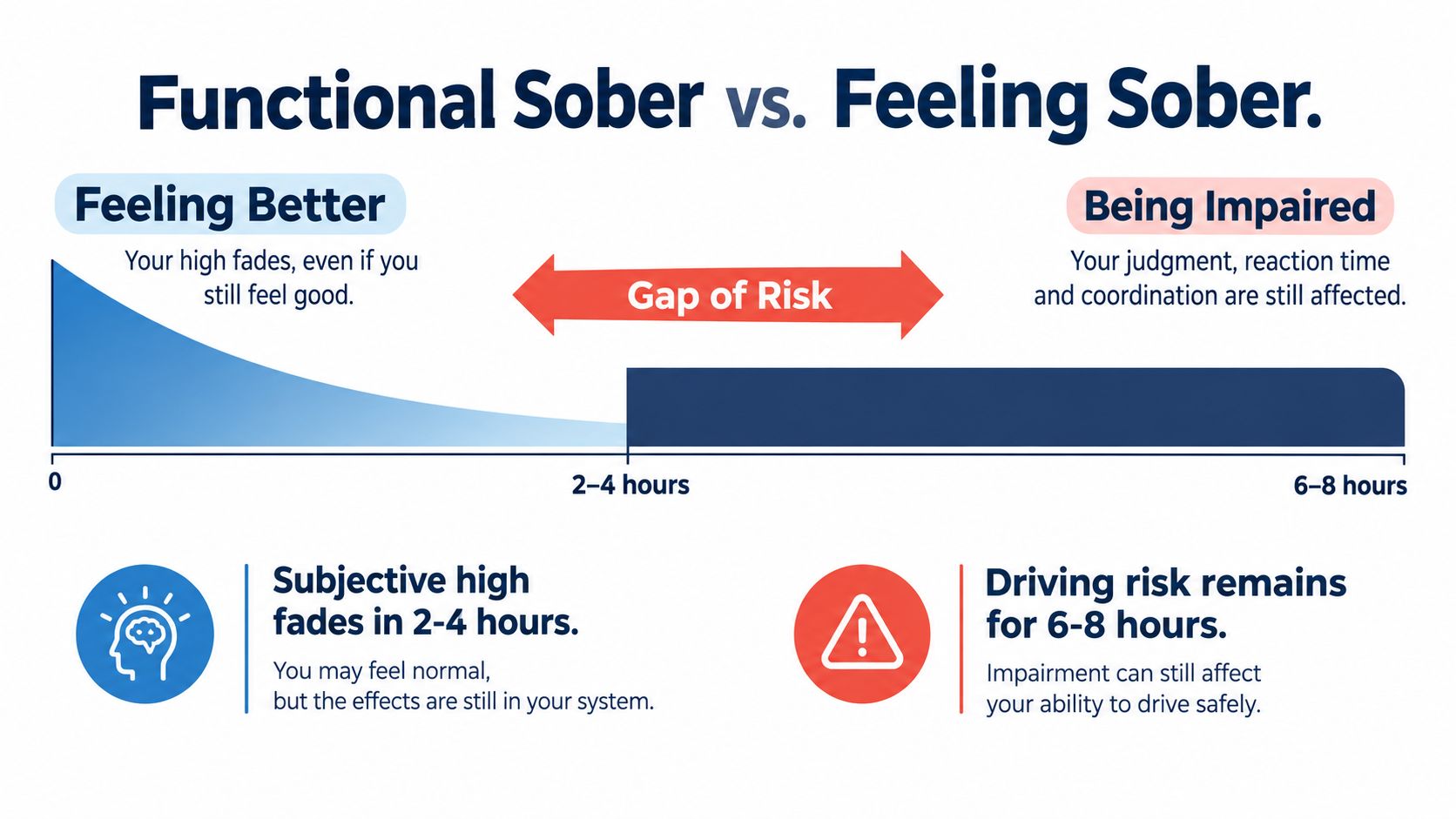
The practical rule is simple: if you're asking whether you're functional, don't perform a safety-sensitive task yet. Fast sobering is not a reliable option. Wait until you are rested, coordinated, clear-headed, and able to decide without the anxious edge or cannabis fog.
Most uncomplicated cannabis intoxication improves with supportive care, but severe symptoms deserve medical attention. Don't try to diagnose the cause from your couch, especially if the product was unusually strong, came from an uncertain source, or was mixed with alcohol or another drug.
Use a direct decision rule: if the symptom feels frightening, is getting worse, or isn't trending down after about an hour, contact a medical line or seek urgent care. You don't need to prove that cannabis caused the problem before asking for help. Tell the clinician what was taken, how it was consumed, when it was consumed, and whether anything else was used.
You can say, “I used cannabis, I'm having these symptoms, and I need help deciding whether this is an emergency.” That script is enough. Don't hide the product or guess at a dose if you don't know it. Clear information helps medical staff choose the right response.
Cannabis intoxication is usually managed with reassurance, reduced stimulation, observation, and treatment aimed at the symptoms. In monitored clinical settings, medication for severe agitation may be considered by professionals, but sedatives aren't a DIY solution. Never borrow someone else's prescription or combine substances to force sleep.
Minors, people taking psychiatric medication, and people with significant heart, anxiety, or psychosis-related concerns deserve a lower threshold for professional advice. The same product can affect different people in very different ways, and a frightening reaction may involve more than THC alone.
The prevention lesson is blunt: the only reliable way to get unstoned faster next time is to get less stoned this time. Use a smaller starting amount, avoid mixing cannabis with alcohol, and don't redose an edible while waiting for it to arrive. Keep track of the product, the route, the amount, and how you felt afterward. That personal log can reveal which formats or products repeatedly push you past your comfort zone.
Tomorrow, make one commitment: choose a baseline dose and set a wait timer before you consume. Keep both promises, even when the first few minutes make you think the product isn't working.
Melt offers adults legal hemp-derived products including THCA flower, all-in-one vapes, and edibles, with product information and lab-report access intended to support more informed purchasing. If you're going to use cannabis, review the product details and choose a measured plan at Melt, then keep your dose and wait timer in writing.
Your cart is currently empty.