


Free Shipping All Orders Over $95
Pick the jar with the highest THC number and you'll get the strongest, most predictable experience. That's the most popular advice for buying the Sour Face strain, and it's also the most misleading. A strain name points to a family, not a fixed formula. The product you buy is one batch, grown one way, tested once. Judge it by that batch's lab report, not by a generic profile copied from one store to the next.
| Trait | Reported Value | Reliability |
|---|---|---|
| Plant type | Indica-dominant hybrid | Strain-market description |
| Indica/sativa split | About 70% indica, 30% sativa | One strain reference |
| Average THC range | 24%-29% | Batch result can differ; confirm on the COA |
| Flowering window | About 68 days | Breeder-line estimate |
| Plant height | Medium | Breeder-line estimate |
| Yield potential | Medium | Set by growing environment |
| Aroma profile | Sour citrus, diesel, pine, OG-like kush | Chemically plausible, not chromatographic |
| CBD content | Not standardized | No standardized specification |
| Dominant terpenes | Not standardized | Requires batch lab report |
| Alternative names | Sour Face OG, Sour Face Off | Confirm identity by batch |
Read that table as a map, not a certificate. The Seedfinder listing for Archive Seed Bank's Sour Face documents it as a cross of Sour Diesel and Face Off OG BX1, with a reported flowering window of approximately 68 days, medium plant height and medium yield potential. Those details describe the cultivar line and suggest a relatively compact, indica-leaning plant. They don't set the cannabinoid or terpene content of flower in a finished package.
Strain-market description means retailers and strain guides commonly use the term, but nobody tested your exact batch to prove it. One strain reference is weaker still. It gives you a rough expectation, such as the indica-leaning split, not a measurement you can dose from.
Breeder-line estimate sits closer to the source. A breeder knows the parent plants and typical harvest timing, yet phenotype selection, environment, harvest timing, curing and storage can move the final result a long way. Two growers can start with related seed stock and finish with noticeably different flower.
Practical rule: Treat the name as an identity and flavor signal, never as a potency guarantee.
The two empty spaces in the table matter most. There's no standardized specification for CBD content or dominant terpenes that you can safely copy onto every Sour Face product. If a seller wants to claim either one, the seller needs a batch-specific certificate of analysis, often called a COA.
The alternative names create a second trap. Sour Face OG and Sour Face Off may appear in commerce, and similar wording doesn't prove you're looking at the same genetics or the same batch quality. Match the name on the package to the name and lot number on the COA before you compare prices or potency.
So the table does one job well. It tells you what Sour Face generally claims to be and what range shoppers often see. It can't tell you what's inside the eighth, preroll or extract in your hand. That answer lives in dated lab data tied to that product's batch.
Think of Sour Face as a family tree with two famous branches. One branch comes from the East Coast, the other from the West. The cross doesn't produce identical children, but it does create a recognizable family resemblance.
The AllBud profile for Sour Face describes it as an indica-dominant hybrid created by crossing Sour Diesel with Face Off OG BX1, estimates the composition at 70% indica and 30% sativa, and reports an average THC range of 24%-29%. That same profile notes Sour Diesel is associated with the New York cannabis tradition, while OG-derived genetics became strongly identified with California cultivation culture.
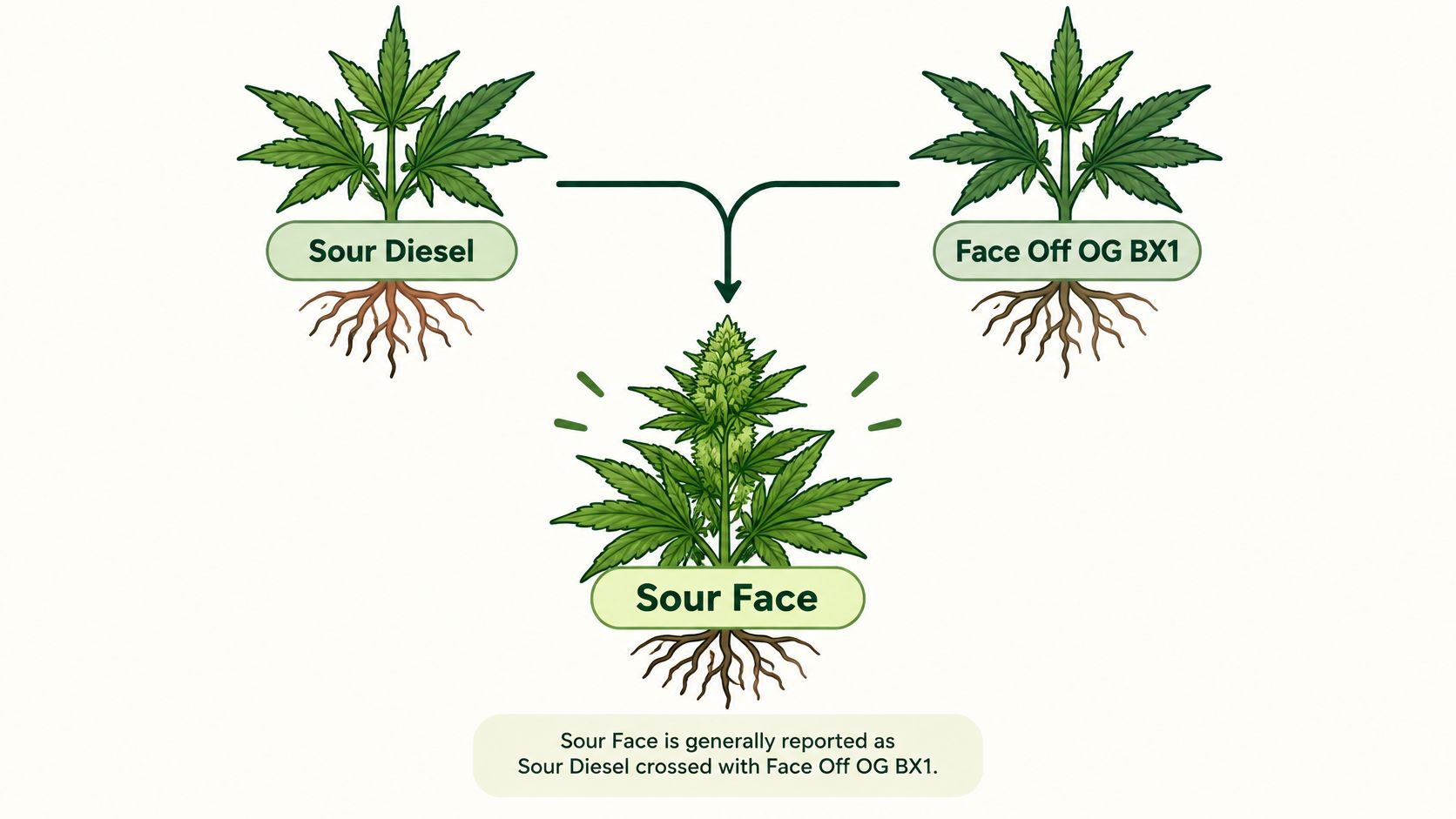
Sour Diesel contributes the sour, fuel-associated heritage implied by the first half of the name. When shoppers expect sharp citrus and diesel character from Sour Face, they're usually picturing that side of the lineage.
Face Off OG BX1 supplies the OG-line ancestry. That helps explain why descriptions often move past bright sour notes into pine, earth and kush territory. The label BX1 signals a backcross in breeding language, which means a breeder crossed offspring back toward a parent line to reinforce selected traits.
That genetic story is more useful than flavor marketing alone. A candy-like product name can be invented in a design meeting. Parentage gives you a testable claim about where the plant came from and what broad traits a grower may select for.
Genetics set the starting point. Selection and growing conditions decide which version reaches the shelf.
Here's where readers often get confused. Seeds from the same cross can express different phenotypes, meaning visible and chemical variations among plants with shared parentage. One phenotype may grow bushier, finish earlier or smell more strongly of fuel. Another may lean sweeter or produce a different cannabinoid balance.
Say two cultivators buy Sour Face seed stock. One keeps the most gassy mother plant and clones it for every run. The other grows from seed each cycle and selects for yield. Both packages can carry the same strain name while the flower inside behaves like cousins rather than twins.
Naming adds another wrinkle because Sour Face OG and Sour Face Off also appear as alternative names. Don't assume every similar label follows the same breeder documentation. Ask which parent cross, phenotype and breeder record the product follows, then confirm THC from the COA rather than from the generic strain description.
Open a fresh jar and many people reach for the same handful of words first. The Leafly page for Sour Face reflects a sensory profile consistently described as sour citrus, diesel fuel, pine, pungency and OG-like kush notes. Those descriptors fit the Sour Diesel and Face Off OG ancestry in broad chemical terms.
That doesn't mean anyone has established fixed percentages for individual terpenes across Sour Face flower. Available strain listings don't provide a validated, independent chromatographic dataset that locks in one terpene recipe for every batch. So limonene, myrcene, beta-caryophyllene or pinene shouldn't be called dominant based on smell alone.
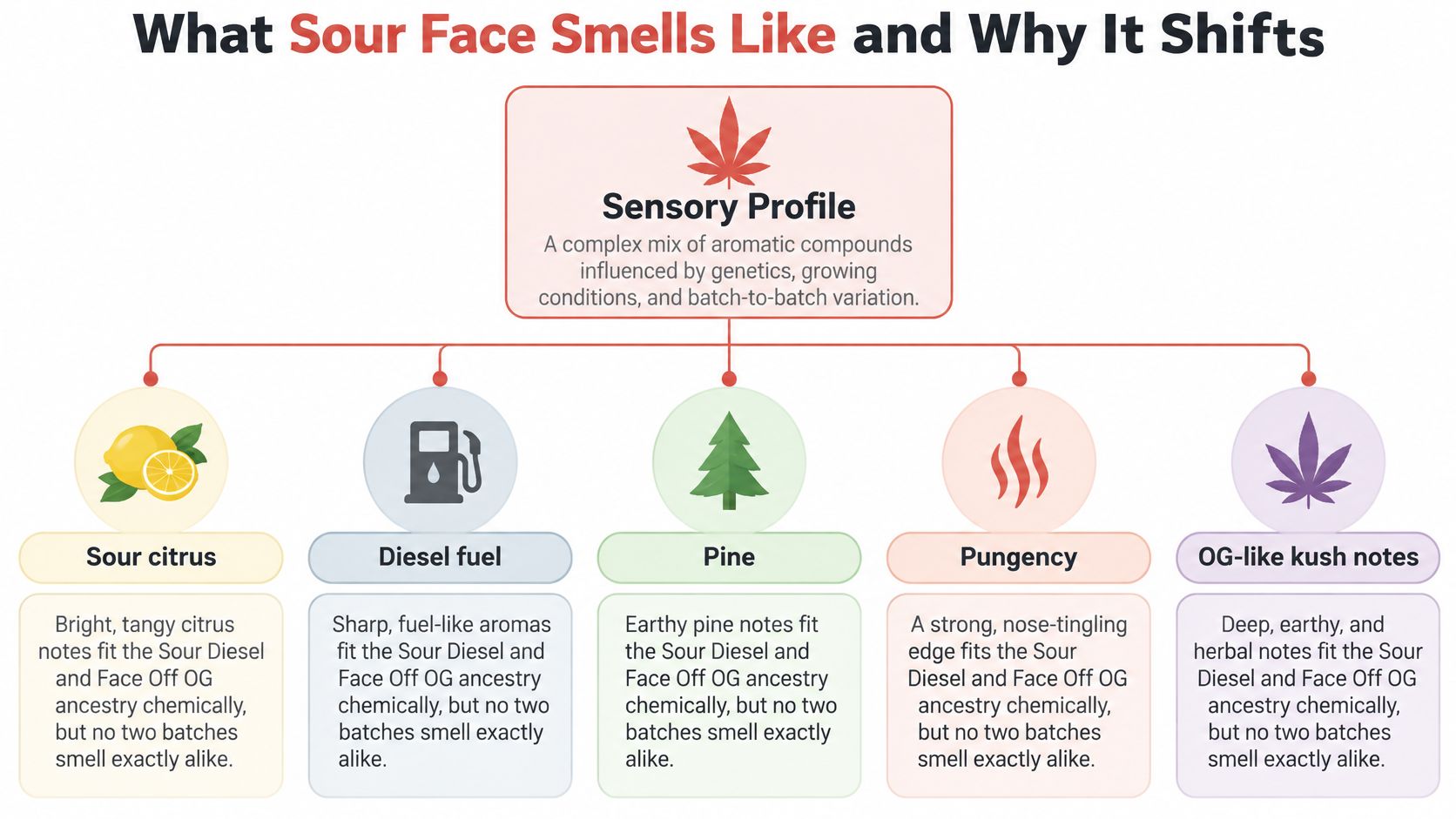
Your nose detects a blend, not a spreadsheet. Citrus character can come through strongly even when several compounds contribute to it. A pine-like impression also doesn't tell you the exact amount of pinene in the sample.
understanding strain-specific terpenes helps shoppers separate a measured profile from a marketing description. A rigorous COA names compounds and gives amounts. A strain page usually gives adjectives.
Minor aroma compounds complicate the picture further. Genetically similar phenotypes can develop distinct aromas because of non-terpenoid compounds, and terpene profiles alone don't reliably predict perceived sensory character. Small amounts of sulfur-containing or other volatile compounds can push a batch toward sharp gas, funk or sweetness out of proportion to their weight.
That hierarchy explains a common shopping puzzle. One Sour Face batch smells sharply gassy, while the next seems sweet or muted. The second jar isn't automatically weaker in THC. It may be a different phenotype, an older package or flower that lost volatile aroma compounds during storage.
The reverse mistake is just as common. The loudest aroma isn't automatically the best product. Intensity reflects genetics plus careful handling, and a very loud nose still tells you nothing about pesticide results, moisture or exact potency.
Smell can tell you whether a batch still expresses its intended character. It can't certify strength, safety or a specific effect.
Check what you can verify. Look for total terpene concentration, named major constituents, harvest or packaging dates and packaging that limits oxygen, heat and light. A terpene panel that's measured and dated gives you a stronger basis for expecting citrus-diesel flavor than the words on the front label. Cannabinoid potency can remain comparatively stable while fragile aroma compounds fade, so a high THC number doesn't rescue stale flower.
A jar marked indica is supposed to settle the body. A jar marked sativa is supposed to brighten the mind. Sour Face breaks that pairing.
The Marijuana Break guide to the Sour Face strain records conflicting listings that call it 70% indica/30% sativa with calming effects while also listing energetic, focused and uplifted effects, and the same market write-up repeats a broad 24%-29% THC range with no batch attached. One name, two moods, and a potency span wide enough to cover very different flower.
A strain name works like a family nickname. It points at shared ancestry and at a story shoppers repeat about the high. It does not measure the flower in the bag. Genetics can tilt which compounds a plant is able to make, the way a family recipe can tilt a dish toward spice or citrus. What you feel still depends on the serving in front of you: the dose, your tolerance, the setting, sleep, food, alcohol, and the cannabinoids and terpenes in that batch.
Ask what is in this batch, and how you are using it. The name cannot say whether the session will feel stimulating or sedating. Chemistry sits closer to the immediate cause than the words on the label, and your own biology still filters the result. Expectation colors the language people reach for afterward. A person who wanted a quiet evening may call the session heavy. A person who wanted to stay on task may call the same flower clear. Both can be describing a real feeling without proving a fixed property of Sour Face.
THC percentage is only one input. Two products with similar totals can still differ in minor cannabinoids, terpene mix, and how completely you inhale or absorb them. A larger number on the package does not lock in a stronger effect, or a more sedating one.
The old genetic boxes do not sort chemistry reliably either. Across medicinal flower, terpene patterns and the indica or sativa tag often fail to line up, and the chemistry inside those familiar categories varies widely. The menu category is a loose label. The measured profile is the product.
Treat Sour Face as a batch-defined chemovar. A chemovar is described by what a lab measured, not by the story printed on the package. Two batches can share parents and still land in different practical territory, one richer in the mix you associate with a bright head, another heavier in the mix you associate with a slower body.
Compare them the way you would compare two dishes that share a title. Set the certificates side by side and read total THC and THCA, then minor cannabinoids, then the dominant terpenes. Keep effect reports in a separate column, as anecdotes. One buyer may call a batch focused after a small dose at lunch. Another may call that same flower calming after a larger dose late at night. Both reports can be honest. Neither word is a guarantee you can print on the next jar.
A COA can look intimidating because labs pack several pages with tables, methods and abbreviations. Read it in a fixed order and it becomes a simple identity check followed by a potency check and a safety check. If the first step fails, you don't need to debate the rest.
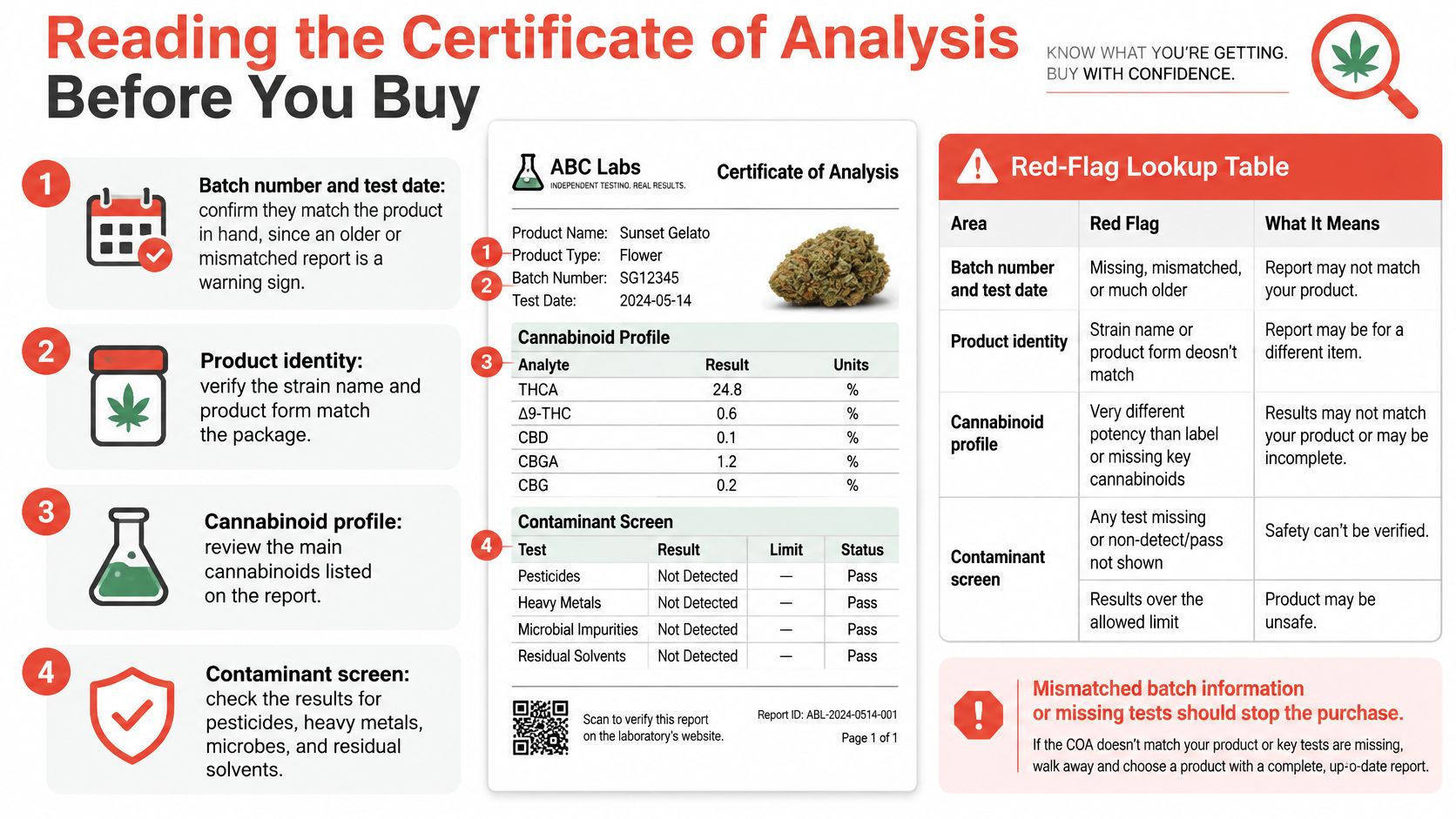
Find the batch number or lot number on the package. Find the same number on the COA, letter for letter and digit for digit. Then check the test date and confirm the product name and form match. A report for flower doesn't validate a preroll made months later, and a report from another harvest doesn't validate the jar in your hand.
This matters during restocks. When a strain sells out, it's unavailable until the next harvest, so a returning name can still mean new flower and a new lab result. Don't reuse last harvest's numbers in your head.
Before going further, use Melt's guide to reading a certificate of analysis if the layout is unfamiliar, then return to the actual report for the batch you're considering. A tutorial explains the fields. Only the matched COA supplies evidence.
Look for THCA and total THC together. THCA is the acidic form that converts to THC when heated, so THCA alone doesn't give smokers or vapers the full potency picture. Total THC is the more useful comparison figure for products you heat.
For example, our Sunset Sherbet Indica THCA Flower has a THCA content of 29.47%, is an indica, and has flavor notes of sweet berry candy and creamy citrus. That illustrates why product-specific reporting matters. A named value belongs to that product, not to every indica and not to Sour Face.
Next, look beyond the headline number. A fuller cannabinoid panel may report CBD, CBG and CBC or mark some compounds as not detected. Minor cannabinoids don't let you predict an exact feeling, but their presence shows the lab measured more than one selling point.
A useful terpene section gives total terpenes and measured values for named compounds. Total terpenes offer a rough clue about aroma potential. The named values let you compare one batch with another instead of trusting words like gassy or citrusy.
Dates matter here because volatile compounds decline during storage. An old terpene result tied to the wrong lot is weak support for a fresh flavor claim. Packaging date and storage conditions help you judge whether the measured profile likely survived to purchase.
The contaminant section should show results, limits and pass or fail status for pesticides, heavy metals and microbials. Extracts also need residual solvents because solvents may be used during processing. Flower reports may include moisture or water activity, which helps flag storage stability and mold risk.
Finally, identify the testing laboratory and its accreditation. ISO/IEC 17025 is the standard commonly used to show a lab's technical competence. Accreditation doesn't make a mismatched report valid, but a complete report from an unnamed lab gives you no way to judge the testing.
| Report Field | What It Tells You | Red Flag |
|---|---|---|
| Batch number and test date | Ties the report to the product in hand | Report older than the batch or no batch match |
| Total THC and THCA | Potency; THCA converts to THC when heated | Only THCA listed, no total |
| Total terpenes | Overall aroma strength potential | Absent or unreported |
| Dominant terpenes | Named compounds behind the smell | Terpene claims with no measured values |
| Minor cannabinoids (CBG, CBC) | Detail beyond a single THC number | Only THC listed |
| Contaminant screen | Pesticides, heavy metals and microbials | Missing or unsigned results |
| Residual solvents | Safety of extracts and processing | Not reported for extracts |
| Moisture or water activity | Storage stability and mold risk | Missing field limits freshness assessment |
| Lab accreditation | Shows the testing standard used | No accredited lab named |
A complete, dated, batch-matched report from an accredited lab deserves trust. A strain name beside one THC percentage is marketing, not evidence.
Watch for reports that blur samples. A QR code should open the exact lot's document, not a brand homepage or a folder of old results. If staff can't connect the package to a signed, dated COA, treat every potency, terpene and safety claim for that item as unverified.
Start low, go slow and wait before adding more. That rule matters more with Sour Face products because a new batch sold under the same name may be stronger than the one you tried before. The COA tells you the starting potency, but it doesn't set your personal tolerance.
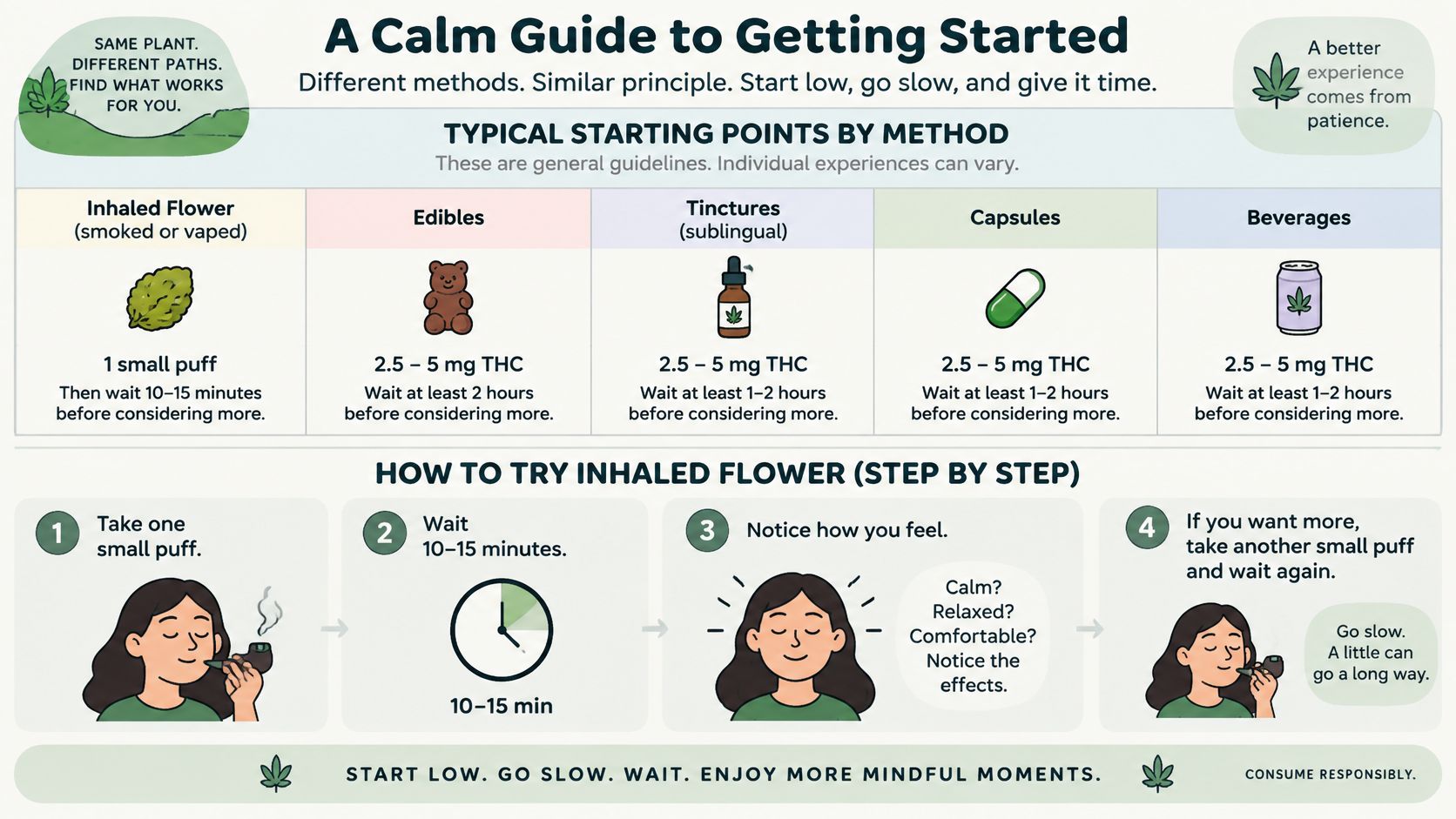
| Method | Common Starting Point | Onset | Typical Duration |
|---|---|---|---|
| Inhaled flower | One small puff, then wait 10-15 minutes | Minutes | 2-3 hours |
| Vaporized flower | One small draw, then wait 10-15 minutes | Minutes | 2-3 hours |
| Edibles | 2.5 mg THC or less | 30-120 minutes | 6-8 hours |
| Tinctures or oils | 2.5 mg THC sublingually | 15-45 minutes | 4-6 hours |
Inhaled and vaporized flower act quickly enough that a short pause gives useful feedback. Take one small puff or draw, wait the full 10-15 minutes, then decide. Melt's explainer on how much THC is in a hit can help you understand why puff size and device efficiency make hit counting imprecise.
Edibles punish impatience. Onset can take 30-120 minutes, and effects can last 6-8 hours. The most common beginner mistake is taking a second piece during the quiet period, then having both doses arrive together.
For tinctures, hold a measured 2.5 mg starting dose under your tongue as directed and wait for the 15-45 minute onset window. Swallowing immediately can make timing feel more like an edible, so be consistent with your method when you compare sessions.
If effects feel strong or unpleasant, stop dosing, drink water, rest somewhere calm and get medical help for severe symptoms.
These starting points are general harm-reduction guidance, not medical advice. Medications, health conditions, tolerance and sensitivity can change your response. Talk with a qualified clinician if you're unsure whether cannabis is appropriate for you.
Before first use, write down three things on your phone or the package: the batch number, the total THC figure from the COA and your planned starting dose. That small note turns a vague strain memory into batch-specific information you can use next time.
Ready to shop by batch data instead of guesswork? Browse Melt's lab-tested THCA flower, disposables, prerolls and edibles, compare the reports before you choose, and start with the conservative dose that fits the product in your hand. Visit Melt to explore the current lineup and check availability before the next harvest sells through.
Your cart is currently empty.