


Free Shipping All Orders Over $95
You're standing in a dispensary with a jar marked 1000 mg, or scrolling past a gummy listing online, and one question keeps getting in the way: does that number describe the entire package, or one piece? The answer changes everything. A 1000 mg edible can represent a large reservoir divided into carefully measured servings, or a product whose individual pieces are far too strong for casual use.
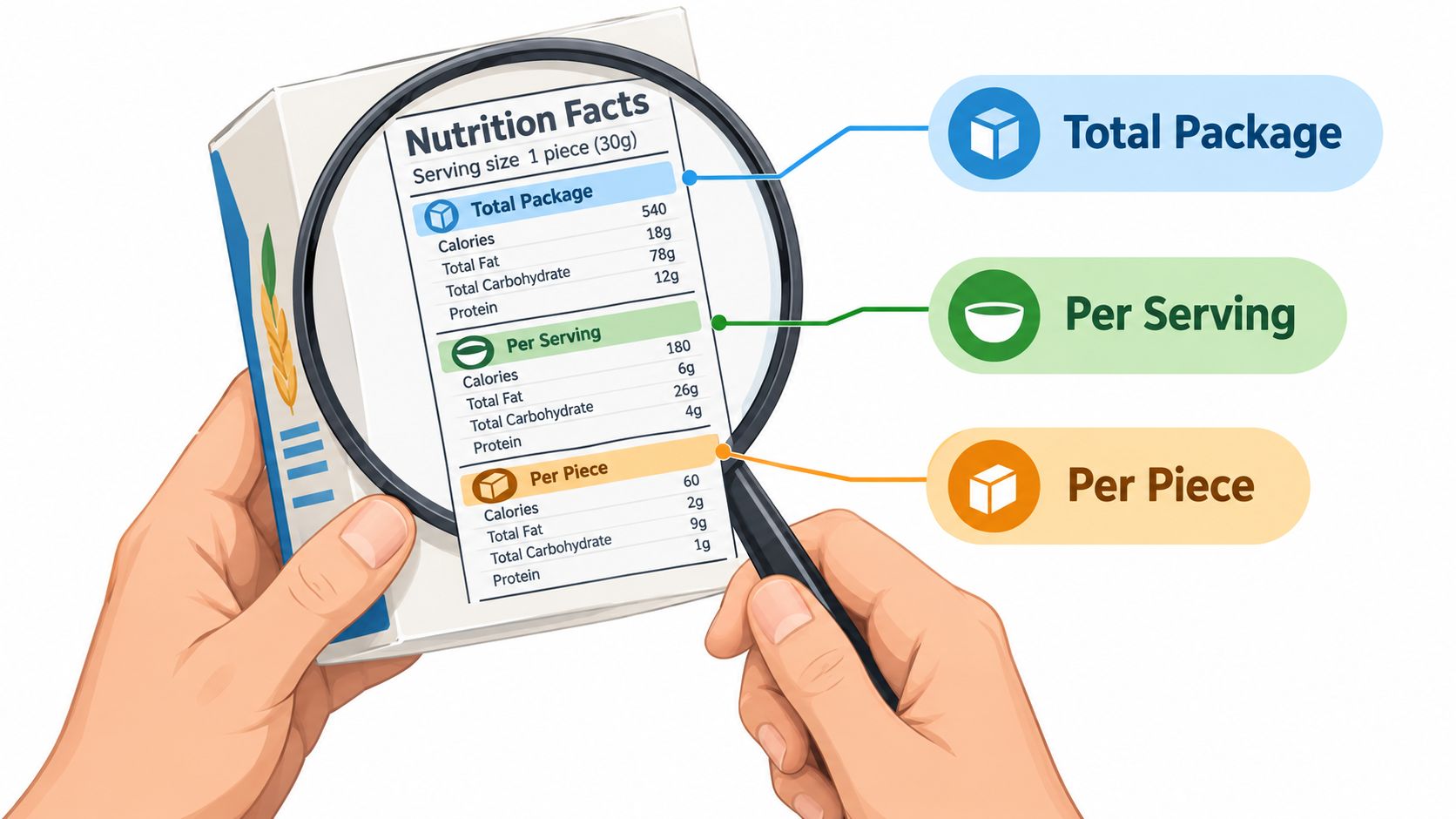
The safest way to understand this category is to stop treating 1000 mg as a dose. Treat it as a package-level figure that must be translated into per-piece potency, actual THC content, serving size, onset, legal status, and storage needs. That small shift turns a confusing label into a practical decision.
A shopper sees “1000 mg edible” on the front of a package and may reasonably assume the whole item contains one enormous serving. Another shopper may assume each gummy contains 1000 mg. Both interpretations can be wrong because the headline number often describes the package, not the piece, and sometimes refers to total cannabinoids rather than THC alone.
The number is unusually high in regulated cannabis markets. Colorado and Washington define a single serving as no more than 10 mg of Δ9-THC, while Colorado limits recreational edible packages to 100 mg total THC with clear serving demarcation, according to this review of edible cannabis regulations. A 1000 mg THC package therefore contains 10 times the total THC allowed in a Colorado recreational retail package and 100 times a typical 10 mg serving. Massachusetts uses an even more restrictive framework, with 5.5 mg per serving and 110 mg per package, making a 1000 mg product an extreme-potency format rather than a routine consumer dose. The same source supports those comparisons.
That doesn't mean every 1000 mg package should be dismissed. Experienced consumers may want one larger package that can be divided into small portions, while micro-dosers may value the flexibility of choosing a fraction rather than buying many low-dose pieces. A larger package can also make the product's cost per milligram more efficient, although the number still tells you nothing about the quality or suitability of the experience.
Practical rule: A 1000 mg package is a reservoir, not an instruction to consume 1000 mg.
A beginner who treats the package as one serving can face an overwhelming experience that lasts much longer than expected. A practiced user who measures each portion may instead use the same package gradually. The safety question is therefore not “Is 1000 mg too much?” It's “How much THC is in each serving, and how will that serving be divided?”
Think of the package as a large bottle of hot sauce. The bottle may contain enough sauce for many meals, but nobody would pour the entire bottle onto one plate just because the bottle lists its total volume. Edible labels work the same way. Total package potency tells you what's inside the container, while per-piece potency tells you what reaches your body when you eat one piece.
The arithmetic is simple:
Total package milligrams ÷ number of pieces = milligrams per piece.
A package can contain 1000 mg in several very different designs:
Those examples describe total cannabinoid or THC math only when the label clearly identifies which one it measures. A package labeled 1000 mg total cannabinoids may include THC, CBD, CBG, CBN, and other compounds. You need the cannabinoid breakdown to determine the psychoactive THC amount.
A consumer who wants small, repeatable servings may prefer a product scored into many portions. Someone with a high tolerance may choose larger pieces and divide them deliberately. The format affects how easy it is to measure, how much room there is for cutting errors, and how quickly an accidental overconsumption can happen.
| Format | Pieces per Pack | mg per Piece | Intended User |
|---|---|---|---|
| Fine-dose format | 100 | 10 mg | Consumers seeking individually measured servings |
| Medium-dose format | 20 | 50 mg | Experienced users who portion carefully |
| Large-piece format | 10 | 100 mg | High-tolerance users using precise fractions |
| Large squares | 4 | 250 mg | Consumers with a specific portioning method |
A 1000 mg package can theoretically provide many sessions if each piece is divided into smaller portions. For example, a 100 mg piece can be split into four 25 mg portions, or into ten approximate 10 mg portions if the product can be cut evenly. The label number is incomplete without the serving design, and a scored piece is more useful than an unscored one when dose control matters.
Edible THC follows a slower and less predictable path than inhaled cannabis. The first effects commonly appear after 30 to 90 minutes, the strongest effects often arrive around two to four hours, and the overall experience can last four to eight hours or longer at high doses, according to this guide to how long gummies take to work.
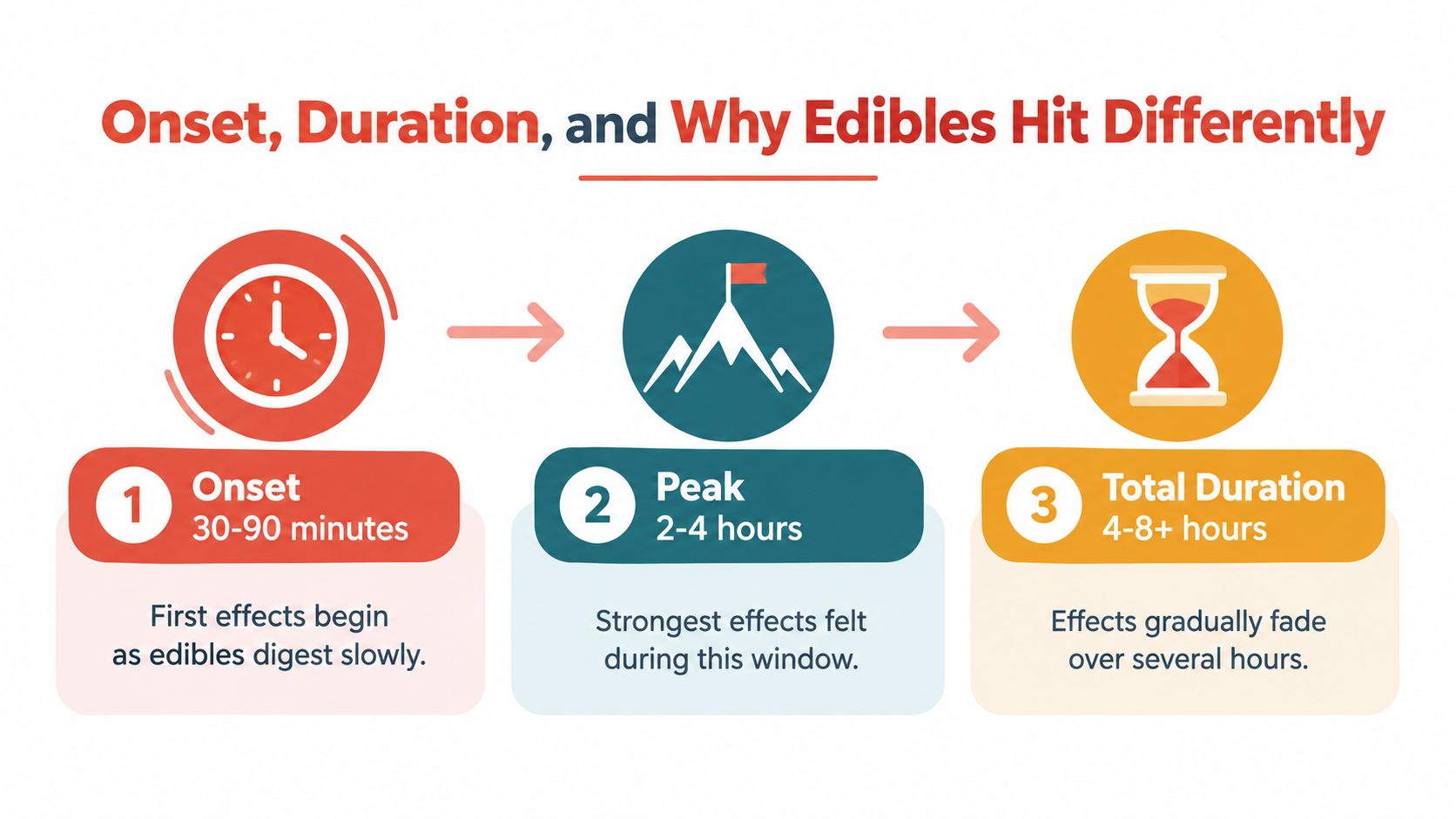
When you inhale THC, absorption begins through the lungs. With an edible, digestion and liver metabolism happen first. The liver converts THC into 11-hydroxy-THC, a metabolite associated with a stronger and longer-lasting edible experience than inhalation. The amount of food in your stomach, your metabolism, body composition, and the product's formulation can all influence how quickly effects appear.
Traditional oil-based gummies may dissolve and absorb gradually, which can make onset feel inconsistent from one occasion to another. Nano-emulsified edibles use much smaller oil droplets, and industry coverage positions this format as a way to improve absorption and produce effects in 10 to 15 minutes, as described in this coverage of functional and nano-emulsified edibles. Faster onset changes the safety equation because consumers have less reason to redose while waiting, but it also means the product can arrive sooner than expected.
The most common mistake with an edible is taking more before the first portion reaches its peak. With a high-potency piece, that second serving can stack on top of an effect that hasn't fully appeared yet. The result may be much stronger and longer-lasting than planned.
Avoid driving, mixing THC with alcohol, or making important decisions while the effects develop. Keep the product away from children and pets, and use a clearly measured portion rather than relying on a quick bite.
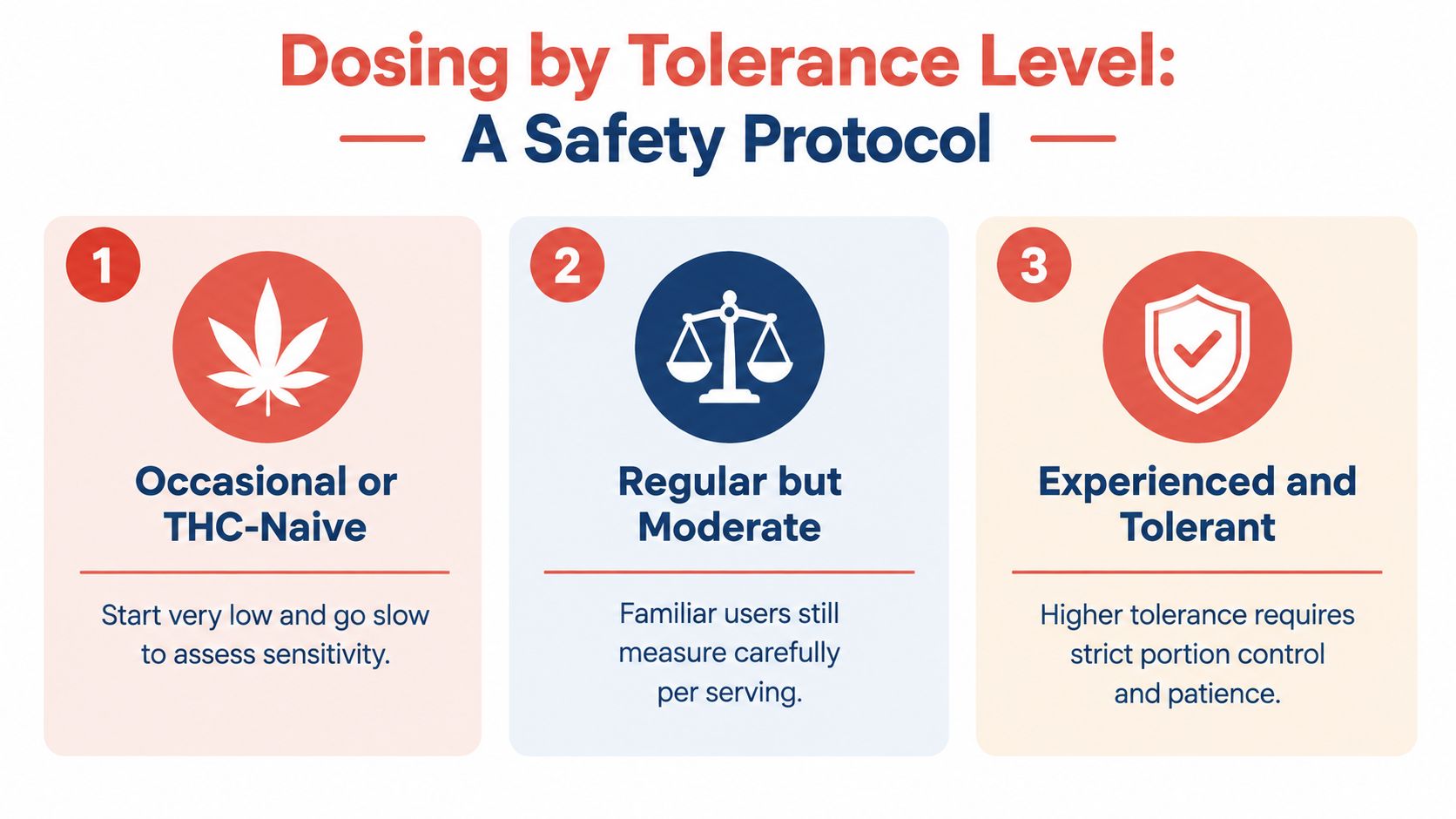
A tolerance framework should function as a safety protocol, not as a challenge to increase consumption. The same package may suit very different adults because one person may take a small measured fraction, while another may already understand how their body responds to a substantial THC serving.
Start with a low single-digit milligram amount of THC, such as 2.5 to 5 mg, and treat that as an assessment rather than a target. A 20 mg square divided into quarters gives approximately 5 mg per portion, but a 100 mg gummy may require more careful subdivision.
Wait at least 90 to 120 minutes before considering any additional amount. Those figures are a conservative waiting window based on the dosing guidance in this edible dosing guide, and waiting longer may be sensible if effects are still building.
A person who uses THC regularly but remains sensitive to moderate servings may choose a measured amount in the 5 to 10 mg range, depending on prior experience. A 20 mg piece can be divided into quarters or halves, but the cut should be deliberate and consistent.
Don't assume familiarity makes eyeballing safe. Piece size, texture, and cannabinoid concentration can vary, so the package's serving information still matters.
High-tolerance adults may use larger portions, but they still need strict control over the amount per sitting. A piece containing tens of milligrams should be divided with a clean knife, a pill cutter when appropriate, or a scale designed for small measurements. Eyeballing half of a large gummy can create a much wider dosing error than many consumers expect.
A 1000 mg container might last an occasional consumer for many carefully portioned sessions, while a high-tolerance consumer may use it more quickly. That difference is why milligrams per sitting matter more than milligrams in the bag.
Portioning habit: Write down the piece size, the estimated THC amount, the time taken, and the time effects became noticeable. A short log reduces guesswork during the next session.
Start with the back of the package, not the large number on the front. Look for three separate figures: total cannabinoids per package, THC per package, and THC per serving or piece. If the label lists only “1000 mg” without identifying what that number measures, you don't yet know the product's psychoactive potency.
Hemp compliance adds another layer. Federal hemp is defined as cannabis containing no more than 0.3% delta-9 THC by dry weight, as described in written testimony on hemp regulation and cannabinoid accounting. That means a 1000 mg product can potentially meet the hemp threshold if the finished product weighs enough, but the product must be evaluated against laboratory results and the applicable law. Milligrams alone don't establish legality.
The relevant comparison is the amount of delta-9 THC against the dry weight of the finished product. A label that says “under 0.3% THC” may be incomplete or misleading if it ignores THCA or total THC calculations. THCA can convert into delta-9 THC when heated, so cannabinoid accounting may need to include both the measured delta-9 amount and the potential contribution from THCA, depending on the governing rules.
A product sold through a licensed cannabis channel follows a different regulatory framework from a hemp-derived product. Don't assume that a product available online is legal in every state, and don't treat a familiar package design as proof of compliance.
A batch-specific Certificate of Analysis, or COA, should show the tested cannabinoid panel and contaminant screening. Check that the COA matches the product batch, includes the relevant THC forms, and identifies testing for solvents, heavy metals, pesticides, and microbial contamination where applicable. The manufacture date, expiration information, and a readable serving statement also help you judge whether the label is complete. This guide to reading a COA can help you interpret those sections.
A high-potency gummy isn't automatically a better product. Its value depends on whether the piece can be divided accurately, whether the label distinguishes THC from total cannabinoids, and whether testing supports the claim.
A 5 mg gummy is generally easier for a new consumer because the entire piece represents a small, defined serving. A 10 mg piece is closer to the single-serving ceiling used in Colorado and Washington regulated markets, while a 25 to 50 mg square requires a consumer who already understands portioning. These comparisons concern dose design, not a universal recommendation.
A 1000 mg package built around 20 mg pieces contains 50 discrete pieces by division, while a 100 mg fast-onset piece contains 10 such pieces by total-potency math. The practical experience depends on the actual cannabinoid panel, not merely the package headline. A product with nano-emulsified formulation may also feel different because its intended onset is faster, as noted in the earlier industry coverage.
| Format | Typical Potency Per Piece | Pieces Per 1000 mg | Intended Audience |
|---|---|---|---|
| Beginner gummy | 5 mg | 200 | THC-naive or occasional adults |
| Standard piece | 10 mg | 100 | Consumers seeking a defined serving |
| Mid-range square | 25 mg | 40 | Experienced consumers using measured portions |
| High-potency piece | 50 mg | 20 | High-tolerance consumers with strict control |
| Ultra-high piece | 100 mg | 10 | Consumers who deliberately split servings |
Third-party testing should verify cannabinoid content and screen for contaminants such as residual solvents, heavy metals, and microbes. Some manufacturers use an internal tolerance of plus or minus 10% from label claims, but you should rely on the product's own current COA rather than assuming every brand follows that standard.
High-potency formats can become more granular rather than stronger. A consumer who can divide a tested, clearly labeled piece may have more control than someone choosing an unscored product with vague serving information. Melt Bites products, including the Watermelon Sour THC Gummies Slices, Zour Belts THC Gummy Belts, and Sour Gummy Worms THC Crawlers, are examples of high-potency formats listed by Melt, but the current package label and batch COA should determine the actual serving decision.
A 1000 mg package may remain in your possession for a long time, especially if you divide it into small servings. Storage protects more than flavor. Heat, light, oxygen, and moisture can affect texture and cannabinoid stability, so the package should stay sealed, opaque, and away from temperature swings.
A cool storage range of 15 to 21°C is commonly used for preserving cannabinoid products, while humidity above 60% can encourage mold or sugar bloom in gummies, according to the product-storage guidance supplied for this article. Those conditions matter most when the package is opened repeatedly.
Freezing portions may work for some products, but the package must be protected from moisture and freezer odors. Let a sealed portion return toward room temperature before opening it, which reduces condensation on the gummy.
Changes in color, hardening, crystallization, stickiness, or an unusual odor can signal age, moisture exposure, or poor storage. These signs don't tell you the remaining THC concentration with precision, so appearance can't replace a current COA. A lab report is the reliable way to verify cannabinoid content for a specific batch, while a label alone may not reflect changes that occur over time.
Store every edible in its original labeled container whenever possible. Keep it locked away from children, pets, visitors, and anyone who could mistake a cannabis gummy for ordinary candy.
The central rule is straightforward: total milligrams describe the package, while per-piece milligrams describe the dose. The gap between those two figures is where most confusion, and much of the safety risk, begins.
Use this decision sequence before opening a 1000 mg edible:
High-potency formats can make sense for experienced adults who value flexible portioning, but they're poor starter products when each piece contains a large amount of THC. The most useful habit is simple: split the dose, wait for the effect, and record how your body responds. That approach turns a dramatic package number into a controlled, repeatable process.
Melt offers high-potency hemp-derived edibles, including 1000 mg gummy formats, alongside product information and third-party testing resources for adults comparing serving design and cannabinoid content. Review the label and batch COA before choosing a format, then visit Melt to explore the available options.
Your cart is currently empty.