


Free Shipping All Orders Over $95
You're standing in a smoke shop or scrolling an online menu, trying to decide whether a disposable cannabis vape is worth it. The appeal is obvious, it's compact, quiet, easy to use, and you don't have to think about extra parts or charging gear. But the buying question isn't just “how strong is it?” It's whether the device itself is well built, whether the oil is formulated with care, and whether the brand is transparent about what's inside.
That shift matters because disposables have moved from a niche convenience item to a major U.S. format. Market data show disposable cannabis vapes rose from 13% of vape dollar sales in Q1 2022 to 17% in Q4 2022, then crossed 50% of U.S. vape market share in April 2026 and reached 51.1% in May 2026. The same update said disposable vape sales grew 41% over the prior 12 months to $3.8 billion, while cartridge sales fell 14% to $4.1 billion. BDSA market trends on cannabis vape formats
A lot of first-time buyers want the same thing, a pen that works without a learning curve and doesn't draw attention. Disposables fit that need because they combine the battery, oil chamber, coil, and mouthpiece into one sealed unit. For many adults, that makes them feel simpler than cartridges, especially when they're trying to avoid the hassle of matching threads, charging separate batteries, or carrying extra accessories.
That simplicity is also why people often skip the part that matters most. Two disposables can look almost identical on the shelf and still deliver very different experiences because the difference lives in the hardware, the formulation, and the testing. One may taste bright and smooth. Another may feel harsh, clog early, or raise questions about material quality.
Most buyers are chasing one or more of these outcomes.
Practical rule: If the product page spends more time talking about “strength” than about testing, materials, and formulation, you're probably looking at marketing first and quality second.
This guide keeps the focus on what changes the experience. You'll get a plain explanation of how these devices work, how the law draws lines between hemp-derived and marijuana-derived products, what safety questions matter most, and how to compare labels and lab reports without getting buried in jargon. The goal is to help you judge device integrity and formulation quality, not just potency.
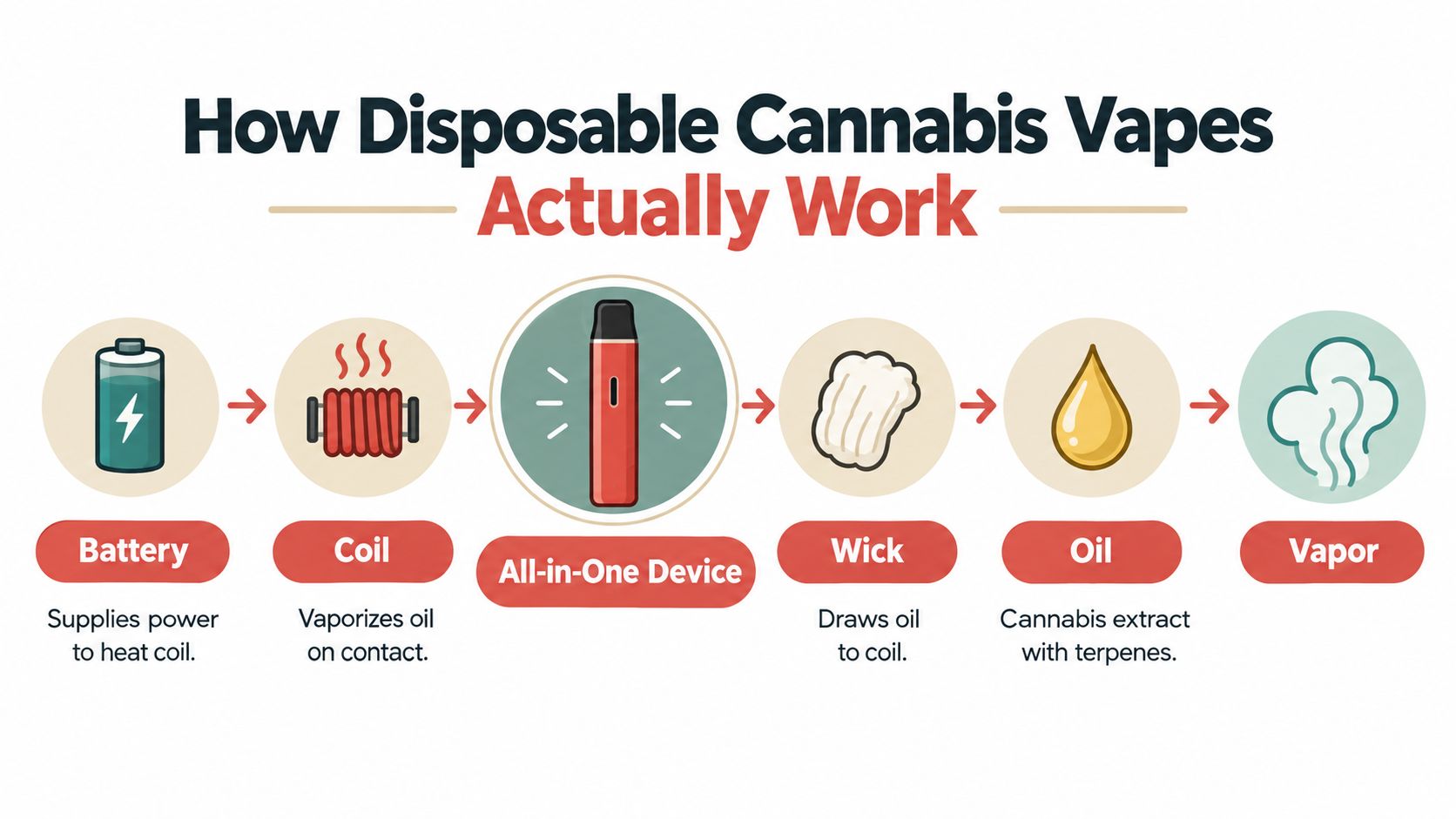
A disposable vape is basically a tiny self-contained heating system. The battery sends power to a coil, the coil heats up, the wick pulls oil to that hot surface, and the oil turns into aerosol when it's warmed enough to be inhaled. That's the whole loop, but the quality of each part changes how smooth the experience feels.
The easiest analogy is a kettle. Water doesn't become steam just because it exists in the kettle, it becomes steam because heat is applied in a controlled way. A disposable vape works the same way, except the liquid is cannabis extract blended with other components that affect flow, taste, and heat behavior.
Cannabis vape oil is not just THC in a tube. It's usually a mix of cannabinoids and terpenes, and those terpenes do real work. They add aroma and flavor, but they also help lower viscosity, which makes the oil easier to move through the wick and onto the coil.
That's why terpene-rich blends can feel more lively and more responsive. The oil flows better, the device aerosolizes more efficiently, and the flavor tends to show up more clearly. If the blend is too thick, the wick may struggle to keep up. If it's overheated, the result can be harsher vapor and more thermal degradation.
Think of the coil as a hot pan and the oil as a sauce. A little heat helps it move and release aroma. Too much heat scorches it. The same idea applies here, especially because certain terpenes vaporize at much lower temperatures than THC itself. A terpene such as myrcene is cited at about 167°C compared with THC at about 417°C in the provided source, which is why lower-temperature operation can preserve flavor and reduce harshness. Terpene chemistry in carts
The user experience starts long before the first puff. Hardware design, oil thickness, and the balance of cannabinoids and terpenes all shape whether the device feels smooth, clog-prone, flavorful, or burnt. That's why a disposable should be judged like a small engineered system, not a single ingredient.
A quick visual reference helps, too. For a broader hardware breakdown, see how vape pens work.
The legal label on a disposable matters as much as the flavor name. In the U.S., hemp-derived products are generally built around the federal definition tied to ≤0.3% Delta-9 THC, while marijuana-derived products fall under a different legal framework. That distinction affects where a product can be sold, who can buy it, and whether shipping is allowed to your state.
THCA adds another layer of confusion. THCA itself doesn't behave the same way as Delta-9 THC until heat changes it, which is why heating a product can alter what you're inhaling. For shoppers, the practical takeaway is simple, the name on the front of the package isn't enough. You need to know the source, the legal category, and the shipping rules that apply where you live.
A compliant product page should tell you enough to make a basic legal judgment.
A good listing tells you what the product is and where it can go. A weak listing forces you to guess.
That's where reading the details saves trouble. If a company says it ships only where allowed and gates access to adults, that's a compliance signal, not a marketing flourish. If it hides the source or buries the legal category, treat that as a reason to slow down.
For a plain-language overview of state-level variation, the state cannabis laws guide is useful context. It won't replace local legal advice, but it can help you read the product page with a sharper eye.
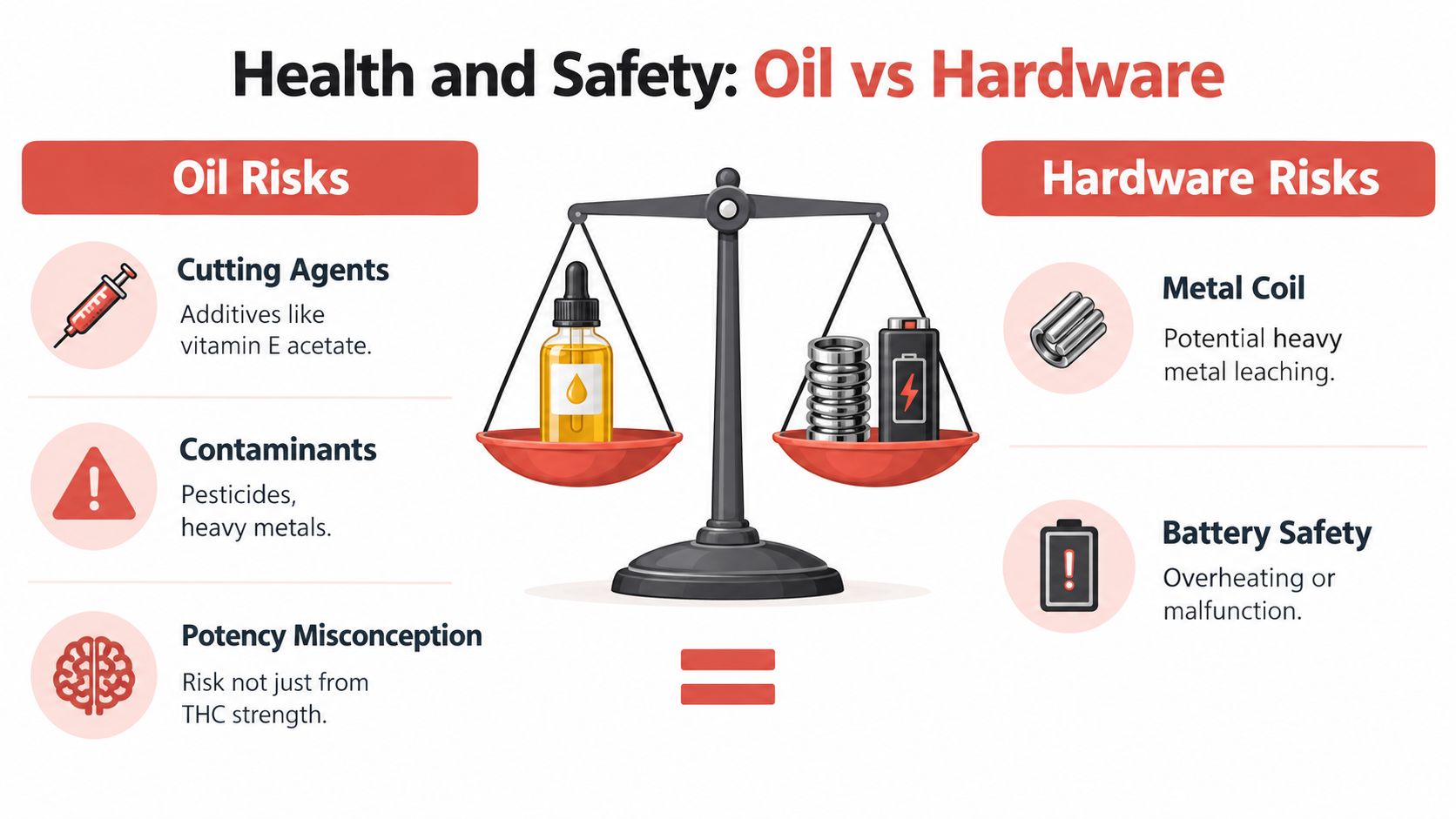
A lot of safety conversations stop at one question, “Is vaping safer than smoking?” That question matters, but it's incomplete. With disposable cannabis vapes, risk can come from the oil and from the hardware that heats it. The device is not neutral. The materials used inside it can affect what ends up in the aerosol.
A 2025 study found aerosol from cannabis vaping products contained metal particles including cobalt, chromium, nickel, lead, tin, and zinc, and the elemental pattern matched the device components, which supports a source-to-aerosol transfer mechanism rather than random contamination. The practical takeaway is that higher heat, repeated coil use, and lower-quality metal assemblies can raise inhalation risk even if the oil itself tests clean. Scientific Reports study on cannabis vape metals
Oil testing answers one question, whether the extract itself has been screened for contaminants. Device integrity answers a different one, whether the hardware can introduce unwanted exposures during use. If a brand only highlights potency and says little about the materials in the heating path, that gap matters.
Recent independent reviews also note that disposable vaping devices can emit harmful substances, including VOCs and heavy metals, and cite studies where lead leached from some disposable pods at levels that exceeded regulatory limits. That makes the device format itself a quality-control issue, not just a convenience issue. Review of disposable vape device risks
Ultra-high potency can change how people use a vape. Public-health discussion now pays more attention to tolerance, overconsumption, and anxiety, especially because vape products can be far more concentrated than flower. NPR reported in 2025 that average cannabis flower contains about 17% to 18% THC, while vape products can reach 95% or higher. NPR report on high-potency cannabis vapes
That doesn't mean every high-potency disposable is a bad choice. It means the user has to understand pacing, dose awareness, and source quality. A strong device in the wrong hands, or from the wrong channel, can turn convenience into a rougher experience than expected.
| Risk Source | What It Affects | What to Check |
|---|---|---|
| Oil quality | Taste, purity, contaminant exposure | Third-party lab report, ingredients, cannabinoid profile |
| Device metals | Aerosol composition, inhalation exposure | Material disclosure, manufacturing quality, hardware screening |
| Battery and heat behavior | Harshness, burnt flavor, unwanted byproducts | Consistent performance, controlled heat, reliable construction |
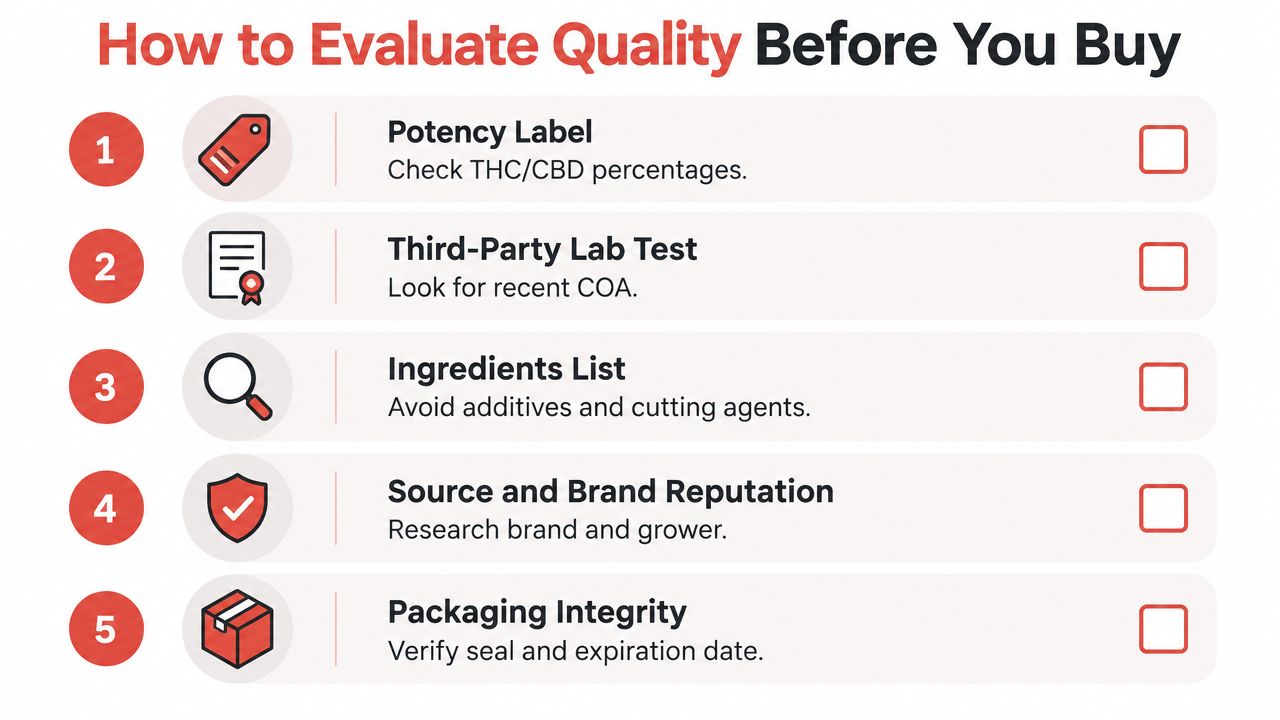
Two disposables can claim the same strain and still feel completely different in real use. One might publish clear testing, list its ingredients, and explain the terpene profile. The other might hide behind a name and a THC number. The first gives you something to evaluate. The second asks for blind trust.
Start with the potency label, but don't stop there. THC percentage tells you how concentrated the oil is, not whether the product is clean, stable, or well made. A thoughtful label should also help you understand what cannabinoids and terpenes are present.
Then look for a recent certificate of analysis, which should show cannabinoids and contaminant testing in a way that connects to the product you're holding. If a brand makes that report easy to find, it's usually trying to be checked. If the report is missing or hard to match to the package, that's a problem, not a minor inconvenience. For a deeper breakdown, see how to read a certificate of analysis.
A strain-specific terpene profile should make sense with the taste and the effect description. Bright citrus notes, earthy spice, or piney edges should feel like part of the formulation, not an afterthought. If a product claims a specific strain but gives you no terpene detail at all, you're missing a major piece of the experience.
Good buying habit: compare two products side by side and ask which one gives you more evidence, not just more adjectives.
Packaging matters too. A sealed package, a visible expiration date, and clear branding are basic signs that the company pays attention to handling. Those details don't prove quality by themselves, but their absence should make you cautious.
Transparent brands usually keep the story simple. They say what the product is, show lab information, explain what went into the oil, and avoid vague miracle language. In practice, that's what makes a disposable easier to trust before you ever open it.
Melt is one example of a brand that positions its disposables around strain-specific terpene profiles, third-party testing, and clear lab reporting. That's the kind of information set worth looking for when you compare products, even if you choose a different brand.
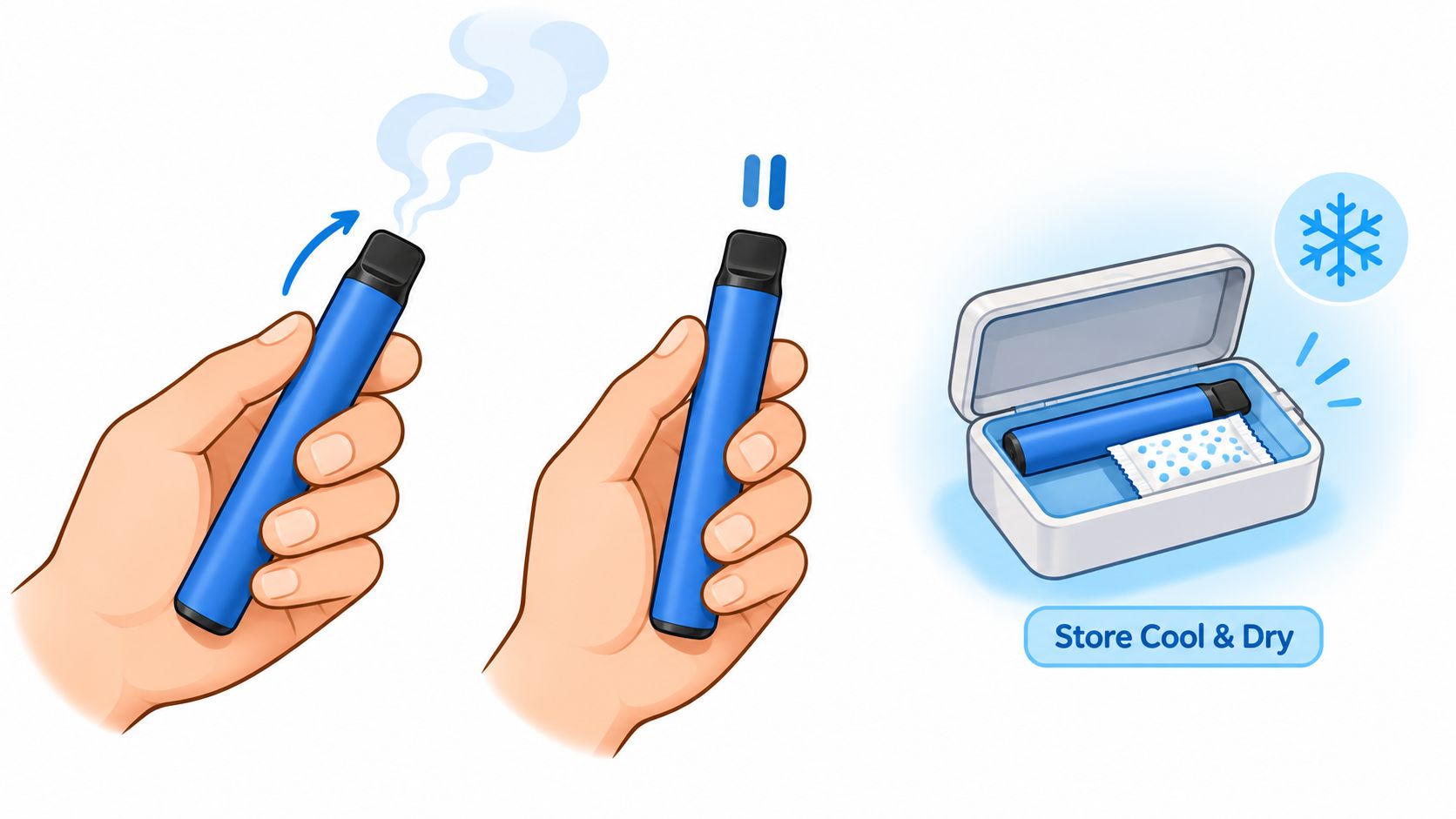
Good handling preserves flavor and reduces avoidable problems. A disposable can taste dull or clog because it's been stored badly or pulled too hard. The device isn't always defective, sometimes it's being used in a way that fights the oil.
The goal isn't to baby the device. It's to keep the oil moving the way it was designed to move. Terpene-rich blends are especially sensitive to heat, so a gentler approach often gives you better flavor and fewer burnt notes.
If a disposable starts tasting off, getting weak, or clogging often, storage and pacing are the first things to review. Don't assume the issue is the oil alone. The way you carry and draw from the device can matter just as much.
A smart purchase starts with a simple sequence, know the legal category, check the hardware quality, review the lab work, then think about flavor and convenience. That order keeps you from overvaluing the THC number and underestimating the importance of contamination control, material disclosure, and packaging integrity.
For U.S. shoppers, compliance details matter before checkout. Age restrictions should be clear, shipping eligibility should be spelled out, and the product page should tell you whether the item is hemp-derived or restricted in your state. If a brand can't explain those basics plainly, that's a warning sign.
Melt's Los Angeles-crafted lineup is built around that kind of transparency, with hemp-derived compliance, strain-specific formulations, and third-party lab testing presented as part of the product story. If you're comparing disposable vapes weed options, that's the standard to look for, clear identity, clear sourcing, and clear testing, before anything else.
If you want a cleaner way to shop, visit Melt and compare disposable vapes with the lab, hardware, and formulation details front and center. You'll see how a better-built disposable makes the choice feel more practical, not more confusing.
Your cart is currently empty.