


Free Shipping All Orders Over $95
You open a jar labeled Cherry Drop, expecting the usual cherry-candy aroma, but the first impression is more layered. Bright citrus rises above a soft floral note, while peppery depth keeps the sweetness from becoming flat. Then the practical questions arrive: Is this really a single genetic line? Will it feel energetic or relaxing? Does a high THC result guarantee better flower?
Those questions matter because Cherry Drop is a name attached to a recognizable sensory style, not always to one perfectly documented pedigree. The most useful way to evaluate it is to connect three things: the reported genetics, the terpene profile, and the batch-specific laboratory data.
A fresh jar of Cherry Drop often announces itself before the flower is even ground. The aroma can suggest tart cherry candy first, then citrus peel, cream, and a restrained earthy or spicy base. That combination reflects the modern dessert-cultivar movement, where breeders selected for fruit, candy, and pastry aromatics rather than relying mainly on fuel and skunk.
Cherry Drop belongs to the broader cherry family associated with West Coast breeding and the spread of Cherry AK phenotypes during the 1990s and 2000s, according to this overview of cherry strain history. Later dessert genetics gave those cherry-led profiles a more confectionary direction. Consumers began looking for flowers that smelled like red fruit, citrus sweets, frosting, and baked goods, so names such as Cherry Drop became useful shorthand for a flavor expectation.
The strongest reported lineage is Cherry AK-47 crossed with Cali OG. That pairing fits the common description of Cherry Drop as a sativa-dominant hybrid with bright fruit on top and a heavier OG-style foundation. Cherry AK-47 can account for the sweet, lifted side of the profile, while Cali OG helps explain the resinous, grounded finish described in the strain's lineage profile.
Other databases list different parents, including Cherry Pie crossed with Northern Lights. These contradictions don't necessarily mean every listing is careless. Cannabis names often move through informal cuts, pheno hunts, boutique releases, and commercial seed catalogs without one universally maintained pedigree record.
Breeder-record reality: Treat a strain name as a starting point, then verify the specific cut, breeder, harvest, and COA attached to the flower you're buying.
The conflicting records still point toward a consistent genetic neighborhood. Cherry-sweet parents appear repeatedly, and OG-style or classic hybrid influences recur in the descriptions. That repeated pattern helps explain why different Cherry Drop lots can share a tart-fruit identity while varying in density, sweetness, body weight, or floral character.

The name suggests flavor, but it doesn't guarantee a fixed effect. A Cherry Drop cut with more limonene and less myrcene may feel brighter, while another with a heavier body-oriented terpene balance may settle faster. Cultivation conditions, harvest timing, drying, curing, and storage can also change how the same general genetics present in the jar.
That's why experienced buyers focus less on a dramatic lineage claim and more on repeatable evidence. Look for a producer that identifies the breeder or source cut, publishes a recent batch COA, and describes the aroma without pretending the name alone determines the experience.
Cherry Drop's dessert-like aroma comes from a terpene mixture, not one defining compound. Reported profiles commonly highlight limonene, beta-caryophyllene, and linalool, with total terpene content varying by batch. The Cherry Drop terpene data helps illustrate why the same strain name can produce different aromatic impressions.
A lower-terpene lot may still smell recognizably like cherry, but with less projection from the flower. A more concentrated batch can unfold in layers of fruit, citrus, floral sweetness, and spice, provided drying and storage preserved those volatile compounds. The ratio matters as much as the total amount. More limonene can make the experience feel brighter, while stronger myrcene or caryophyllene presence may give the profile more weight.
Limonene supplies the citrus lift. Look for lemon zest, candied peel, or a bright top note that appears before the deeper aromas. It keeps the cherry character from becoming overly syrupy and gives the opening a sharper edge.
Linalool adds floral softness. It rounds the sweetness with impressions of lavender, cream, or delicate flowers. In a balanced profile, this layer makes the fruit seem smoother rather than just sugary.
Beta-caryophyllene brings warm spice and structure. Black pepper, clove, and a dry woody finish can appear as the aroma develops. This terpene gives the candy-like notes a firmer base, helping explain why some Cherry Drop batches feel more grounded than their fruit-forward name suggests.
Myrcene, when present, can add earthy body and a softer finish. It does not create the cherry aroma on its own. Instead, it may reduce the sharpness of the citrus edge and make the overall profile feel fuller.
The result is dessert-forward when fruit and floral notes sit above spice and earth, rather than being dominated by fuel. For a clearer explanation of how these compounds interact with cannabis aroma and experience, see this guide to terpenes in weed.
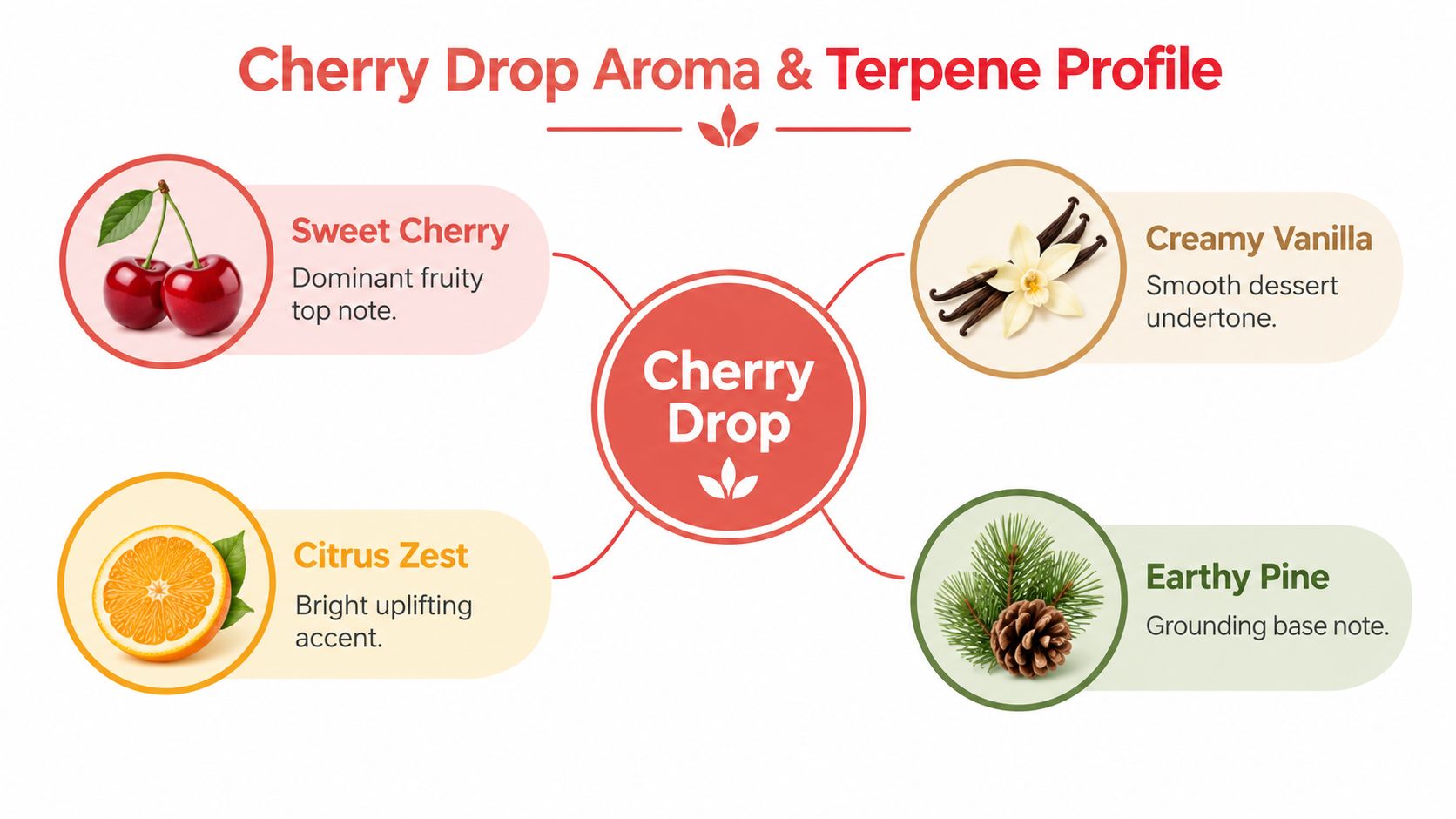
Smell the unground flower first. A well-preserved lot should offer a recognizable fruit impression without relying on combustion. Grinding can release sharper cherry and citrus notes, followed by pepper or earth as the deeper material becomes exposed.
Low-temperature vaporization generally preserves more volatile top notes than high-heat combustion. Notice the sequence: citrus and cherry may appear first, floral softness in the middle, then spice and earth on the exhale. That progression reveals the batch's terpene balance more clearly than the strain name alone.
Aroma also provides a practical quality check. Muted, excessively grassy, or harsh chemical smells may point to issues with that batch's curing, storage, or contamination, rather than defining Cherry Drop genetics.
Cherry Drop is commonly described as sativa-dominant, but that label doesn't mean it will feel purely stimulating. The reported Cherry AK-47 and Cali OG pairing suggests a more balanced arc, with an initial mental lift followed by physical ease. Terpenes can influence that impression, but they don't operate as guaranteed effect switches.
The first phase may feel bright, social, or mentally engaging. Some consumers choose this type of profile for conversation, music, light creative work, or an afternoon reset. The OG influence can become more noticeable as the session develops, bringing a heavier physical finish that may suit relaxed evenings better than demanding tasks.
A conservative amount may preserve the strain's uplift and flavor clarity. Larger amounts can make the body effect more prominent, especially for consumers who are sensitive to THC or already tired.
Dose determines the destination: The same flower can feel bright at one amount and physically heavy at another, so evaluate the effect before adding more.
Limonene is often associated with citrus brightness and a lifted mood impression. Linalool brings a softer floral dimension, while beta-caryophyllene and myrcene can make the experience feel more grounded. These associations help explain why Cherry Drop may seem both cheerful and calming, but they shouldn't be treated as clinical proof.
Cannabis can affect people differently based on tolerance, metabolism, current mood, medications, and setting. Anyone considering cannabis for a health concern should speak with a qualified clinician, especially when using prescription medicines or managing anxiety, pain, sleep problems, or mood symptoms.
Avoid driving or operating equipment after using intoxicating cannabis. If the experience becomes uncomfortable, stop consuming, move to a calm environment, hydrate, and give the effects time to settle.
A Cherry Drop label becomes more informative when THC and terpene results are read together. Reported flower commonly falls within the 22% to 24% total THC range, while total terpenes often sit around 2.0% to 2.4%, according to Cherry Drop lab benchmarks. Those figures describe tested samples, not a permanent definition of the cultivar.
A different grower, harvest, cure, or genetic cut can change the result. THC indicates cannabinoid concentration. Terpene data adds another layer, helping you judge aromatic intensity and the likely character of the sensory experience. In practical terms, THC is one part of the engine, while the terpene mix influences how that engine feels on the road.
| Metric | Typical Range | Impact on Experience |
|---|---|---|
| Total THC | 22% to 24% | Indicates a commonly reported high-potency flower range, but not the entire effect profile |
| Total terpenes | 2.0% to 2.4% in commonly reported samples | Helps indicate aromatic density and potential flavor expression |
| Broader reported terpene band | 1.5% to 3.5% | Shows why different lots can vary from moderate to highly expressive |
| Limonene | Frequently highlighted | Adds citrus brightness and a sharper fruit impression |
| Beta-caryophyllene | Frequently highlighted | Contributes peppery spice and grounded depth |
| Linalool | Frequently highlighted | Adds floral softness and rounds the dessert profile |
| Myrcene | Often included among relevant terpenes | Can contribute earthiness and physical weight |
Another reported sample measured 1.01% total terpenes, with borneol at 0.18%, ocimene at 0.41%, and sabinene at 0.24%. The lower total does not erase Cherry Drop's identity. Smaller compounds can act like seasoning, adding accents that remain noticeable even when the overall terpene percentage is modest.
Review the batch date, product name, laboratory identity, cannabinoid panel, terpene panel, and contaminant results. The COA should match the exact product or batch rather than a generic strain page. For a practical walkthrough, use this guide to reading a certificate of analysis.
Compare the listed compounds with the flower's aroma. A product promising cherry-candy character but providing little terpene information, while smelling flat, gives you a reason to question its freshness or transparency.
A high THC number does not automatically promise better flavor, smoother vapor, or a more satisfying session. The strongest purchase is the batch whose laboratory data, aroma, freshness, and intended use agree with one another.
Cherry Drop rewards gentle handling. Its appeal depends on volatile aromatic compounds, so excessive heat, stale storage, or a rushed cure can reduce the cherry and citrus character before the consumer ever uses the flower.
For consumption, begin with a clean glass piece or a dry-herb vaporizer. Lower heat generally favors delicate fruit and floral notes, while hotter settings emphasize heavier spice and roasted flavors. Because equipment temperatures aren't always exact, use the lowest setting that produces a satisfying vapor and increase gradually rather than starting aggressively.
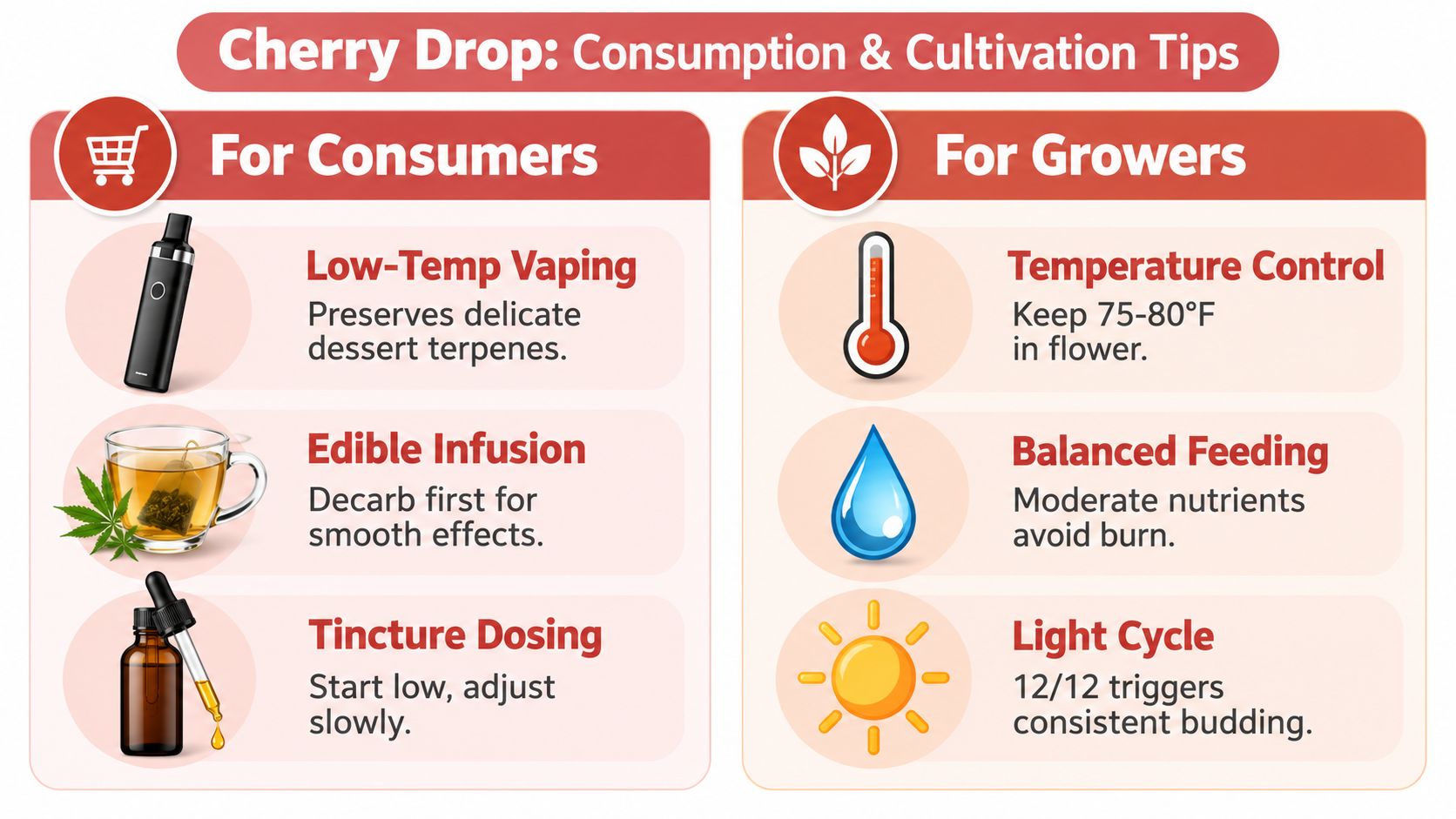
Edibles require extra caution because the experience develops differently from inhalation. Don't assume that a flavorful flower will translate directly into a predictable edible effect. Use only products with clear labeling, follow local rules, and keep all intoxicating products away from children and pets.
Cherry-leaning sativa hybrids can vary substantially by cut, so don't rely on the name for exact flowering behavior or nutrient needs. Prioritize verified breeder information, observe the plant's response, and avoid forcing a rigid feeding schedule onto an unfamiliar cultivar.
Moderate feeding and stable environmental conditions help preserve plant health. Excessive nutrients can create burn or imbalance, while heat during flower can dull volatile aromas. Training should aim for an even canopy and good airflow rather than maximum manipulation.
The dry and cure deserve as much attention as the grow. Dry flower slowly in a controlled environment, then cure in clean, appropriately sealed containers while monitoring aroma and texture. A rushed process can leave harshness or mute the sweet profile, even when the flowers developed strong resin coverage.
Legal availability depends on jurisdiction, product category, and the rules governing hemp-derived cannabinoids where you live. THCA flower requires particular care because THCA can convert into intoxicating THC when heated, while hemp products are commonly evaluated under legal frameworks that include a 0.3% Delta-9 THC threshold. Rules can also restrict THCA products even when a product is marketed as hemp-derived.
Read the law that applies to your location before ordering. Check shipping exclusions, age requirements, possession rules, and whether local authorities treat the product differently from the federal framework. A product being available online doesn't guarantee that it can legally enter every state or region.
A reputable seller should make product information easy to verify. Before buying Cherry Drop or any other exotic flower, look for:
This educational guide to THCA flower online can help readers understand the product category and the questions to ask before ordering.

Packaging can communicate style, but it can't replace a recent COA. A polished label may describe cherry, cream, or exotic genetics, yet only the batch data can show whether the flower has meaningful terpene density and whether it passed relevant safety testing.
Buy from licensed or otherwise lawful channels in your area, and verify the seller's age-gating and shipping practices. Adults should also remember that even hemp-derived products may be intoxicating after heating or ingestion, so storage, dosing, and transportation require the same care as other cannabis products.
Cherry Drop is best understood as a flavor-driven hybrid category with recurring genetic themes, not as a strain name that guarantees one fixed chemical profile. The commonly cited Cherry AK-47 and Cali OG lineage explains the bright cherry side and the heavier finish, while conflicting listings show why pedigree claims deserve verification.
Terpene data gives the name more meaning. Limonene can account for citrus brightness, linalool for floral softness, and beta-caryophyllene for peppery structure. Myrcene may add earthiness and body, but the final experience still depends on the specific flower, dose, freshness, and personal physiology.
Use this checklist when comparing Cherry Drop products:
A premium exotic isn't defined by a dramatic name alone. It earns attention when the sensory experience, cultivation quality, laboratory evidence, and sourcing story point in the same direction. Cherry Drop remains compelling because it captures the modern preference for fruit-forward cannabis while retaining enough spice and OG-style depth to feel complex rather than sugary.
Melt offers curated THCA flower and other hemp-derived cannabinoid products with strain-focused flavor profiles and third-party lab information. Visit Melt to explore its current collection, review available product details, and find a Cherry Drop-style experience that fits your preferences and local purchasing rules.
Your cart is currently empty.