


Free Shipping All Orders Over $95
A zip generally means one ounce of cannabis flower, conventionally 28 grams, although the exact scientific mass of an avoirdupois ounce is 28.35 grams. In other words, “28 grams” is the practical cannabis-market answer, while 28.349523125 grams is the precise conversion.
You may hear the term at a dispensary, see a product listed as an ounce, or compare a 28-gram flower package with a smaller eighth. The confusion starts when people treat slang, retail labeling, scientific measurement, and legal limits as if they were all using the same language. They aren't.
At a dispensary counter, a budtender may hear a customer ask for “a zip.” The practical question is immediate: how much flower is going into the bag? The answer depends on whether the speaker is using slang, a retail label, or a precise measurement.
In cannabis terminology, a zip generally means one ounce of cannabis flower. The conventional market figure is 28 grams, while the exact mass of one avoirdupois ounce is 28.349523125 grams. Informal transactions and retail conversations usually use the rounded figure, as documented in this cannabis slang definition of “zip”.
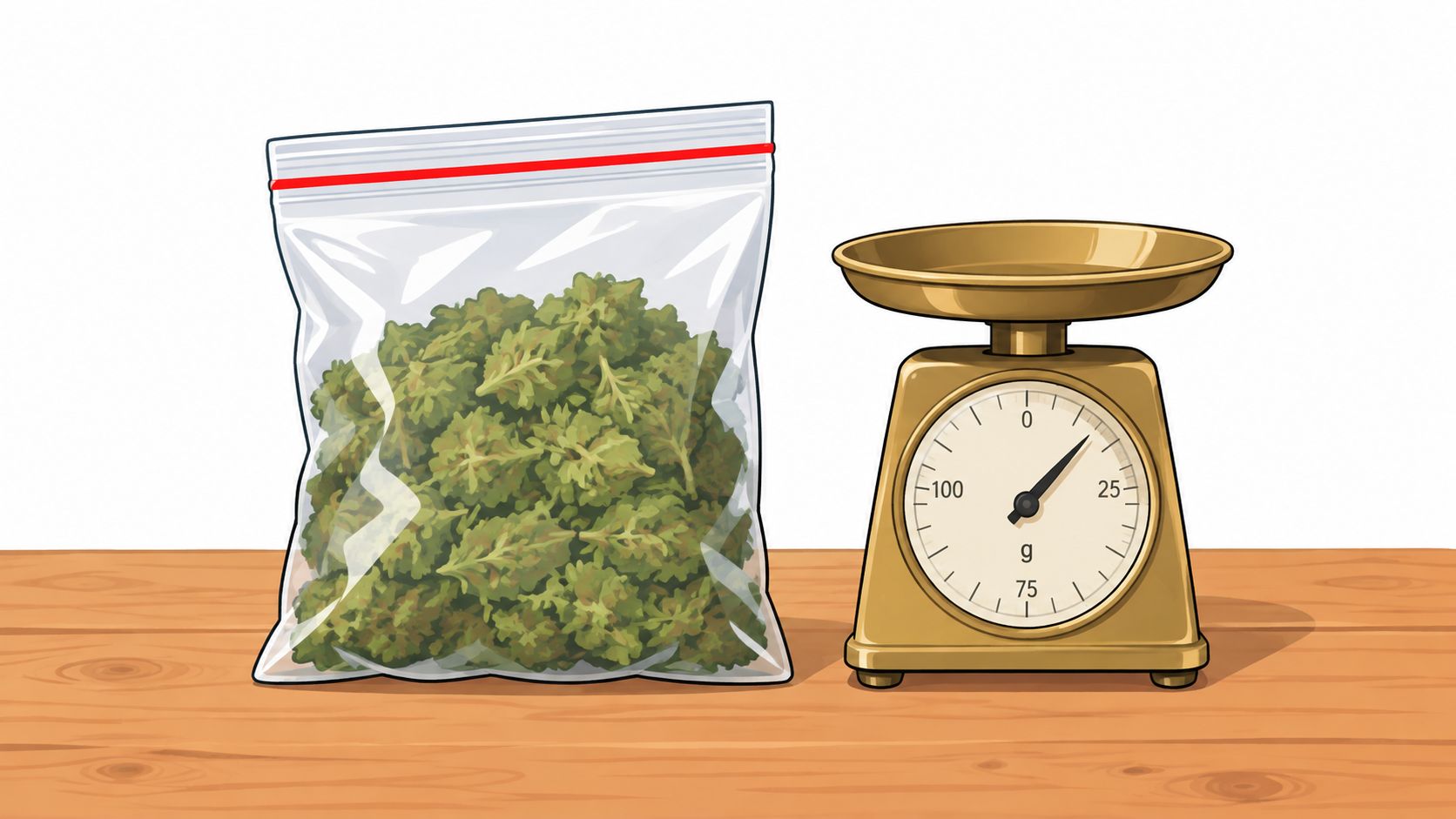
At checkout, one zip equals one ounce of dry flower. The term is not normally used for vape oil, concentrates, or edibles. Those products are generally labeled by volume or cannabinoid content, such as milliliters or milligrams, rather than by the flower-weight shorthand used for a zip.
The quantity is easier to explain than the word itself. A popular explanation connects “zip” with zip-top or Ziploc-style bags used to store and sell cannabis before regulated, pre-weighed packaging became widespread. An ounce was commonly treated as an amount that could fit in a resealable bag, so “zip” became shorthand for that bag-sized quantity.
The term's first documented use is difficult to establish because cannabis slang developed in informal markets with limited written records. Other explanations connect it with “oz” or different underground shorthand. The bag explanation is therefore a popular account, not a proven linguistic origin.
Legal cannabis retailers kept the term because customers and staff generally recognize it. A store may list flower as 28 grams or one ounce, while a shopper asks whether it has a “zip.” Those expressions usually identify the same purchase quantity, but the numeric label is more useful for comparing packages and checking an order.
Practical rule: Treat “zip” as a conversational term. Treat the package's stated gram weight as the operational term.
That distinction helps prevent checkout errors. A customer may request a zip expecting one ounce of flower, while the inventory system records the package by numeric weight. Ask whether the item is a 28-gram flower package, and confirm that the listed weight refers to the flower alone rather than the container. This separates slang from the label used for inventory, packaging, and purchase verification.
A customer can ask for a zip, see a package marked 28 grams, and later compare it with an ounce listed as 28.35 grams. The difference is small in casual conversation, but the two figures serve different purposes. Retail language favors a rounded number, while scales, inventory records, quality-control documents, and regulated packaging may use a more precise conversion.
An avoirdupois ounce has an exact mass of 28.349523125 grams. That value is conventionally rounded to 28.35 grams, while cannabis transactions commonly use 28 grams, as shown in this how one ounce converts to 28.35 grams.
The rounded figure keeps product labels, menus, and price comparisons easy to read. A retailer can describe flower as 28 grams without printing several decimal places. A scale used for reconciliation may show a value closer to 28.35 grams when the product is being compared with a mathematically exact ounce.
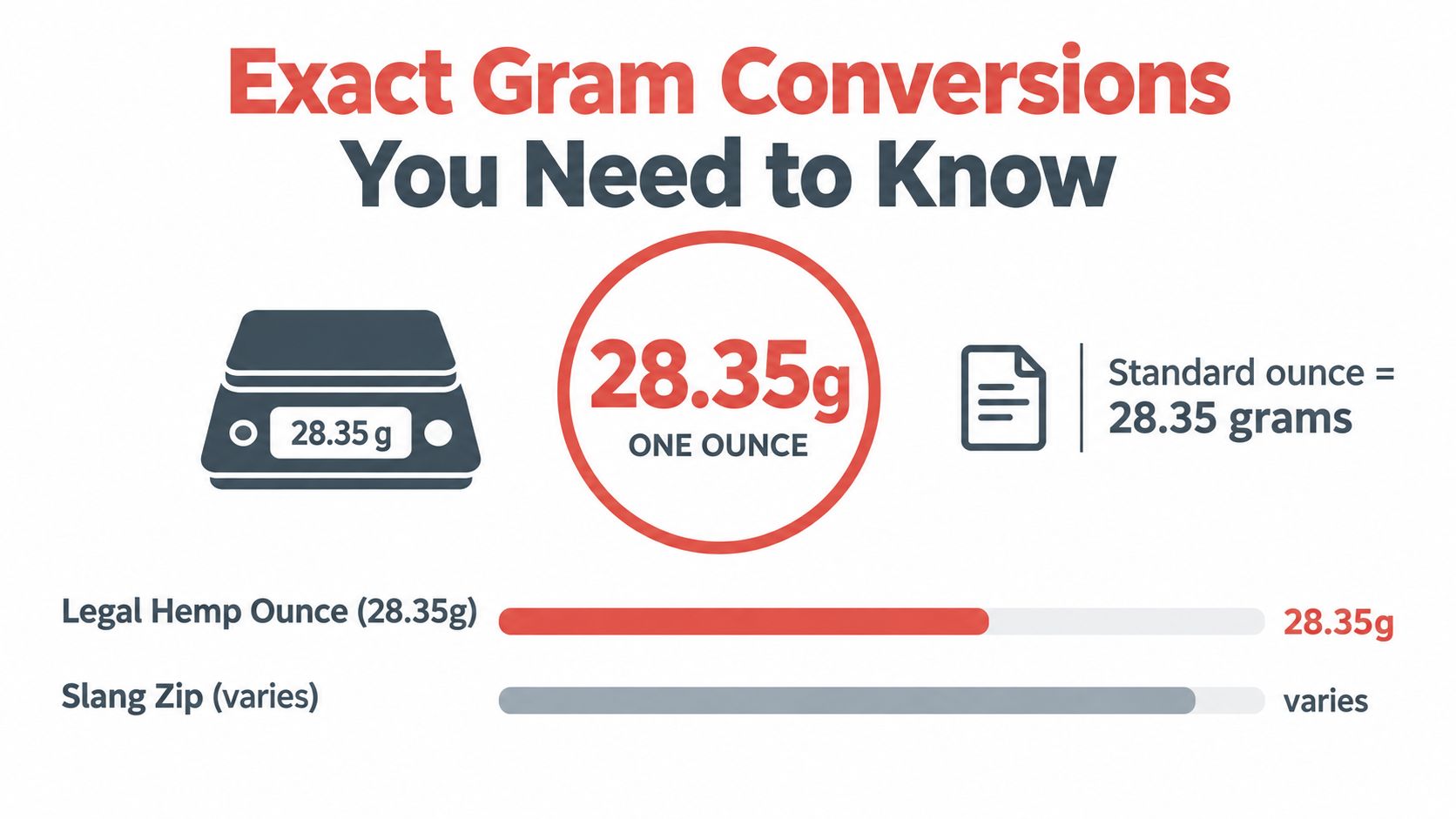
Treating a zip as exactly 28 grams creates a difference of 0.3495 grams, or roughly 1.23% of the standardized ounce. That gap rarely changes an ordinary personal purchase. It can matter when flower is weighed near a packaging threshold, when staff reconcile several packages, or when a jurisdiction applies a specific labeling rule.
Use 28 grams in everyday cannabis conversations, when comparing common package sizes, or when a product is advertised as a zip. Use 28.35 grams when recording a precise ounce conversion or checking a scale against the standard unit.
A label stating 28 grams may reflect the established cannabis-market convention rather than the exact mathematical mass of an ounce. A scale reading slightly above 28 grams does not automatically indicate a labeling error. Check whether the seller is using a rounded retail quantity, an exact ounce conversion, or a jurisdiction-specific packaging requirement.
At checkout, read the unit name and the numeric weight together. “Zip” communicates the seller's conversational meaning. The gram label identifies the quantity the package is intended to contain. If the two do not appear to match, ask whether the listed weight refers to flower alone and which convention the retailer uses.
A zip makes more sense when you place it alongside the smaller quantities used at retail. The standard ladder moves from an eighth to a quarter, a half-ounce, and then a full ounce. The exact calculations are based on multiplying each ounce fraction by 28.349523125 grams, while cannabis packaging generally uses rounded values, as set out in this NIST unit-conversion reference.
| Common term | Ounce fraction | Common retail weight | Precise fractional conversion |
|---|---|---|---|
| Eighth | 1/8 ounce | Approximately 3.5 g | Approximately 3.5437 g |
| Quarter | 1/4 ounce | Approximately 7 g | Approximately 7.0874 g |
| Half-ounce | 1/2 ounce | Approximately 14 g | Approximately 14.1748 g |
| Zip | 1 ounce | Approximately 28 g | Approximately 28.3495 g |
The table shows why shoppers can encounter slightly different figures without anyone necessarily using the term incorrectly. Retail conventions favor clean numbers, while exact conversion preserves the underlying measurement. For most buyers, the rounded figure is enough to identify the package. For inventory teams, the measured gram value is more useful than slang.
An eighth is a small purchase for someone testing a strain or buying flower infrequently. A quarter provides more room for regular use without committing to a full ounce. A half-ounce sits between routine restocking and bulk buying. A zip is the largest of these standard consumer quantities and usually represents a full ounce of the same flower, unless the retailer offers a build-your-own format.
You can also use the quantity ladder to check a menu quickly. Four conventional quarters correspond to one ounce, and two half-ounces correspond to one ounce. Eight conventional eighths also make one ounce, although the rounded retail weights may not add up to the precise mathematical conversion because each smaller package uses a practical approximation.
For a broader comparison of cannabis weight terminology, see this guide to how many ounces are in a QP. The important checkout habit is to compare the stated gram weight, not the size of the bag or the apparent volume of the buds. Dense flower can look compact, while airy flower can fill more space. Appearance doesn't determine weight.
Buying more flower can lower the effective price per gram, but a larger package isn't automatically the better purchase. The useful question is whether the lower unit price outweighs the risk of buying more than you can store or use while the product still meets your preferences.
One regulated-market dataset reported September 2026 benchmarks of $8.09 for a single gram, $20.23 for an eighth, and $47.83 for a full ounce. That dataset put the ounce at roughly $1.71 per gram, about one-fifth of the single-gram rate, according to the Headset cannabis industry statistics dataset.
Those figures illustrate the shape of bulk pricing, not a universal price list. Retail prices vary by market, product category, taxes, quality, brand, and promotion. The cited benchmark represents regulated dispensary revenue, so it shouldn't be applied automatically to informal sales or hemp-derived products.
To compare packages, divide the package price by its flower weight. The result gives you an effective price per gram and lets you compare an eighth with a quarter, half-ounce, or zip on equal terms.
A larger package can look attractive because the total ticket price may be lower than buying the same amount through multiple small packages. But the calculation only answers the financial side. It doesn't tell you whether the flower will remain fresh for your entire ownership period, whether you'll still enjoy the strain later, or whether you bought more product than your routine supports.
Use the same approach when comparing a quarter with a zip through this quarter-ounce price guide. Compare the actual package weight and final checkout price, including any listed fees or taxes, rather than relying on the advertised size alone.
A zip makes practical sense when you already know the flower suits you, have appropriate storage, and expect to use the quantity before its quality declines. It can be a poor choice when you're sampling a new strain, buying for occasional use, or choosing a product only because the unit price looks lower.
Freshness is part of value. If a bulk package dries out, loses its preferred aroma, or no longer fits your tastes, the nominal savings don't represent a real saving. Splitting the purchase across smaller quantities can cost more per gram but reduce waste and give you more flexibility.
The cheapest gram is only a bargain if you actually want that gram and can keep it in usable condition.
A practical decision framework is straightforward:
Hemp-derived flower creates another language problem because the word “zip” describes a quantity, not a guarantee that a product can be shipped or possessed everywhere. Online buyers need to separate the product's stated weight from the rules that apply to its cannabinoid profile, labeling, destination, and intended use.
A package can be described conversationally as a zip while the product page uses a numeric gram value. That numeric value is the one to check when comparing listings. For edibles and liquid products, the package may instead use milligrams or milliliters because those formats are measured by cannabinoid content or volume rather than dry flower weight.
Start with the product page. Confirm that it identifies the product as flower, states the net weight, provides current testing information where applicable, and explains any shipping exclusions. Don't assume that a listing available online can be delivered to every address.
Next, check your jurisdiction. State rules can differ, and shipping eligibility can change independently of the slang used by customers. A “zip” isn't a legal category that overrides state restrictions, age requirements, labeling rules, or carrier limitations.
For THCA products in particular, read the product documentation instead of inferring compliance from the package size. This guide to whether THCA is legal to ship is a useful starting point, but buyers should still confirm current rules for their own location before ordering.
A scale can tell you how much flower is present. It can't tell you whether the product may legally be shipped to your state, whether the label satisfies local requirements, or whether the laboratory documentation applies to the exact batch you received.
Keep the questions separate:
That process works better than treating “zip” as proof of legality or assuming that a familiar cannabis term carries the same meaning in every market.
A package label is the starting point, not a substitute for a careful measurement when you need to verify contents. Use a digital scale on a stable, level surface, keep air movement and vibration away from the weighing area, and let the scale reset before placing the flower on it.
Weigh the empty container first if you're checking a bag or jar. Then place the flower on the scale without pressing on the platform, and account for the container's weight so you're reading the net flower weight, not the combined weight of flower and packaging.
A calibrated scale is more useful than visual estimates. Bud size, density, and shape can change how full a bag looks, but they don't establish its weight. Use the rounded market convention for ordinary comparisons, and keep the precise ounce conversion in mind when a business record, threshold, or quality-control check calls for greater accuracy.
Melt offers legal hemp-derived cannabinoid products, including THCA flower listed in gram-based quantities, along with disposables, prerolls, and edibles supported by third-party testing and lab-report transparency. Visit Melt to compare product weights, review available documentation, and check shipping eligibility before placing an order.
Your cart is currently empty.