


Free Shipping All Orders Over $95
You're comparing cannabis products that look almost interchangeable. Then you open the jars: one suggests freshly twisted lemon peel, while the other brings to mind ripe berries and something sharply fuel-like. Those differences are worth paying attention to, but they tell you more about a product's sensory character than how it will make you feel.
That first impression can become your reference point for the whole product. You might remember a particular flower as the one with the orange-rind opening or the earthy finish, even when you can't remember its strain name. Terpene flavors give adult consumers a useful vocabulary for those distinctions.
Cannabis has a remarkably varied aromatic chemistry. Scientific reviews report more than 100 distinct terpenes across cannabis varieties, while profiling of eight cultivars detected 48 individual terpenes, according to this review of cannabis terpene diversity. That variety helps explain why cannabis doesn't have a single, uniform smell.
The contrast between citrus and berry is a useful starting point for describing what you notice.
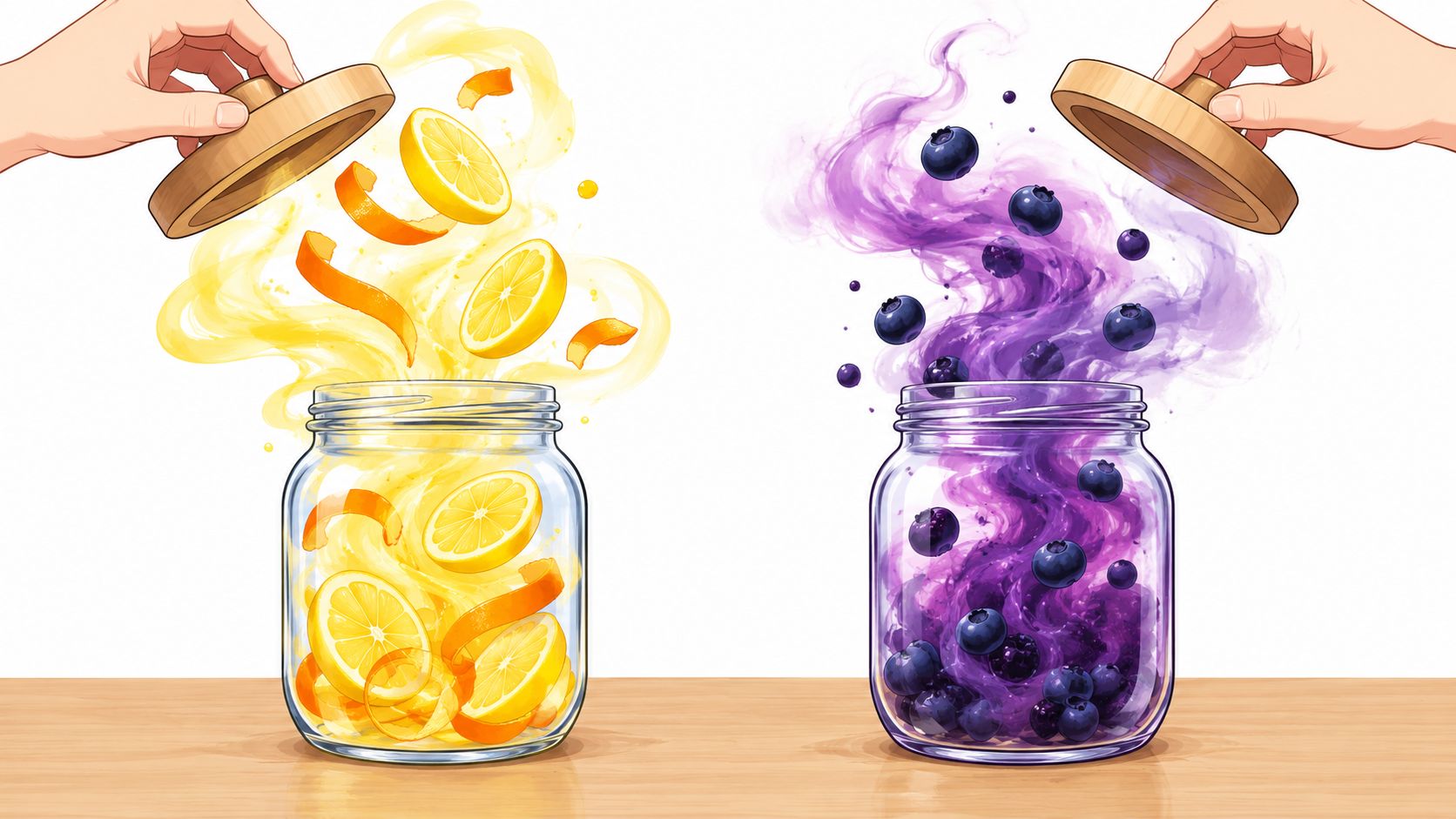
For practical comparison, treat a product's aroma as a sensory fingerprint. Ask what makes it recognizable, not merely whether it smells strong. A delicate floral opening followed by dry wood can be more distinctive to you than an overwhelmingly pungent profile.
Practical rule: Choose flavor language that helps you recognize a product again, rather than language that merely makes it sound impressive.
This approach also keeps an important boundary clear: sensory descriptions help you express what you enjoy. They aren't dependable promises of relaxation, energy, or any other effect.
Terpenes are aromatic compounds that contribute to cannabis fragrance. Think of them as components in an aroma toolkit, not complete flavors bottled inside individual molecules. A recognizable cannabis profile comes from a mixture, much as a seasoning blend tastes different from any ingredient considered alone.
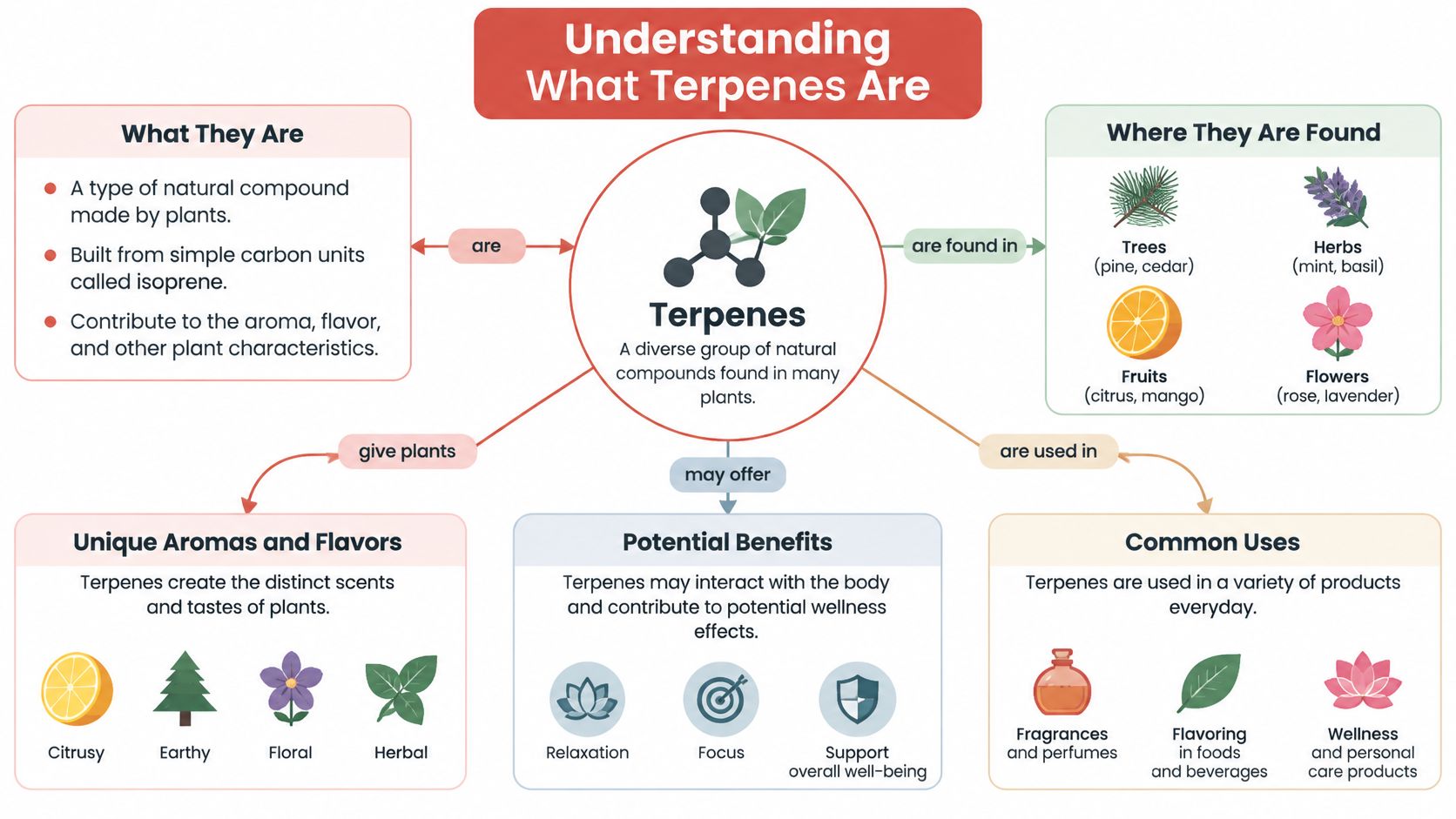
The terminology becomes easier when you separate chemical categories from sensory descriptions. Monoterpenes, sesquiterpenes, and oxygenated derivatives are chemical groupings. Citrus, herbal, floral, and earthy are descriptions of what someone perceives. They answer different questions.
This concept map offers a visual introduction to the terminology.
A terpene panel is best understood as an ingredient-level description of part of the aroma system. It can identify compounds and their measured proportions. It doesn't translate automatically into a complete tasting note.
| Label language | What it helps describe | What to avoid assuming |
|---|---|---|
| Dominant terpene | The most abundant reported terpene | That it supplies the entire flavor |
| Total terpenes | The combined measured amount | That a larger value means better taste |
| Terpene profile | The measured mixture and proportions | That it captures every sensory contributor |
| Flavor notes | The intended sensory description | That everyone will perceive identical notes |
For a plain-language analogy, consider a bowl of fruit salad. Knowing the largest ingredient tells you something useful, but you'd still want to know what else is present and how the ingredients balance. Cannabis chemistry deserves that same attention to the whole mixture.
You don't need to memorize every compound before shopping. Start by learning how a label's chemical information differs from its descriptive language, then compare both with your own observations. That distinction makes technical information useful without asking it to do more than it can.
Would you rather smell a freshly peeled orange, a bowl of ripe berries, or a rain-damp forest path? Those comparisons are more useful for choosing among flavor families than vague descriptions such as smooth or premium.
The following vocabulary is a sensory reference, not a set of chemical formulas. Use the examples as prompts for your own descriptions rather than as claims about what every product in a category contains.
| Flavor family | Sensory cues to consider | A useful comparison question |
|---|---|---|
| Citrus | Bright peel, zest, sharp rind | Is it closer to fresh juice or bitter peel? |
| Berry | Ripe fruit, jam, sweet skin | Does it suggest fresh berries or cooked preserves? |
| Diesel or gas | Fuel-like, pungent, chemical | Is that impression dominant or a background accent? |
| Earthy | Damp soil, dry wood, forest floor | Does it feel moist and organic or dry and woody? |
| Floral | Soft petals, perfumed herbs | Is it delicate or strongly perfumed? |
| Pine | Resin, needles, forest-like freshness | Does it suggest green needles or sticky resin? |
| Tropical | Juicy, ripe, mixed-fruit impressions | Can you name a fruit, or is it a broader association? |
You don't have to choose between fruit and gas if you perceive both. A useful tasting note could describe a berry-like opening with a pungent background and a woody finish. That communicates more than assigning the product to a single category.
Likewise, citrus can mean several different things in your notes. Lemon zest, orange flesh, and grapefruit rind are helpful reference points because they distinguish sharpness, juiciness, and bitterness without requiring specialist language.
Your description doesn't need to sound sophisticated. It needs to help you remember what you actually noticed.
Keep aroma words separate from literal ingredients, too. A berry-like description doesn't, by itself, tell you whether a product contains added berry flavoring. Check the ingredient list rather than using the tasting note as an ingredient declaration.
When comparing products, write your first impression before reading elaborate marketing descriptions. Then compare your notes with the label. Treat disagreement as useful information about your preferences, not proof that your palate is wrong.
Open a jar and inhale. The first thing you register might be lemon peel; a second later there's damp earth underneath, then something faintly sweet at the edges. None of that arrived as separate molecules. Your nose received a blended signal, and your brain sorted it into recognizable impressions on the fly.
That sorting is why aroma and taste reward separate attention. Aroma is the scented part of the experience, picked up through the nose before and during consumption. Taste and mouth sensations, including bitterness, astringency, and the coating that lingers after an exhale, add dimensions that smell alone can't carry. When you describe a product as juicy, pungent, or dry on the finish, you're reporting the combined signal.
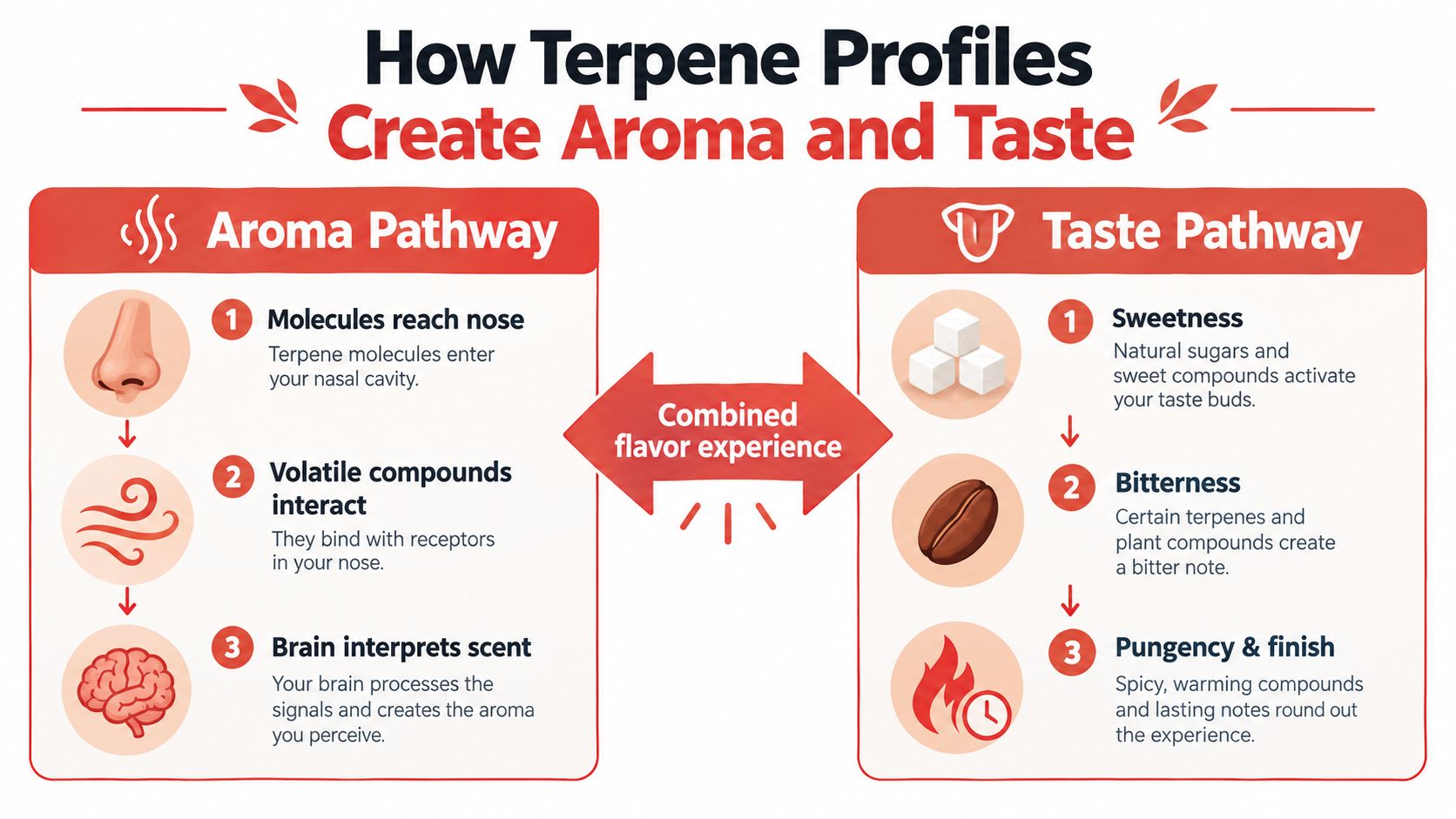
A cannabis aroma works like an orchestra. The loudest instrument draws your ear, while the quieter ones make the piece recognizable. A cultivar dominated by a single terpene can still smell distinctive because minor compounds shape the background, which is why a sensory fingerprint describes a product better than a list of its top three molecules.
A 2023 study put numbers on that gap: total volatile concentration correlated with an exotic aroma score at only r = 0.03, while flavorant relative weight percentage showed a stronger correlation of r = 0.58, as reported in this research on cannabis aroma and flavorants. Measured abundance alone didn't predict that particular sensory score.
So when a lab panel reports total terpene content, read the figure as a description of quantity.
The video above approaches the same aroma-versus-flavor relationship from another angle.
Two habits sharpen your own reading of a profile. Score intensity and character separately: "loud" tells you how strong the smell is, while "citrus peel with a dry herbal finish" tells you what it is. And remember that a quieter profile may suit your preferences well, since the largest number on a terpene panel only reports what was measured in that sample.
Two products labeled with the same citrus-forward cultivar can smell and taste different. The cultivar name offers a clue, much like a recipe title, while growing conditions and the steps after harvest shape the finished result.
Genetics influence which aromatic compounds a plant can produce. Cultivation and processing affect how those compounds develop and remain in the product. Aroma also comes from more than terpenes: aldehydes, ketones, esters, and sulfur compounds contribute to scent, while flavonoids and phenolics can influence taste. This broader chemistry is discussed in research on plant chemistry and sensory interpretation.
A greenhouse-grown flower and a vape made from extracted or formulated material may share a cultivar name, yet offer different sensory fingerprints. The growing environment is one part of that story. A guide to growing cannabis in a greenhouse can help explain how cultivation context varies, but the finished product is what your senses encounter.
To compare products, check whether the description and testing apply to the item you're considering. Flower, extracts, and formulated products have different production paths, so their tasting notes may not match. A citrus note might come across as sharp peel and herbs in flower, then as sweeter fruit in a vape.
For repeat purchases, record the product format alongside the cultivar name. Keep the producer's description separate from your own notes. That way, you can tell whether you're looking for a familiar strain label, a particular aroma, or the character of a specific finished product.
A citrus scent can bring to mind alertness, while a woody aroma may feel calming. Those associations can guide what you enjoy, but flavor alone can't predict a particular high. A terpene profile is more like a sensory fingerprint than an effects label: it describes a product's aromatic character, not a guaranteed response.
Research on terpene-cannabinoid synergy has not established that terpenes change cannabinoid activity at cannabinoid receptors. Some findings remain preliminary or come from animal studies, as summarized in this discussion of evidence for the entourage effect. So treat claims that a specific flavor will produce a specific feeling with care.
The distinction is practical. Aroma helps you choose a product whose character appeals to you. The experience also depends on factors such as cannabinoid content, dose, how you consume it, and individual response. Even familiar labels like “uplifting” or “relaxing” describe expectations, not outcomes everyone will share.
Expectation can shape how you approach an experience, too. A scent linked in your memory to a pleasant occasion may bring that association back. The memory doesn't prove the aroma compound caused the feeling.
For a closer explanation of how terpenes work, keep the chemistry in perspective: aroma can help identify a product's sensory character, but it cannot promise its effects. Your own notes can help you recognize preferences over time. Record the product and format, what you noticed, and the circumstances, then treat those observations as personal experience rather than a rule for everyone.
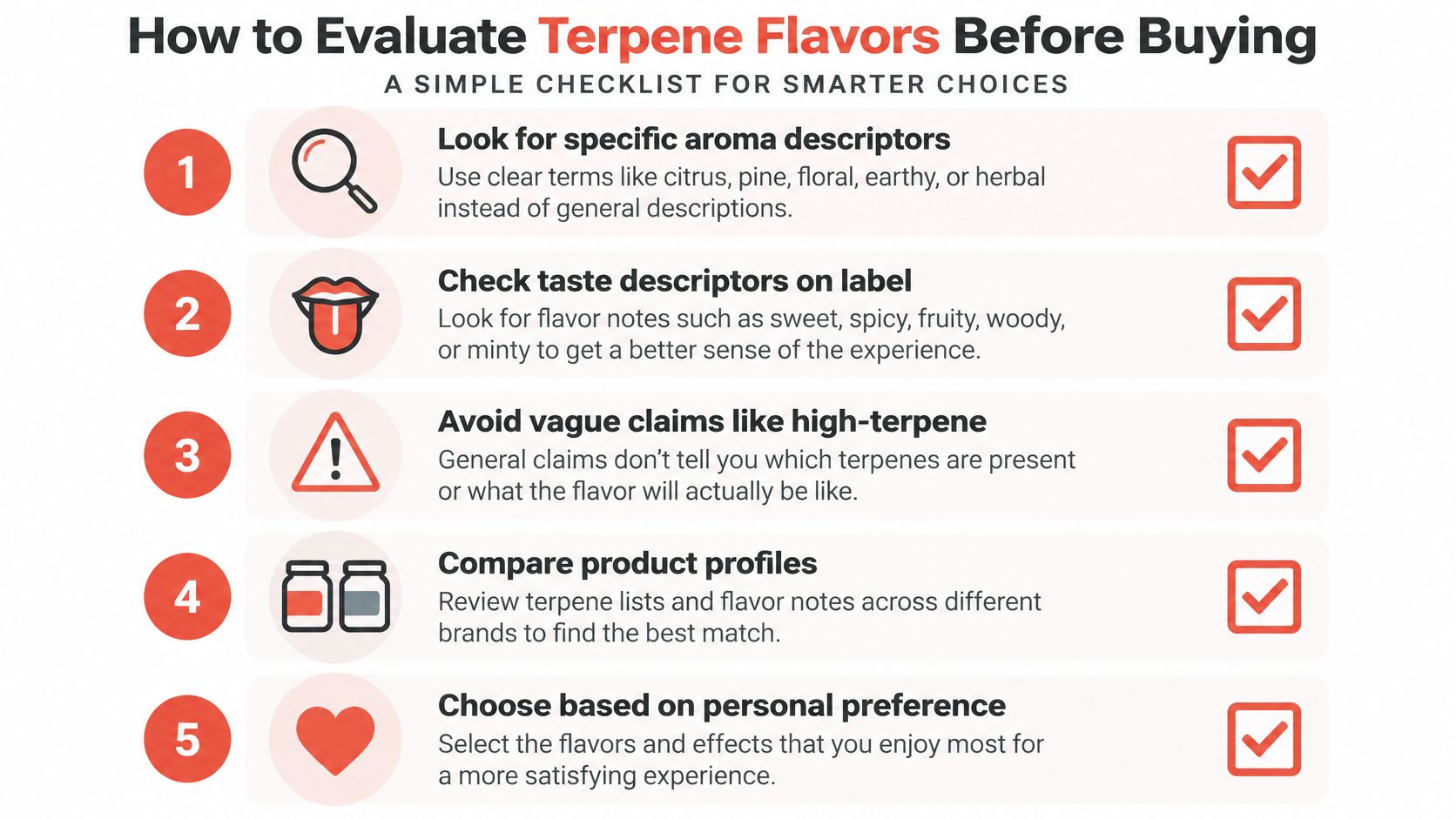
Start with the description you can use. Fresh orange peel with a dry herbal finish gives you something to compare; premium terpene experience doesn't. Look for specific aroma and taste language, then check whether the available product information supports a clear comparison.
A compact checklist can keep the purchase focused on preference rather than hype.
Read a certificate of analysis as a record of specified tests, not a complete review of the experience. Check the product identity, batch information, and analytes listed. This guide to reading a certificate of analysis can help you approach the document more deliberately.
Before opening, inspect the seal and packaging rather than expecting to smell through an airtight container. Once opened, note the first aroma; during intended use, record the main impression and finish. Compare your observations with the label without forcing a match.
Storage is part of a flavor-conscious purchase. Review evidence recommends opaque, airtight containers, temperatures below approximately 25 °C, relative humidity near 50–60%, and minimized oxygen exposure for preserving cannabis inflorescence, as discussed in this study of terpene retention during storage.
Apply flower guidance to flower, and follow manufacturer instructions for formulated products and devices. Don't assume a storage recommendation transfers unchanged across every format.
The most useful buying record is simple: what you expected, what you noticed, and whether you'd choose it again. That gives you a personal selection method rather than a ranking based solely on analytical totals.
California-crafted flavor positioning is most useful when you translate it into specific shopping questions. What does bright mean in this product's description? Does juicy refer to an aroma impression, a fruit-flavored formulation, or both? Look for concrete answers instead of treating a regional identity as a flavor guarantee.
For strain-specific products, approach cultivar identity as something to evaluate through the finished item. Flower, prerolls, devices, and gummies invite different comparisons, so don't expect one tasting vocabulary to capture them equally well.
A sensory-first approach lets you appreciate a brand's style without surrendering your own judgment.
Transparent information matters most when it helps you answer a specific question. A lab report can support your assessment of the tested product, while your tasting notes answer whether its character suits you. Neither document should be asked to guarantee an identical experience for every adult.
A useful buying standard: Know what the label describes, what the report measures, and what you personally enjoy.
Keep legal availability separate from sensory appeal, too. Review the current shipping restrictions and product requirements for your location before ordering. An appealing profile doesn't remove the need to check whether that product is available to you.
Your goal isn't to find a universally superior terpene flavor. It's to recognize the profiles you enjoy, choose products with clear information, and keep realistic expectations about what flavor can tell you.
For adults comparing terpene flavors, Melt offers an age-gated hemp-derived lineup and highlights third-party testing, transparent lab reports, and fast, discreet shipping. Visit the lineup, compare the available product descriptions and testing information, and choose a sensory profile that fits your preferences rather than an effects promise.
Your cart is currently empty.