


Free Shipping All Orders Over $95
"Euphoria" describes a possible effect, not a standardized strain, and reported products under that name range from roughly 9 to 10% THC with comparatively high CBD to about 15 to 20% THC and 9% CBD, so your batch's tested numbers will shape the experience far more than the name on the jar. That distinction matters when you're standing at a counter or scrolling a menu and trying to predict your evening from a single word. A label can tell you what a seller hopes you'll feel. It can't tell you how much THC you'll consume, how much CBD comes with it, or how your own tolerance will respond.
You're scanning a menu, you see Euphoria, and your brain fills in the rest. Happy, bright, social, maybe a little floaty. That's a reasonable guess, and it's also where most disappointment starts, because you're treating a marketing name like a recipe.
A strain name isn't a standardized chemical profile. Growers can produce different phenotypes from related genetics, harvests vary, and two products sold under the same name can test quite differently. When people talk about Euphoria strain effects, they're usually describing a hoped for mood, not a fixed formula you can count on across brands, states, or batches.
Your experience comes from a short list of variables working together.
None of those factors live in the strain name. They live in the lab report and in how you use the product.
Treat the name as a nickname. Treat the tested chemistry as the actual description.
That shift protects you in both directions. You won't assume a mild, balanced batch will deliver a strong celebratory high just because the jar says Euphoria. You also won't assume a potent batch is safe for a casual daytime plan because the word sounds light and pleasant. Once you stop asking what Euphoria does in general and start asking what this specific product contains, your expectations get much more accurate, and your sessions get easier to plan.
Euphoria from cannabis isn't magic, and it isn't created by a clever strain name. It's an acute response that starts when delta-9-THC activates CB1 receptors in your central nervous system.
Think of CB1 receptors as switches that sit on nerve cells. When THC binds to them, it changes how those cells communicate. That signaling influences dopaminergic reward pathways, including an area called the nucleus accumbens, which helps your brain register pleasure, importance, and reward.
When reward signaling shifts, ordinary input can feel more vivid. A song sounds richer, a joke lands harder, colors seem warmer, and your sense of well-being rises. That cluster of changes is what people usually mean by euphoria, uplift, or a head high. It's not one single sensation. It's pleasure, salience, sensory intensity, and relaxation arriving together.
Evidence for that receptor link is direct. Cannabis-related euphoria can be reduced by the CB1 antagonist rimonabant, which supports the idea that the high depends on CB1 activation rather than on branding or folklore.
That mechanism also explains why more isn't always better. Stronger CB1 activation can raise intensity, but past your personal comfort zone the same system can produce anxiety, paranoia, perceptual disruption, and impaired attention. The switch doesn't only control the pleasant parts. It influences thinking, memory, coordination, and time perception too.
Route and tolerance change how hard and how fast that switch gets pressed. An inhaled dose reaches your brain quickly, so you notice the shift sooner. A frequent consumer may need more THC to get the same receptor effect, while a newcomer can overshoot with an amount an experienced friend barely notices. The practical lesson is simple. Intensity follows THC exposure at CB1 receptors, not the poetry on a package, and careful titration is how you stay on the pleasant side of that curve.
A certificate of analysis, or COA, looks intimidating the first time you open one. You don't need to memorize every line. You need to find the few numbers that predict intoxication.
Start with THC and CBD. Health Canada identifies delta-9-THC as the cannabinoid responsible for the cannabis high, while CBD doesn't itself produce intoxication, and CBD may reduce some THC effects when it's present at equal or higher amounts. That's why ratio matters as much as raw THC percentage.
Many hemp-derived flowers list THCA instead of delta-9-THC. Raw THCA doesn't intoxicate you. When you heat it by smoking or vaping, it converts to delta-9-THC through decarboxylation. A high-THCA flower can therefore deliver a strong high after heating even if the unheated product meets hemp limits. CBDA works in a parallel way, converting to CBD with heat.
A controlled comparison makes the ratio point concrete. Groups received 24% THC/1% CBD, 9% THC/10% CBD, or 1% THC/23% CBD, and the THC-dominant group reported more elation but also more anxiety and paranoia.
Terpenes such as myrcene, limonene, caryophyllene, and terpinolene drive aroma and flavor. They can make a batch smell citrusy, peppery, floral, or earthy, and that character affects how you experience a session. Current human evidence doesn't justify treating one terpene as a dependable on switch for euphoria, so use them as aroma cues and personal preference notes. If you want the mechanics in more depth, read about how terpenes work in cannabis products before you shop by terpene name alone.
The word chemotype means the chemical type of a product. It's a more useful word than strain for shopping, because it points to tested contents.
Listings under the Euphoria name don't agree with each other. Reported profiles range from roughly 9 to 10% THC with comparatively high CBD to approximately 15 to 20% THC and 9% CBD. Those aren't minor rounding differences. They describe products that can feel noticeably different at the same dose.
| Attribute | Balanced Profile | Higher-THC Profile |
|---|---|---|
| Overall feel | Subtler, calmer, more relaxing | Stronger, brighter, more intense |
| Mood and social energy | Gentle uplift, easier conversation | More euphoria, energy, and talkativeness |
| Body feel | Light relaxation | Heavier body sensation at larger doses |
| Risk at high doses | Lower, though not zero | Greater chance of dizziness or paranoia |
| Best fit | Newer consumers, daytime plans | Experienced consumers, planned downtime |
A balanced batch gives CBD more room to moderate THC. Many adults describe that kind of session as clear enough for a walk, music, or a small gathering. You're less likely to feel overwhelmed, and you're also less likely to get a pronounced peak.
A higher-THC batch presses the CB1 system harder. Pleasure and sensory intensity can rise, and so can the unwanted side. That trade-off is normal, not a product defect. Reading about different types of highs and how they vary can help you put words to which end of that range you enjoy.
Use the table as a thinking framework, not a promise. Cultivation, phenotype, storage, and your own biology still intervene. The only version of Euphoria that matters for your plans is the one described on the COA for the batch in your hand.
Timing confuses more people than potency does. The same chemistry feels manageable when you expect the curve and alarming when you don't.
Inhaled cannabis acts quickly. You usually notice a change soon after smoking or vaping, effects build to a peak, then they taper. Because feedback arrives fast, you can take a small amount, wait, assess, and decide whether you want more. That feedback loop is the main safety advantage of inhalation.
Edibles and drinks must pass through digestion first, so onset is slower and the total experience lasts longer. A full stomach, your metabolism, prior use, and tolerance can all shift the curve. The most common edible mistake is redosing during the quiet period because you assume nothing is happening. Then both doses arrive together.
Practical rule: With ingestibles, boredom during the wait is not evidence that the dose failed.
Dose also changes the shape of the experience as time passes. The expected profile can be biphasic, with lower exposure producing mood elevation and calm while increasing exposure produces sedation, altered time perception, anxiety, or paranoia. In plain terms, the early part of a strong session can feel bright and social, and the later part can feel heavy or uneasy if you've taken too much.
Plan around that arc. Don't start an edible right before you need to drive, work, or care for someone else. Don't combine cannabis with alcohol while you're learning a new product, because you'll lose track of which substance caused what. Give a new batch one controlled session at home, note when you first felt it and when it peaked, and you'll have a personal timeline that's far more useful than any generic chart.
Match the batch to the plan, not the other way around. That single habit prevents most bad sessions.
The visual below sorts common plans by potency so you can see the logic at a glance.
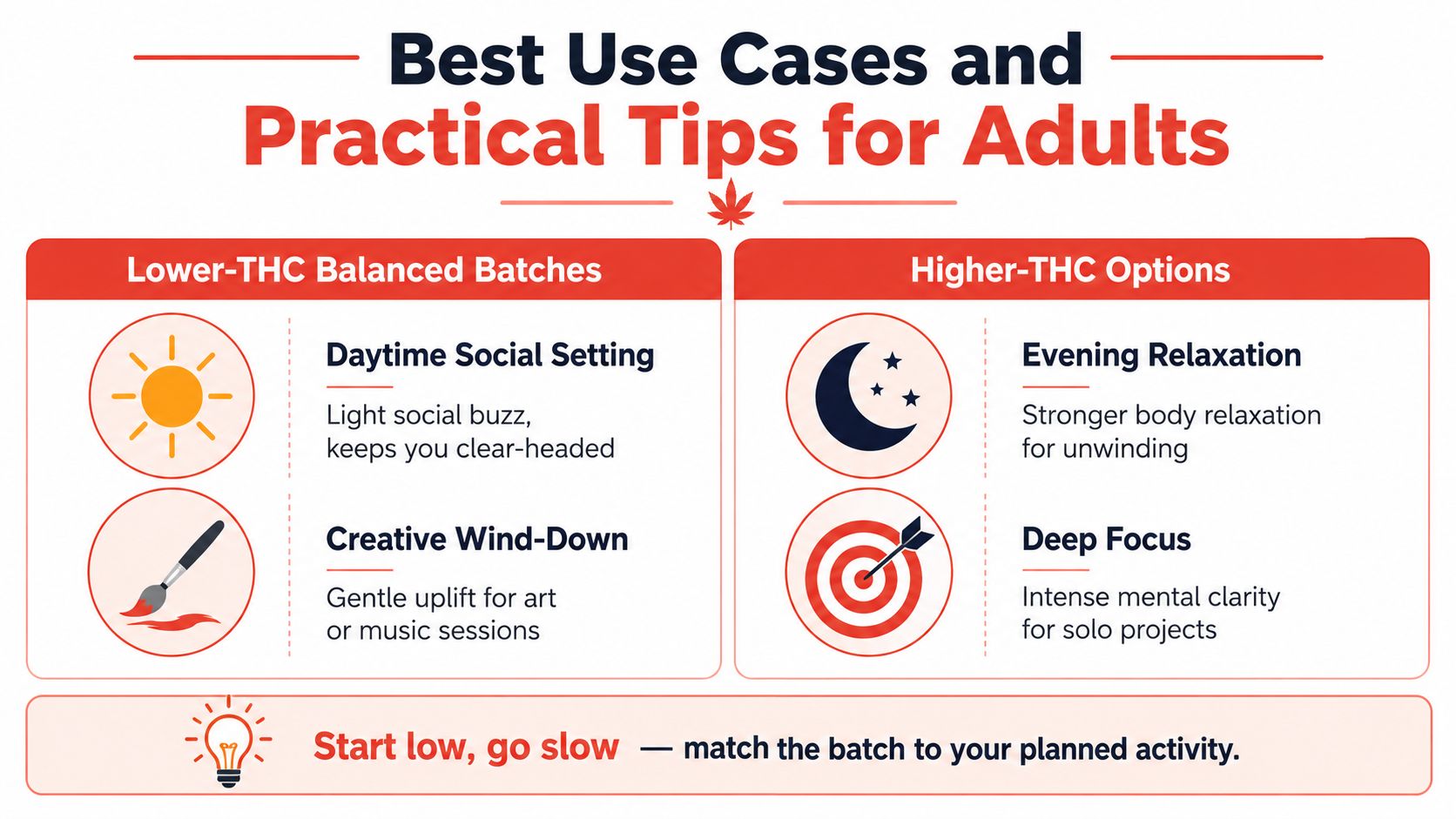
A lower-THC, balanced batch fits a daytime social setting or a creative wind-down where you still want your wits about you. A higher-THC batch belongs in the evening, at home, with no obligations and no driving, especially if you're still learning your tolerance. Experienced consumers sometimes choose stronger products for a focused solo project, but that's a preference built from personal records, not a starting point.
Keep expectations grounded in what people report. In a 2024 survey of 1,028 medical cannabis users, euphoria was reported by 6.7% of participants, while dry mouth at 19.5%, increased appetite at 17.1%, and tiredness at 13.0% were more common. That doesn't mean euphoria is rare for you personally. It means you should also plan for water, food, and getting sleepy.
The short video below walks through pacing a session in a way that pairs well with those habits.
When you shop, brands such as Melt publish third-party lab reports and list strain-specific terpene profiles for products such as THCA flower and disposables, which gives you the tested numbers you need for this kind of planning.
Most strain myths survive because they're simple. Replacing them doesn't require cynicism. It requires a better model.
Myth one, the name tells you the effect. You've already seen why that fails. One name can cover balanced and higher-THC chemotypes, so the name alone can't predict intensity. Ask for the batch COA instead of debating what Euphoria is supposed to do.
Myth two, higher THC always means a better time. Higher THC means stronger CB1 activation. For some adults that's more pleasure. For others it's racing thoughts, dizziness, or an evening spent waiting to feel normal. Better means better matched to your tolerance and your plans.
Myth three, one terpene guarantees euphoria. Limonene smells bright and citrusy, and many people enjoy limonene-forward products. Enjoyment isn't proof that the terpene caused the mood lift. THC dose and ratio still do the heavy lifting, and human evidence doesn't support using a single terpene as a reliable predictor.
Myth four, sativa means energy and indica means sedation. Those words originally described plant types, not guaranteed effects in modern hybrid products. Two products both labeled sativa can test very differently, and a so-called indica can feel alert at a low dose. The label can stay on the jar for tradition. Your decisions should come from tested cannabinoid ratios, dose, route, and your own journal.
You don't have to correct every friend who repeats these ideas. Just upgrade your own shopping questions. Instead of asking whether a strain is uplifting, ask how much THC and CBD the batch contains, how you plan to consume it, and how much you took last time something felt right.
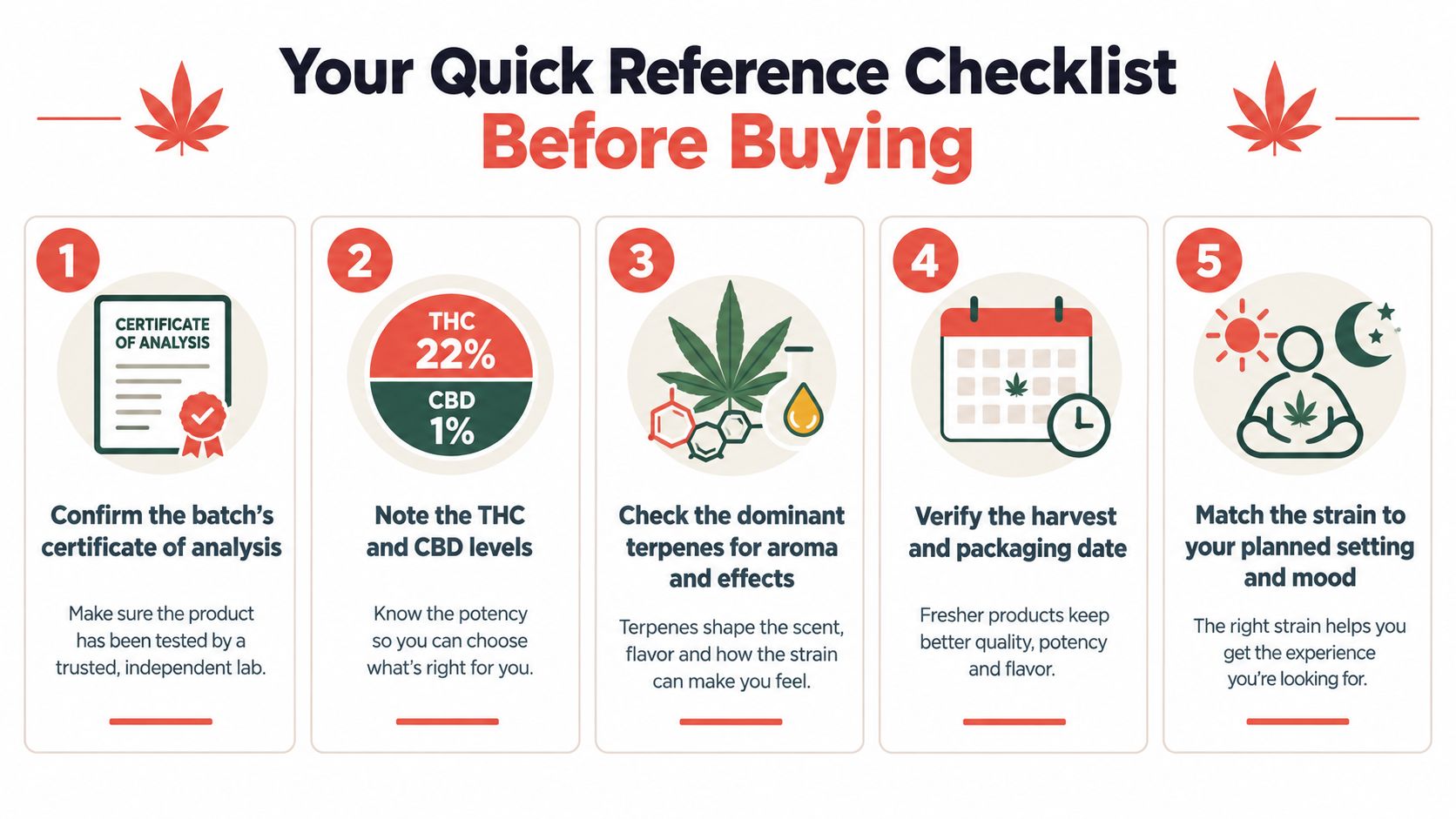
Screenshot this routine and use it before your next purchase. It takes a couple of minutes and it replaces guesswork.
The checklist below condenses the same five checks into a visual you can keep on your phone.
Your goal isn't the strongest possible high. It's the most predictable fit for the moment you have in mind. When you buy by chemotype, dose by route, and learn from your own notes, Euphoria strain effects stop being a vague promise and become something you can plan around.
If you're ready to shop by tested numbers instead of strain names alone, explore THCA flower, disposables, prerolls, and edibles with published third-party lab reports at Melt. Check the COA for the batch you're considering, match its THC and CBD profile to your plans, and start your first session low.
Your cart is currently empty.