


Free Shipping All Orders Over $95
You're probably doing what most first-time buyers do. You search for THC-P for sale, open five tabs, and immediately run into a mess of huge potency language, slick packaging, random legality disclaimers, and checkout pages that look far less serious than the product they're selling.
That disconnect is the problem. THC-P is sold online with the ease of a casual hemp item, but it should be evaluated like a regulated intoxicant. If you buy it the way you'd buy CBD, you're taking on risk you may not even see yet.
The category is also running into a hard legal wall. In the United States, Congress changed the federal hemp definition in 2025 to a total-THC standard, with the new rule taking effect on November 12, 2026, and it also set a 0.4 milligram total THC per container limit for finished hemp-derived consumer products. That change sharply narrows the space for many high-potency hemp items marketed as THC-P, and products over the cap can be treated as marijuana under federal law after the effective date, according to the Congressional Research Service summary of the revised hemp framework.
If you're going to buy in this category, buy like someone who expects rules to tighten, labels to be imperfect, and weak vendors to disappear.
A first-time buyer comparing two THC-P vape listings can miss the difference in under a minute. Both pages promise heavy effects. Both show glossy packaging. Only one gives you a batch-linked COA you can read before paying, explains where it will not ship, and runs more than a weak “I'm 21+” checkbox at checkout.
That gap is why shopping for THC-P for sale feels shaky.
The product category is being sold with the speed and polish of ordinary hemp ecommerce, but the buyer is carrying the risk. The biggest mistakes usually happen before the order is placed. A vendor posts a lab report that does not match the exact batch. A product page says “federally compliant” without addressing the November 2026 total-THC standard. Checkout accepts an age affirmation but does not appear to verify age in any serious way.
THC-P sits in a part of the market where controls vary hard from site to site. Some sellers act like they are handling an intoxicant that will face tighter scrutiny. Others act like they are moving flavored hemp candy.
That difference shows up in plain sight:
Here is the rule I recommend. If a THC-P listing makes the product sound fun first and controlled second, close the tab.
The risk is not just bad labeling. It is timing.
Between now and November 12, 2026, a lot of THC-P listings will still look routine. That can fool buyers into treating product availability as proof of legitimacy. It is not. A seller can have inventory online today and still be unprepared for the total-THC framework that will narrow what can be sold as hemp after the federal change takes effect.
So do not judge a vendor by how easy it is to add a cart to checkout. Judge the seller by whether it behaves like scrutiny is coming. The safer vendors already show their work. They make testing easy to verify, explain restrictions before payment, and treat THC-P like an adult-use intoxicant, not a casual novelty.
THC-P is a naturally occurring cannabinoid found in Cannabis sativa, but it entered the commercial conversation only recently. That late discovery helps explain why product listings spread faster than safety research. A 2019 report described THC-P as a naturally occurring cannabinoid and found that it binds to the human CB1 receptor about 33 times more strongly than delta-9 THC in laboratory testing, according to the 2019 overview summarizing the original scientific finding.
Here's the structural difference people should care about. THC-P has a longer side chain than delta-9 THC, and that matters because it changes how tightly it binds at cannabinoid receptors.
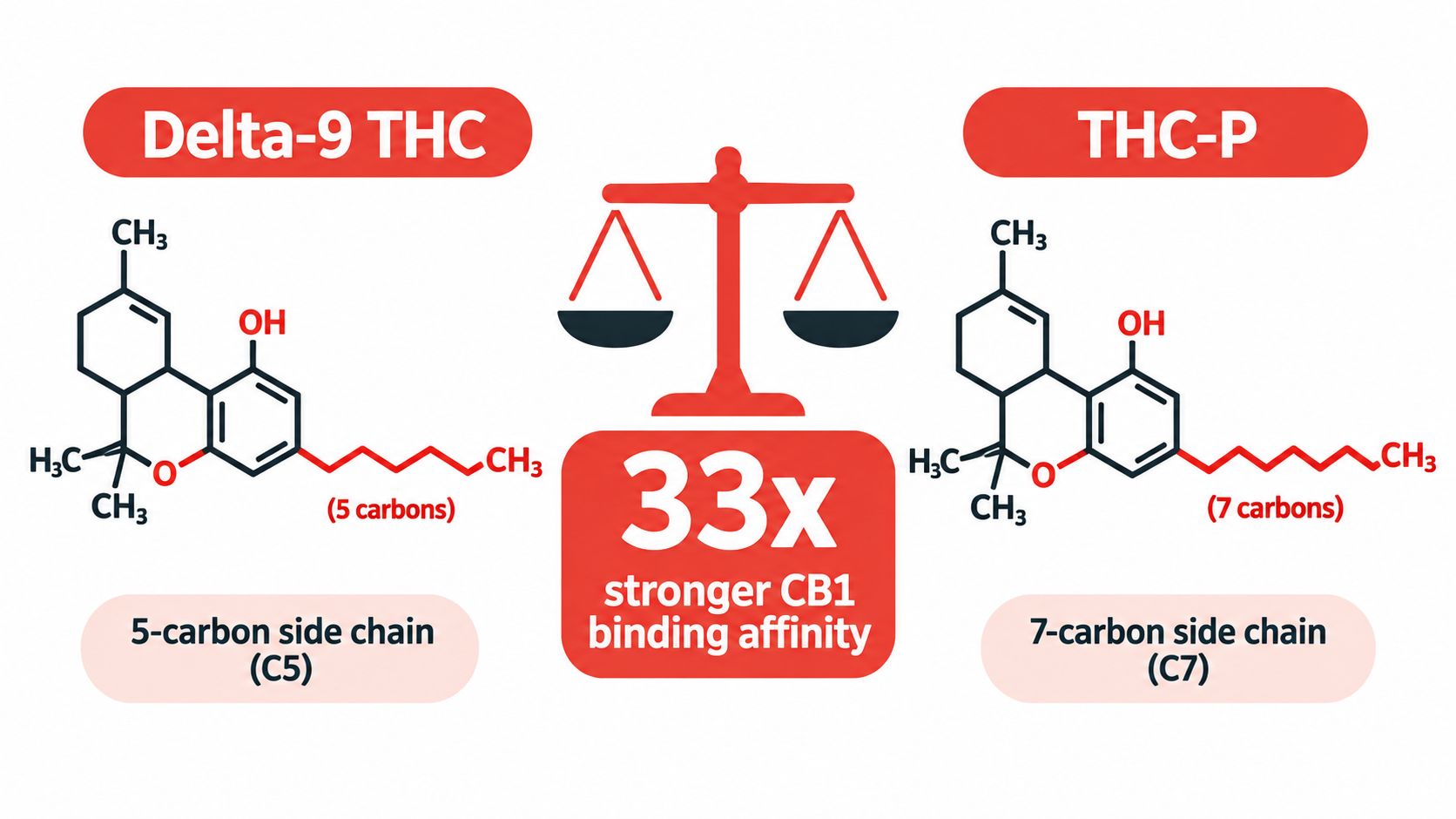
The technical paper is more precise than most product pages. The 2019 phytocannabinoid study reported a Ki of about 1.2 nM at human CB1 for THC-P versus roughly 40 nM for delta-9 THC, implying about 33x stronger binding in that in vitro assay, and it also reported about 6.2 nM at CB2 for THC-P in the same testing, as shown in the full study on PubMed Central.
That does not mean the-world high is “33 times stronger.” It means THC-P shows unusually strong receptor affinity in the lab. For a buyer, the practical implication is simpler: treat dosing claims with skepticism and assume you can overshoot your comfort zone fast.
If you want a basic primer before comparing products, Melt has a plain-language explainer on what THC-P is.
You'll also see names that look close enough to fool rushed buyers. THC-P is not the same thing as delta-8 THC, and it's not the same thing as THCP-O. If a seller mixes terms loosely, that's not a harmless typo. It's a sign they may not understand the formula they're selling.
The safest interpretation is this:
A short overview helps illustrate the distinction in video form:
Buyers often frame potency as a reason to purchase. I think that's backward. With THC-P, potency is a reason to slow down before you purchase.
You find a THC-P product today, the site takes your payment, and the package ships. That does not tell you much about whether the product belongs in a stable legal category.
The question is whether the seller is building around the scheduled federal shift to total THC. Under the revised hemp framework described earlier, the standard is scheduled to change in November 2026, and finished hemp-derived consumer products face a 0.4 milligram total THC per container limit. For THC-P listings, that changes the buying calculus now, not later.
Older hemp selling logic gave vendors more room to market intoxicating products by focusing narrowly on delta-9 THC. The scheduled total-THC approach cuts that room down fast. A product that looks compliant under the old framing can become much harder to defend once regulators and carriers focus on total THC across the finished item.
For buyers, this means current availability is a weak signal. A listing can be live today and still be part of a short-term inventory strategy with no clear path under the scheduled 2026 rules.
Sellers generally have only a few options:
That last option is the one to watch for. If a vendor sells THC-P like a novelty and says nothing about total-THC exposure, treat that as a compliance warning.
| Factor | Earlier hemp framework | Scheduled post-shift framework |
|---|---|---|
| Main federal measuring concept | Delta-9 THC focus | Total-THC framework |
| Treatment of high-potency THC-P hemp items | More room in the hemp channel | Far less room |
| Finished product cap | Less focused on a finished per-container total THC cap | 0.4 milligrams total THC per container |
| Buyer takeaway | Wide availability can create false confidence | Reformulation, restrictions, or removals become more likely |
The safest buyer does not stop at "Is this for sale?" Ask whether the product page, labeling, and compliance language show any sign that the company is preparing for the scheduled total-THC standard.
A serious seller should already act like THC-P is an intoxicant under scrutiny. That means tighter labeling, clearer shipping limits, stronger age controls, and batch documents that can survive inspection. If the company still sells THC-P with carefree copy and no sign of legal discipline, skip it.
With THC-P, the legal status of a listing affects more than checkout. It affects whether the product can be sold, shipped, and supported without putting the buyer in the middle of a compliance mess.
A polished website proves almost nothing. Good branding is cheap. Good compliance habits are harder to fake.
When I vet a THC-P seller, I don't start with flavors or potency language. I start with whether the company behaves like it understands it's selling an intoxicating product to adults under changing rules.
Use this as a pre-screen. If a vendor misses more than one of these, move on.
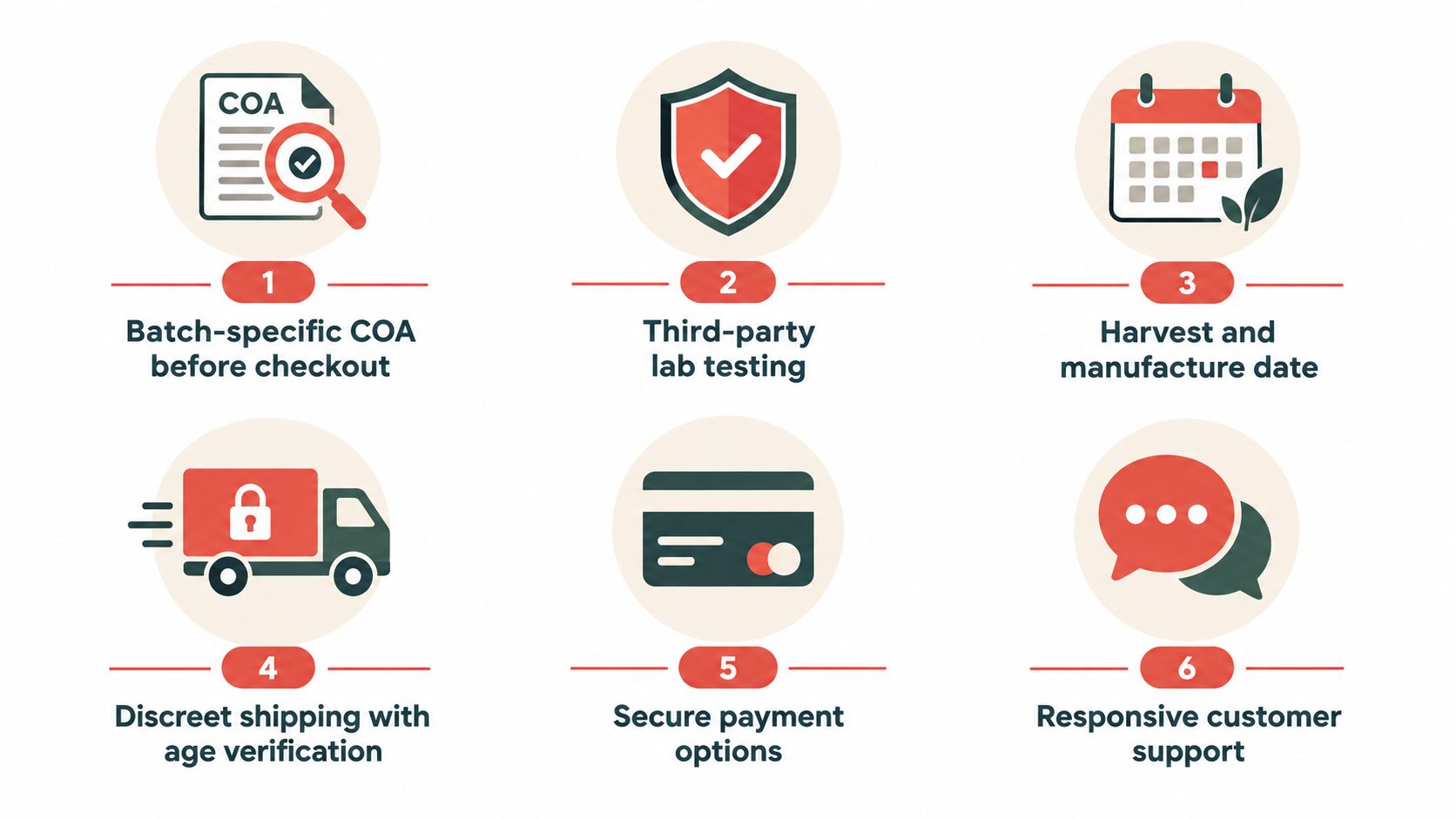
The worst vendors often give themselves away in plain sight.
One example of a seller behavior worth noticing is when a brand publicly emphasizes age-gating, transparent testing, and shipping restrictions for hemp products. Melt, for instance, presents an age-gated storefront and publishes lab-focused product information across its hemp lineup, which is the kind of operational posture buyers should prefer when evaluating intoxicating cannabinoids.
You're looking for restraint. Clear documents. Traceability. Fewer hype words. More compliance detail.
Buyer filter: If the page spends more space selling a vibe than proving what's in the product, the vendor hasn't earned your trust.
The best THC-P vendors aren't the loudest. They're the ones that make it easy to verify what you're buying before your card is charged.
A certificate of analysis, or COA, is the document most buyers claim they care about and then barely read. That's how mislabeled products keep moving.
A COA is useful only if it ties clearly to the exact product in your cart. If the report is generic, old, incomplete, or disconnected from the batch on the label, it's not meaningful protection.
Before you look at cannabinoid numbers, confirm that the report belongs to the product.
Use this order:
If the seller is offering gummies and the report appears to describe a vape oil sample, stop there.
For a fuller walkthrough, Melt has a practical guide on how to read a certificate of analysis.
| COA Section | What It Should Show | Red Flag |
|---|---|---|
| Lab identity | A clearly named testing laboratory | No lab name or vague screenshot |
| Batch information | Batch or lot ID that matches the product label | Batch mismatch or no batch listed |
| Product description | Form and sample details that fit the item sold | Report appears to describe a different product |
| Cannabinoid panel | Clear listing of cannabinoids present, including THC-related compounds if relevant | Vague potency claim with no detailed panel |
| Report timing | Recent enough to make sense for the current product batch | Old report with no link to current inventory |
| Contaminant screening | Results for common safety screens such as solvents, heavy metals, pesticides, or microbials | “Tested” language without actual results |
A clean COA is necessary. It is not sufficient.
It can help you answer basic questions:
It can't answer every practical safety question. It doesn't tell you whether the product will feel appropriate for your tolerance, whether the formula is stable over time, or whether the seller stores and ships it well.
A THC-P COA should lower uncertainty. If it raises new questions, don't rationalize them away.
Disciplined buyers separate themselves from impulse buyers. You are not looking for a PDF. You are looking for a chain of evidence.
You find a THC-P vape online, the site accepts your payment, and checkout looks normal. Then the order gets canceled, held, or blocked for age verification because your state treats intoxicating hemp more aggressively than the product page suggested. That is a compliance problem, not bad luck.
The federal shift to total-THC treatment in November 2026 makes this category tighter, not looser. Sellers that still treat THC-P like ordinary hemp merch are telling you something important about their standards.
Illinois gives buyers a concrete example of how states are approaching intoxicating cannabinoids. The state says cannabinoid products with more than 0.4 mg of THC or similar-effect cannabinoids such as THC-P may only be sold to people over 21, according to the Illinois hemp act overview.
Use that as a buying signal. If a vendor ships THC-P into stricter states without clear adult-use controls, published exclusions, or meaningful ID checks, assume the company is prioritizing conversion over compliance.
If you need a broader legal orientation before ordering, review a current state-by-state cannabis law guide.
| Region | Example state and practical rule | What buyers should do |
|---|---|---|
| Midwest | Illinois: products over the state threshold, including similar-effect cannabinoids such as THC-P, are restricted to 21+ under the Illinois Hemp Act overview | Confirm the product is adult-only, expect age verification, and do not assume a hemp label means open shipping |
| South | Texas: rules and enforcement around hemp-derived intoxicants have shifted repeatedly, and vendor shipping policies often change faster than state summaries | Check the vendor's blocked-state list the same day you order and confirm they still ship your exact product type |
| Northeast | New York: intoxicating hemp products face tighter state oversight, and many national hemp sellers restrict shipments there | Treat “ships nationwide” claims as unreliable until the checkout page and shipping policy both confirm your address |
| West | California: hemp rules can be stricter than buyers expect for ingestible and intoxicating cannabinoid products, even when a product appears federally arguable | Read the vendor policy for state exclusions and age checks before adding anything to cart |
This table is not a legal map. It is a screening tool. State treatment changes fast, and THC-P usually gets judged by intoxication risk, not by marketing language.
A serious THC-P seller should tell you three things before payment: where they will not ship, what age gate they use, and whether signature or ID checks apply at delivery.
If any of that is hidden, vague, or missing, stop there.
Use this quick filter:
Carrier policy matters too. USPS, UPS, and private carriers can apply their own risk rules, and a seller's willingness to print a label does not mean the package will complete the trip.
Canceled orders usually point to weak screening somewhere in the chain. Protect yourself by treating THC-P shipping as conditional adult-use commerce under tightening rules, especially with the November 2026 total-THC standard pushing sellers and states toward stricter review.
The worst assumption in this category is that THC-P is just “strong hemp.” That framing gets people in trouble.
THC-P should be treated like a high-risk intoxicant for inexperienced users. The issue isn't panic. The issue is dose discipline, impairment awareness, and honest self-screening before purchase.
You do not need the strongest option on the page. You need the option that gives you the best chance of staying within your limits.
That usually means:
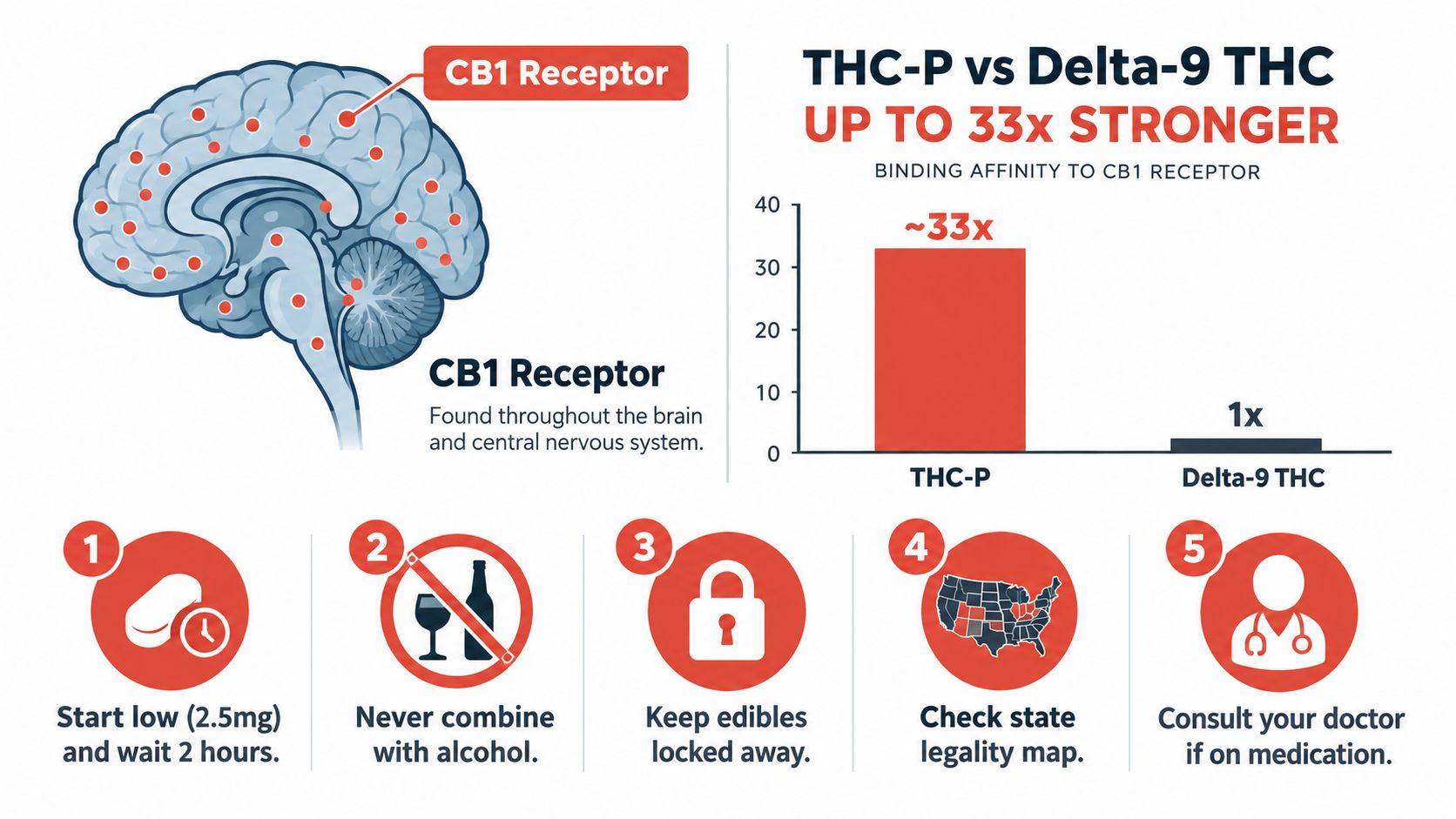
Some buyers shouldn't be experimenting with this category at all.
Skip THC-P if any of these apply:
That last one matters more than people admit. A product can be legal to buy in your state and still be a terrible fit for your body, schedule, or obligations.
Different forms create different user mistakes.
| Format | Main Risk Pattern | Better Buyer Mindset |
|---|---|---|
| Vape or disposable | Re-dosing too quickly because onset feels manageable | Pause after each small session and avoid “just one more pull” behavior |
| Edible or gummy | Taking more before the full effect is clear | Use patience and don't stack servings casually |
Buy the format you're most likely to use conservatively, not the one with the loudest label.
The bigger point is simple. A normal THC tolerance doesn't guarantee good judgment with THC-P. People who are comfortable with cannabis often underestimate new cannabinoids because they assume experience transfers automatically. Sometimes it does. Sometimes it absolutely doesn't.
Treat THC-P like a product that can exceed your expectations fast. That attitude protects you better than any flavor description ever will.
A rushed THC-P checkout is how buyers end up with stale lab reports, mislabeled blends, or a package that creates problems before it even arrives. The last screen before payment is where you make the decision.
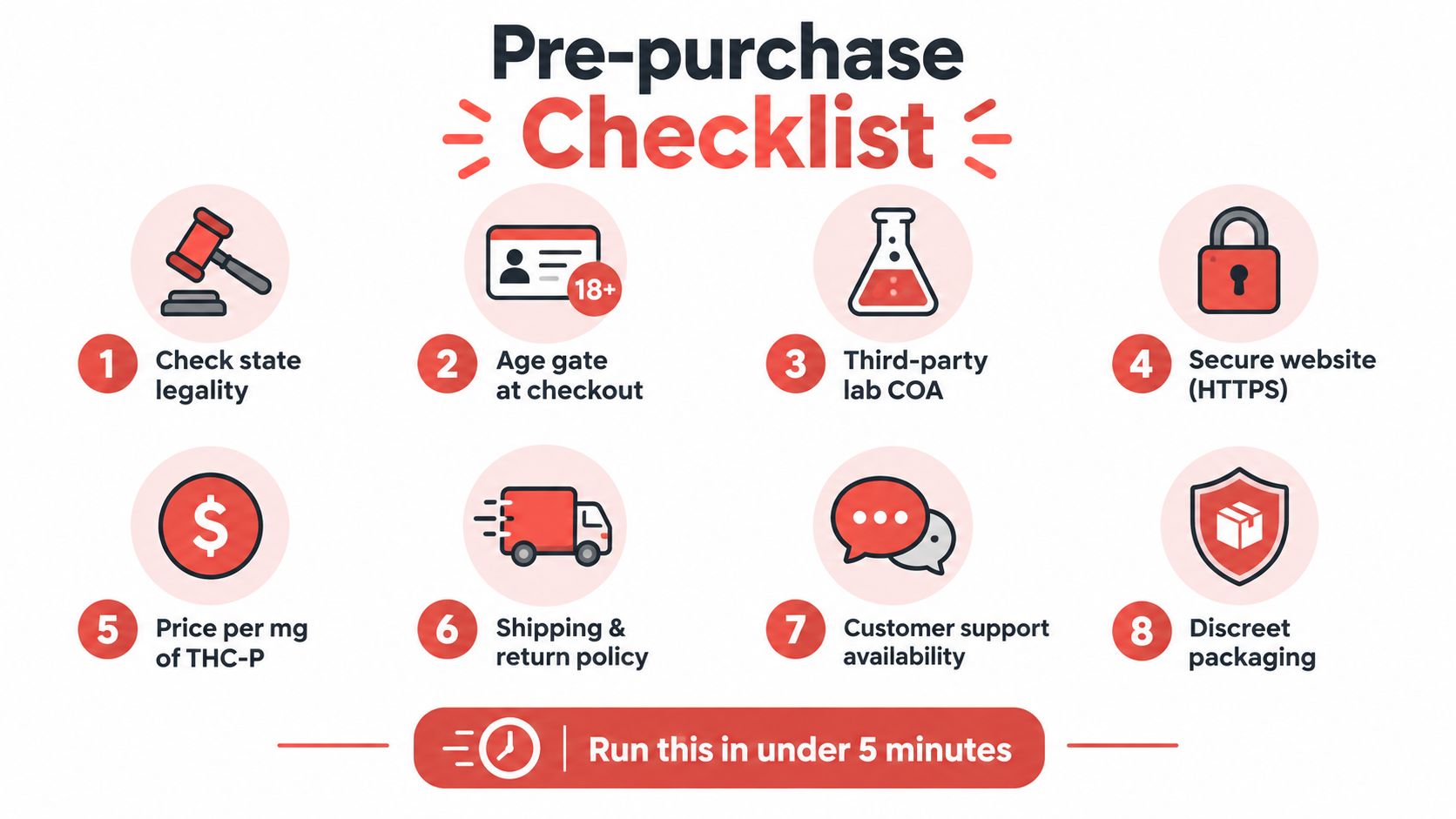
Use this list to decide whether a product deserves your money.
How much THC-P should a first-time buyer order?
Buy the smallest available quantity. One unit is enough to judge labeling accuracy, packaging quality, and your own reaction. Stocking up in a category facing a total-THC federal shift is how people get stuck with product they should not have bought in volume.
What is the clearest sign a THC-P listing is low quality?
Conflicting information. If the headline says one thing, the description says another, and the COA says something else, stop there. Bad documentation usually travels with bad inventory control.
Should I avoid products that blend THC-P with other cannabinoids?
Avoid blends you cannot read fast. A blend is not automatically bad, but it raises the chance of sloppy dosing and misleading marketing. New buyers should favor formulas with plain labeling and obvious per-serving math.
What if the seller says a fresh COA is “coming soon”?
Do not buy on promises. Sellers that are ready for the 2026 enforcement reality keep current documentation attached to live inventory.
Is a cheap THC-P product ever worth the risk?
Usually no. Low price often signals old stock, thin documentation, weak support, or a blend padded with other cannabinoids to make the label sound stronger than the formula really is.
The smarter approach is simple. Buy small, compare the listing against the paperwork line by line, and treat THC-P like a regulated intoxicant sold in a legally unstable category.
Melt offers an age-gated hemp storefront, third-party lab transparency, and cannabinoid education that fits this category's compliance reality instead of pretending THC-P is casual. If you want to compare products, read labels carefully, and buy from a brand that takes testing and shipping restrictions seriously, visit Melt.
Your cart is currently empty.