


Free Shipping All Orders Over $95
You've found Black Ice on two menus, but the prices don't line up. One listing emphasizes indoor flower and a laboratory report, while another uses the same strain name with little information beyond the package weight. It's tempting to assume the cheaper option is a bargain or the expensive one is automatically better. Neither conclusion is safe until you know what the label represents.
The practical question isn't just “What's the Black Ice strain price?” It's “What product is being sold under that name, and which verified qualities justify the charge?” Package weight, cultivation method, freshness, cannabinoid results, terpene data, and batch documentation give you a much more reliable answer than the strain name alone.
A shopper can open several dispensary menus, search online retailers, and find Black Ice listed at noticeably different prices. That variation doesn't automatically signal price gouging. In many cases, the name itself isn't consistent enough to serve as a universal benchmark.
Black Ice is most commonly described as an indica-dominant cross involving Black Domina and ICE. Strain references associate Nirvana Seeds with a Black Ice F1 lineage and describe the cross as ICE × Black Domina IBL, with development references tracing back to the late 1990s and broader North American visibility during the 2000s. Those references help identify one lineage, but they don't establish a single retail product or a reliable universal price. BudFinders' Black Ice strain reference also highlights why menu comparisons require caution.
Practical rule: Treat “Black Ice” as a starting label, not proof that two packages contain genetically identical flower.
Consider two hypothetical menu entries. The first is a small-batch indoor flower with a batch number, harvest date, cannabinoid panel, terpene results, and contaminant screening. The second is commercial-scale flower using the same name but offering no breeder information or current certificate of analysis. A premium for the first may reflect production and documentation. The label alone can't tell you whether the second is comparable.
Genetic naming also varies across market descriptions. Some coverage connects Black Ice with Black Domina crossed with White Widow, while other descriptions acknowledge multiple lines with differing parentage, potency, and aroma. That uncertainty makes the black ice strain price market-specific rather than fixed.
Before comparing quotes, record the package weight, cultivation method, potency, test results, and jurisdiction. For hemp-derived or THCA products, also check legal status, shipping restrictions, and testing standards. A listing without a harvest date, batch number, or laboratory report gives you limited evidence that it matches another Black Ice product.
A national benchmark can help you spot an implausible quote, but it can't replace local comparison. A recent U.S. study found an average dried-flower price of $9.05 per gram and an average standardized pre-roll price of $11.72 per gram. Those figures come from the study published in the National Library of Medicine, and they describe broader legal-market pricing, not Black Ice specifically.
State variation is substantial. The study reported average flower prices of approximately $5.95 per gram in Oklahoma and $16.93 per gram in New Jersey. Taxes, regulation, supply, retail overhead, and market maturity can all move the same product category far from a national average.
Potency also influenced pricing in the study. Compared with flower below 15% THC, products at 20%–25% THC were priced 18.19% higher, products at 25%–30% THC were priced 30.45% higher, and products at at least 30% THC were priced 49.42% higher. The researchers estimated a THC price elasticity of 0.17, meaning a 10% increase in THC content corresponded with an approximately 1.7% price increase when other factors were held constant. These are market relationships, not a promise that stronger Black Ice delivers better value.
Normalize every listing to price per gram, then compare like with like. Flower shouldn't be evaluated against pre-rolls, concentrates, vapes, or edibles as though they share the same cost structure. Indoor production, verified testing, brand positioning, potency, and state taxes can all justify a difference from the national average, but the seller should give you enough information to identify those differences.
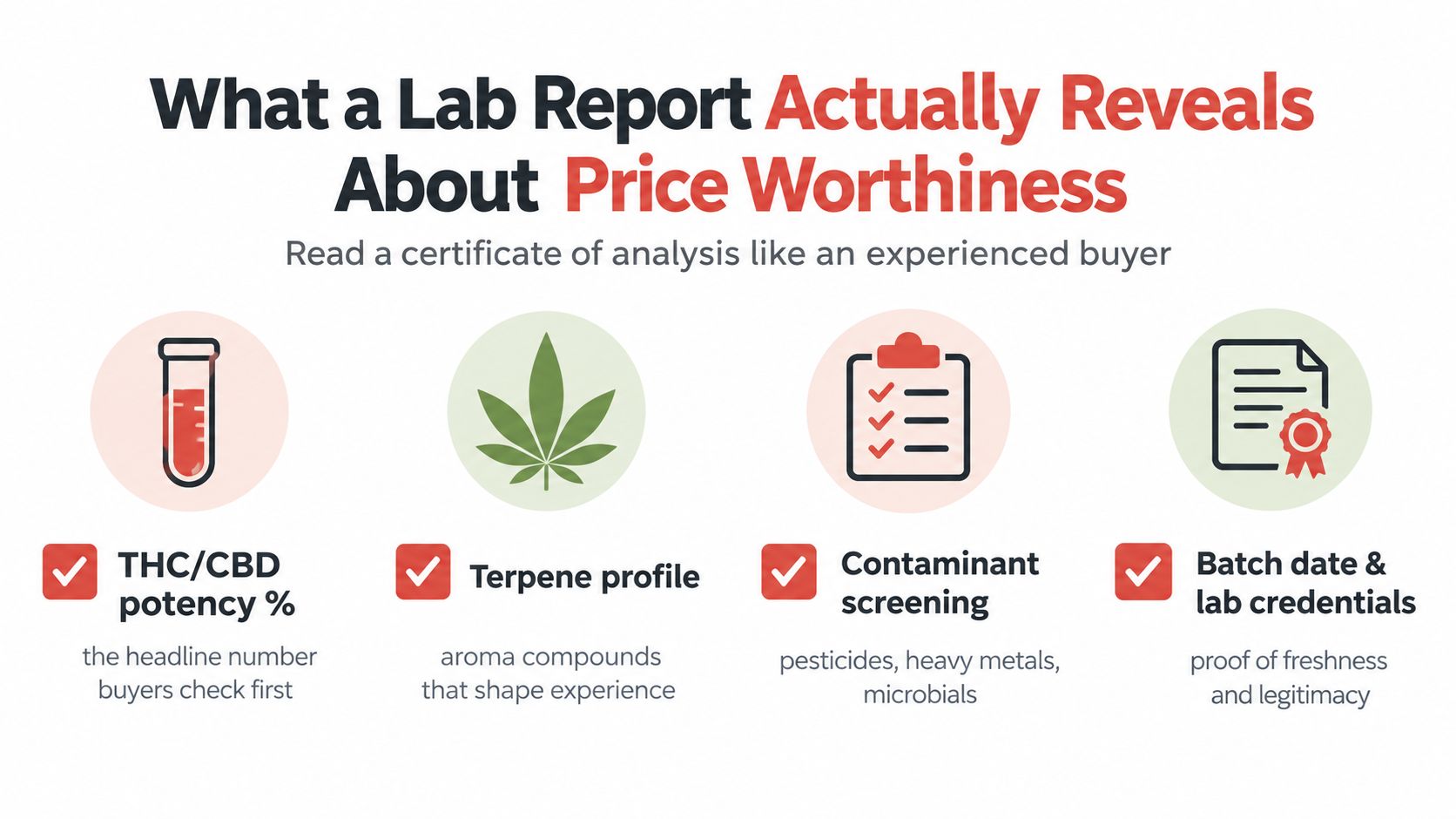
A strain name is a marketing reference. A certificate of analysis is evidence about a specific batch. If a seller wants you to pay more for Black Ice, the report should help explain what you're receiving.
Start with the batch number. It connects the package to the laboratory result and lets you check whether the document belongs to the product in front of you. Next, look for the harvest date or another clear freshness indicator. A report with no batch identity or date may still contain useful information, but it offers weaker support for a premium price.
Publicly reported Black Ice batches commonly fall around 18%–24% THC, while higher results are described as outliers in a Black Ice strain guide from BudLords. That range is a reference point, not a guarantee for every product sold under the name. It also shows why a high price shouldn't be treated as proof of exceptional potency.
Check the full cannabinoid profile rather than THC alone. Then examine the terpene profile, which helps identify the aromatic character and whether the product has meaningful strain-specific documentation. Terpene data won't tell you exactly how you'll feel, but it gives you more information than a package claiming “premium” without chemical detail.
Finally, confirm contaminant screening. A credible report should identify testing for pesticides, heavy metals, and microbial contamination. Missing panels create uncertainty, and uncertainty is a cost risk for the buyer.
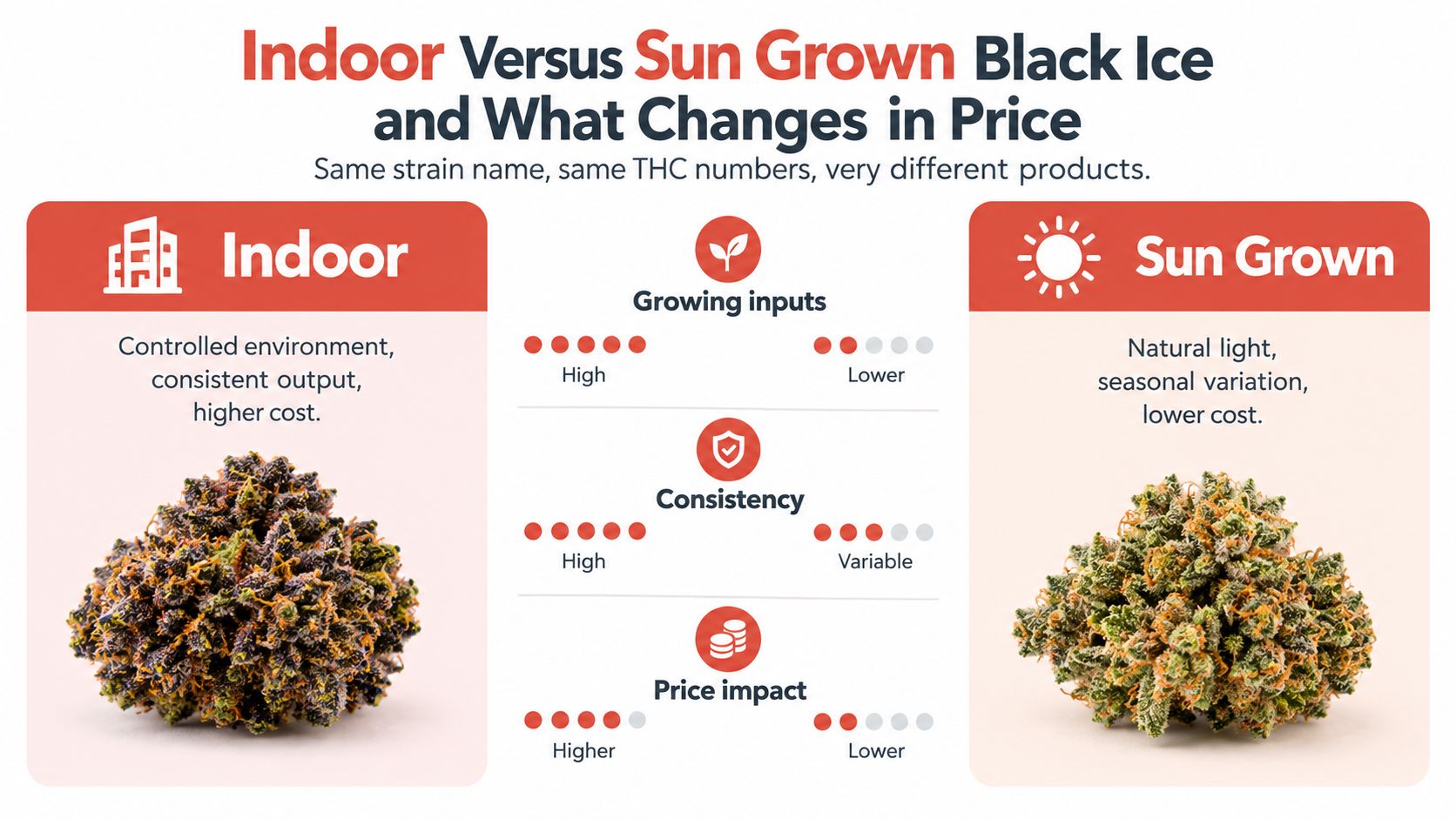
For a practical explanation of the fields and terminology, use this certificate of analysis reading guide. The strongest value signal is transparency. Fancy packaging, a dramatic strain description, or an unusually high THC claim can't compensate for a report that doesn't clearly identify the batch.
Cultivation method often explains a price difference that THC numbers can't. Indoor flower requires a controlled environment, deliberate climate management, and more intensive production inputs. Sun-grown flower uses natural light and can scale differently, with more exposure to seasonal conditions.
| Factor | Indoor flower | Sun-grown flower |
|---|---|---|
| Growing environment | Controlled conditions | Natural seasonal conditions |
| Production profile | Higher input and consistency expectations | More variable environmental influence |
| Price logic | Often supports a higher market position | Can offer accessible value |
| What to verify | Terpene preservation, grade, batch data | Curing, freshness, testing, and consistency |
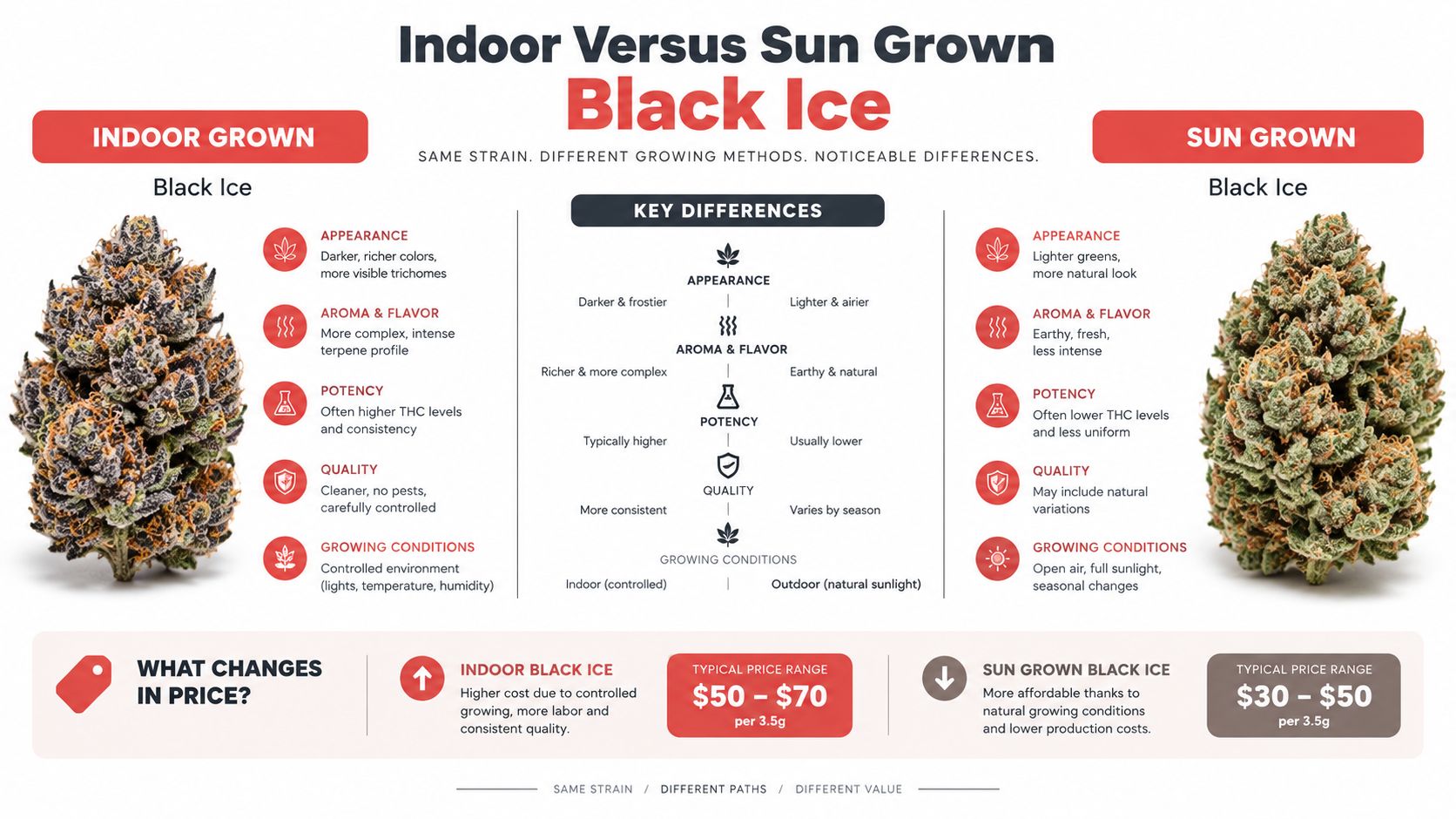
Indoor production can support tighter consistency and more controlled finishing, but the method alone doesn't prove superior flower. A poorly dried indoor batch may be less satisfying than carefully grown and cured sun-grown material. Conversely, lower production cost shouldn't be mistaken for a defect when the sun-grown product has a strong terpene profile, clean testing, and good storage.
The useful comparison is not “indoor equals good” and “sun grown equals cheap.” It's whether the cultivation method matches the price and the product's documented quality. A buyer seeking dense, carefully managed craft flower may accept a higher quote for indoor Black Ice. Someone focused on flavor and practical value may find sun-grown flower the better purchase if the report and freshness indicators are solid. This guide to sun-grown cannabis provides additional context for evaluating that production choice.
Price usually reflects a combination of signals rather than one winning number. Potency sets an expectation, but it doesn't guarantee a better experience. Terpenes describe part of the product's aromatic identity, while freshness determines how much of that profile remains available when you open the package.
A Black Ice listing with a strong cannabinoid result but no terpene information leaves an important question unanswered. You know the headline potency, but you don't know whether the seller has documented the compounds that shape aroma and flavor. A complete report gives you a better basis for comparing two products with similar THC results.
Freshness requires its own check. Look for a harvest date, package date where available, and storage information. Examine the flower for signs of careful handling, but don't use color as a standalone quality test. Dark hues can come from genetics and pigments, while dullness, poor aroma, or evidence of improper storage raises a different concern.
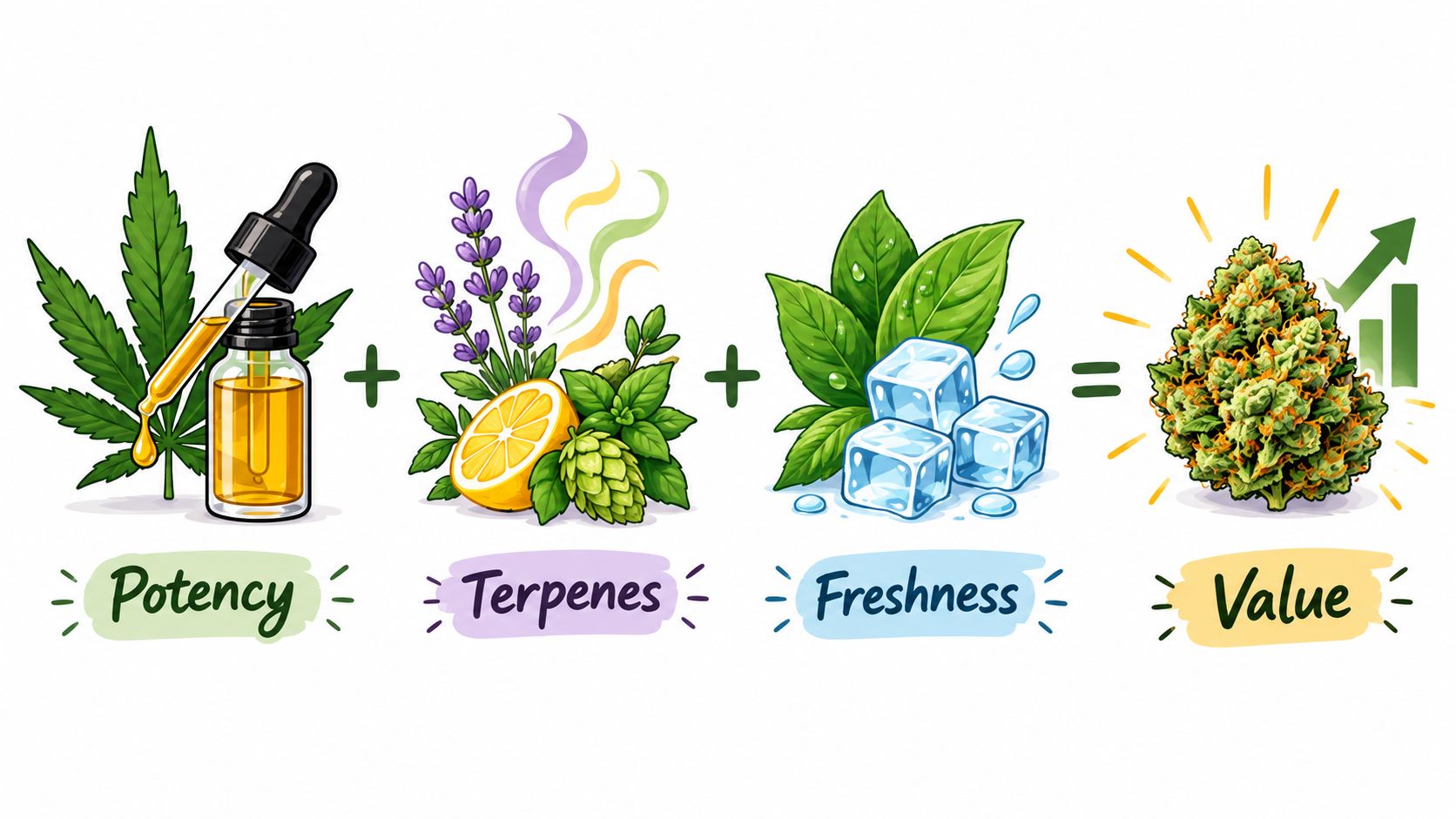
Use a simple combined judgment:
A higher price is easier to defend when these signals agree. If only the THC number looks impressive, treat the premium cautiously.
The same Black Ice product can carry different real-world costs depending on the sales channel. A licensed dispensary operates within a regulated framework that can include compliance, testing, inventory controls, and retail overhead. An unverified online listing may appear cheaper, but a low sticker price doesn't tell you whether the product is authentic, legally shippable, or supported by batch-specific testing.
Hemp-derived and THCA products add another layer of scrutiny. Legal status, labeling rules, shipping restrictions, and testing standards can differ from those in regulated adult-use cannabis markets. Check the rules that apply to your location before ordering, using a state cannabis laws reference as a starting point rather than assuming every seller follows the same requirements.
The advertised price isn't always the amount that matters. Shipping, transaction fees, minimum order requirements, bundle discounts, and promotions can change the effective price per gram. A larger package may lower the unit cost, but only if you actually want the quantity and the product remains fresh after opening.
Seasonal supply can also influence availability and pricing. Those shifts matter less than documentation when you're deciding whether a specific premium is justified. A verified report, clear product identity, and lawful fulfillment provide more value than a vague discount attached to an untraceable listing.
Don't pay extra because a menu uses the word “exotic.” Pay extra when you can identify the product, verify the batch, understand the cultivation method, and see a clear reason for the difference.
Use this checklist before you compare any Black Ice listing. It works in a dispensary, on a regulated menu, or while reviewing a hemp-derived THCA product online.
Buyer's shortcut: If you can't explain what makes one Black Ice package more valuable than another, you haven't gathered enough information to justify the higher price.
Black Ice pricing confusion is normal because the name doesn't identify one universally standardized product. Different genetic claims, breeders, production methods, batches, and legal channels can all sit behind the same label.
The reliable shift is from trusting the name to checking the evidence. Compare price per gram, then connect the price to cultivation method, cannabinoid results, terpene data, freshness, contaminant screening, and lawful fulfillment. A low price becomes easier to question when documentation is missing. A higher price becomes easier to accept when the product's quality signals are visible and consistent.
A dispensary buyer who has seen both strong deals and expensive disappointments doesn't ask whether Black Ice is “worth it” in the abstract. They ask what the package contains, which batch produced it, and whether the report supports the seller's positioning. That approach won't produce one universal number, but it will produce better purchases.
Melt offers indoor craft and premium sun-grown THCA flower with strain-specific terpene profiles and third-party lab reporting, so you can evaluate quality using the same signals covered here. Review the available products, check the testing information, and visit Melt to find a legal, discreet option that fits your priorities.
Your cart is currently empty.