


Free Shipping All Orders Over $95
Delta-8 THC is treated like hemp in Georgia when the product's delta-9 THC stays at or below 0.3%. But consumable-hemp rules under SB 494 and the 2025 Patel v. State decision add age, packaging, testing, and product-format requirements on top of that threshold.
You're standing at a Georgia smoke-shop counter, or scrolling an online menu, looking at a colorful package marked “hemp-derived.” The clerk says it's legal, but the label doesn't show a batch number and nobody can produce a laboratory report. That's where the simple answer, “delta-8 is legal,” stops being useful.
For practical purposes, Georgia legality has three parts: delta-9 THC concentration, product category, and buyer age. A compliant gummy can have a different legal position from a flower product or preroll, even if both contain delta-8. After reading this guide, you should be able to inspect a certificate of analysis, challenge a weak “hemp-derived” claim, and understand why a legal purchase still might create workplace or probation problems.
The phrase “delta 8 legal Georgia” describes a compliance question, not a blanket approval. Georgia's framework asks whether the item qualifies as hemp, whether it fits the state's rules for a consumable hemp product, and whether the transaction follows age and retail requirements.
Start at the product, not the marketing:
“Hemp-derived” only describes the claimed source. It doesn't prove that the finished product meets Georgia's testing, packaging, labeling, advertising, or product-category requirements. A label can be attractive and still fail to establish compliance.
Practical rule: Treat the product's COA, batch number, format, and seller controls as more important than the word “legal” on the front of the package.
For background on why source language can be misleading, see this explanation of what hemp-derived means. The useful question at the register is narrower: Can this exact batch be tied to a defensible laboratory report and a permitted sale?
Georgia's legal structure rests on the hemp distinction. The federal framework established a pathway for hemp products tied to a 0.3% delta-9 THC limit, and Georgia's Hemp Farming Act uses that distinction to determine whether cannabis-derived material falls within the state's hemp definition.
The important clarification came from the Georgia Court of Appeals in the 2025 decision Patel v. State. The court explained that delta-8 THC alone doesn't automatically make a product a controlled substance. The controlling question was whether the product contained more than 0.3% delta-9 THC, consistent with the Georgia Hemp Farming Act's definition of hemp. The court also recognized that hemp includes cannabis derivatives, cannabinoids, isomers, and related compounds, and that products within the statutory definition of hemp or hemp product aren't controlled substances merely because they contain THC. See the Georgia Court of Appeals decision in Patel v. State.
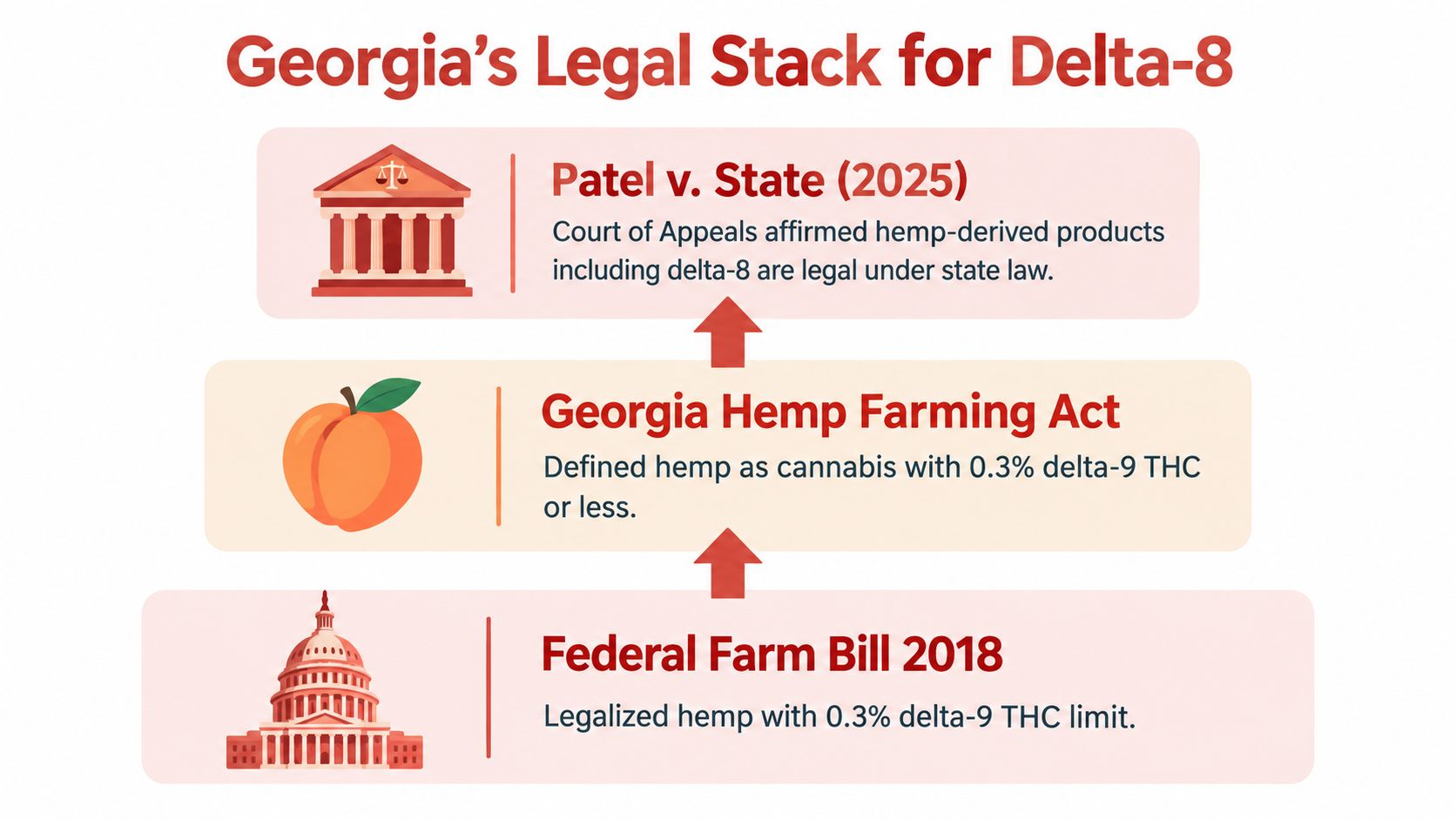
In Patel, the state hadn't presented evidence that the seized products exceeded the delta-9 limit. The court also noted that the delta-8 could have been naturally derived from hemp. That matters because it rejects the shortcut that the mere presence of delta-8 establishes criminal illegality.
The decision doesn't give every delta-8 product a free pass. A product can still fall outside the hemp framework if its delta-9 concentration exceeds the applicable limit, if it doesn't meet the statutory definition, or if it violates later consumer-product rules.
A defensible shortcut is this:
“Hemp-derived” is a starting claim. The COA and the product's Georgia compliance record are what test the claim.
That approach is more reliable than treating delta-8 as automatically illegal or automatically unrestricted. For a broader comparison of state cannabis frameworks, review this guide to state cannabis laws, but apply Georgia's own product and retail requirements to any purchase made here.
Patel addressed the controlled-substance question. Senate Bill 494 addressed the retail system around consumable hemp. Georgia's Department of Agriculture now regulates the growing, processing, testing, manufacturing, wholesale, and retail sale of consumable hemp products.
The law's timing matters because different obligations became effective on different dates. The department identifies July 1, 2024 for provisions involving retail-location distances from K-12 schools and restrictions on advertising or representing a business as a medical-cannabis dispensary. October 1, 2024 covers most of the remaining provisions. These dates are set out in the department's Georgia Hemp Program FAQ.
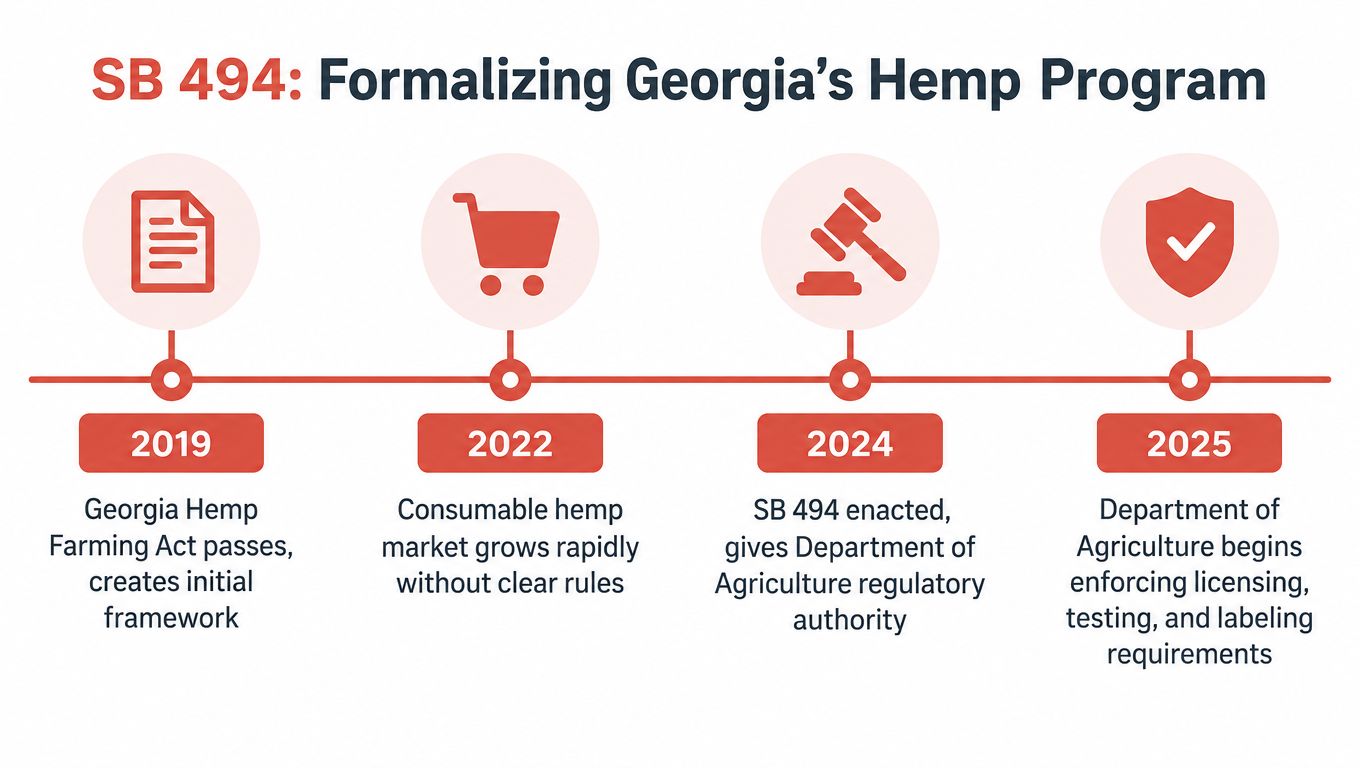
SB 494 moved Georgia away from a loose hemp marketplace toward a regulated, age-gated system. A seller's obligations extend beyond keeping delta-9 THC within the hemp threshold.
The Georgia Department of Agriculture's hemp program page identifies gummies, vapes, oil-based tinctures, and beverages as permissible categories when they satisfy the new requirements. That means a product's legal status depends on what it is, how it was tested, how it is presented, and who buys it.
The most useful correction to “delta-8 is legal” is that format matters. Georgia's hemp-program materials identify gummies, vapes, oil-based tinctures, and beverages as permissible product categories when they comply with SB 494. That doesn't place every item containing delta-8 into the same legal bucket.
| Product format | Permitted under SB 494? | Key compliance hooks | Buyer takeaway |
|---|---|---|---|
| Gummies | Yes, when compliant | Sealed packaging, required labeling, batch testing, total-THC documentation, age-gated sale | Ask for the COA tied to the package |
| Vapes | Yes, when compliant | Product label, cannabinoid testing, registered-laboratory report, lawful marketing | Don't rely on the cartridge alone if the box is missing |
| Oil-based tinctures | Yes, when compliant | Ingredient and cannabinoid information, traceable batch, compliant packaging | Keep the bottle and its original label |
| Beverages | Yes, when compliant | Consumable-hemp labeling, testing, packaging, age-gated sale | Verify the exact beverage batch |
| Flower and prerolls | Treated differently or prohibited | Format-specific restrictions and legally relevant THC documentation | Don't assume “hemp flower” makes the item lawful |
A sealed gummy with a traceable lot number gives a buyer a clear path to verification. Loose flower or a preroll sold from an unmarked container gives you much less evidence and may fall into a category Georgia treats differently. That's why the same delta-8 cannabinoid can appear in products with different legal outcomes.
A compliant-looking product should have several anchors at once:
If the product is loose bud or a preroll labeled only "hemp," treat the seller's claim skeptically. Don't let a delta-8 label substitute for the product-specific rules that determine compliance.
A certificate of analysis, or COA, is a compliance document, not a decorative QR code. At the counter, the report should connect the exact product in your hand to a laboratory result and a legally relevant delta-9 THC calculation.
Check these details before paying:
The Georgia framework includes random retail inspections and testing. The department also warns that certain copycat food products containing hemp violate federal and state law. That is another reason to reject a product supported only by “hemp-derived” wording. The court's discussion of the need for evidence concerning delta-9 concentration reinforces why a defensible COA matters. You can also review this practical guide to reading a certificate of analysis.
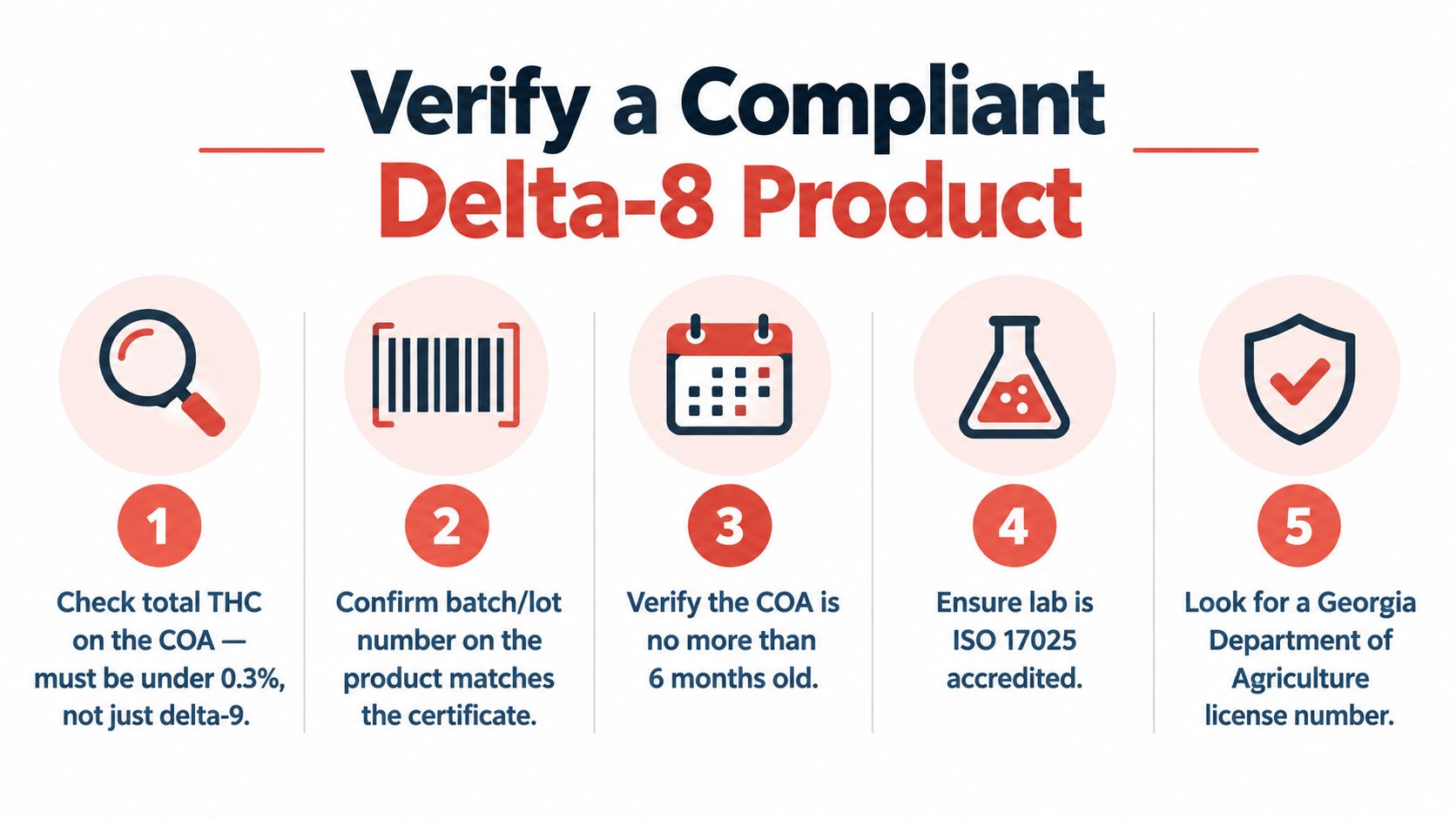
Online buyers should apply the same test before checkout. Look for age verification, a product-specific COA, clear shipping restrictions, and a seller willing to state whether the item can legally ship to Georgia. If the report appears only after purchase, choose a different seller.
Legal retail status doesn't guarantee a clean workplace drug test. Delta-8 is metabolized into compounds that standard urine tests designed to detect cannabis metabolites can also detect, so a Georgia consumer may test positive after using a hemp-derived product bought legally. The testing risk is separate from whether the purchase complied with Georgia's hemp rules.
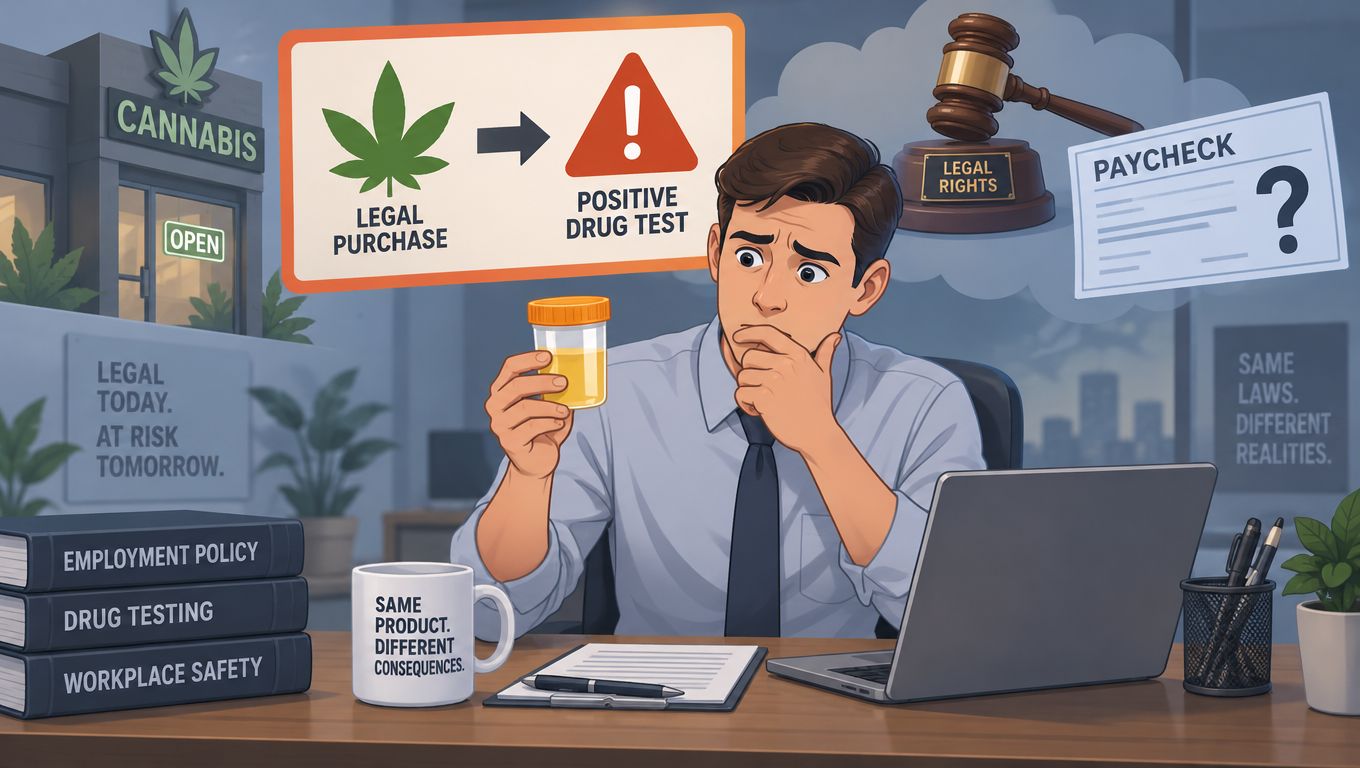
A COA can show what a laboratory found in a particular batch. It can't predict how your body will metabolize that product, whether another cannabinoid is present, or how a testing program will interpret the result. Third-party testing is valuable for product quality and traceability, but it isn't a promise of test-free use.
Before using delta-8, read the policy that governs your job, license, or probation. If the consequences of a positive test are serious, legal retail status isn't enough protection.
Do not drive or perform safety-sensitive work while impaired. If you're subject to testing, ask the responsible employer, agency, or supervising authority how its policy treats hemp-derived cannabinoids before using any product.
A Georgia retailer should make compliance visible. Buyers don't need access to every internal record, but they should see enough evidence to distinguish a controlled operation from a shelf of unverified products.
At the counter, run this quick check:
The Georgia Department of Agriculture regulates retail sale as part of the broader consumable-hemp program. Its framework includes random retail inspections and testing, so a seller should be ready to identify every product's source, batch, and laboratory documentation.
For an owner, the right standard is simple: if an inspector asks for the product record, staff should know where to find it without improvising. For a buyer, refusal to show basic documentation is a go-no-go signal.
A store doesn't become compliant because its products are popular, colorful, or sold beside CBD. Ask for the report, compare the lot number, confirm the format, and leave if the answers don't line up.
No. Georgia's hemp program specifically identifies gummies, vapes, oil-based tinctures, and beverages as permissible categories when they meet the applicable requirements, while flower and prerolls are treated differently or may be prohibited. Don't buy a flower product based only on a “hemp-derived” label. Ask the seller to identify the Georgia rule supporting that exact format and provide matching laboratory documentation.
It should connect the exact package to a batch or lot, identify the laboratory, and show the legally relevant delta-9 THC result, including the applicable total-THC calculation. A report that covers a different batch or only advertises delta-8 potency isn't enough. Save a copy of the COA and compare its lot number with the package before purchase.
Yes. Delta-8 can be metabolized into compounds that standard urine tests designed to detect cannabis metabolites also detect. A COA documents the product's laboratory result, not your future test outcome, so review employer, probation, driver, or safety-sensitive-work rules before using it.
Look for age verification, a batch-specific COA, clear product-format information, and shipping controls that address Georgia restrictions. The seller should identify what it will ship, where it won't ship, and how it verifies the buyer's age. If those details are missing, don't place the order.
Melt offers hemp-derived cannabinoid products with third-party lab reports and state-based shipping restrictions, which can help buyers compare product documentation before ordering. Visit Melt to review its products, testing information, and Georgia shipping availability before you buy.
Your cart is currently empty.