


Free Shipping All Orders Over $95
A THCA flower bundle gives you curated strain variety and potential savings, but it still requires careful lab-report review and total THC calculations. THCA can approach zero in approximately 30 minutes at 110°C, 9 minutes at 130°C, and 6 minutes at 145°C, so the label's THCA percentage isn't a direct prediction of delivered THC.
You're comparing jars online, trying to decide whether variety is worth giving up the predictability of one familiar strain. A single purchase is easier to inspect, but a well-built THCA flower bundle can let you explore several cultivars without filling your storage space with one choice. The trade-off is that bundled products demand more scrutiny, because several strains, harvest lots, or test results may sit under one offer.
The best buying decision starts with two questions: what exactly is included, and how has total THC been calculated? If the seller answers both clearly, a bundle can be a practical way to diversify your stash. If the product shows only a large THCA number and vague testing language, the discount may be less valuable than it appears.
You open a dispensary page looking for something new, then find yourself choosing between familiar flower and a collection of different cultivars. Buying one large quantity of a single strain gives you consistency, but it also means living with that aroma, texture, and effect until the jar is empty. A curated bundle solves the commitment problem by dividing the decision across several options.
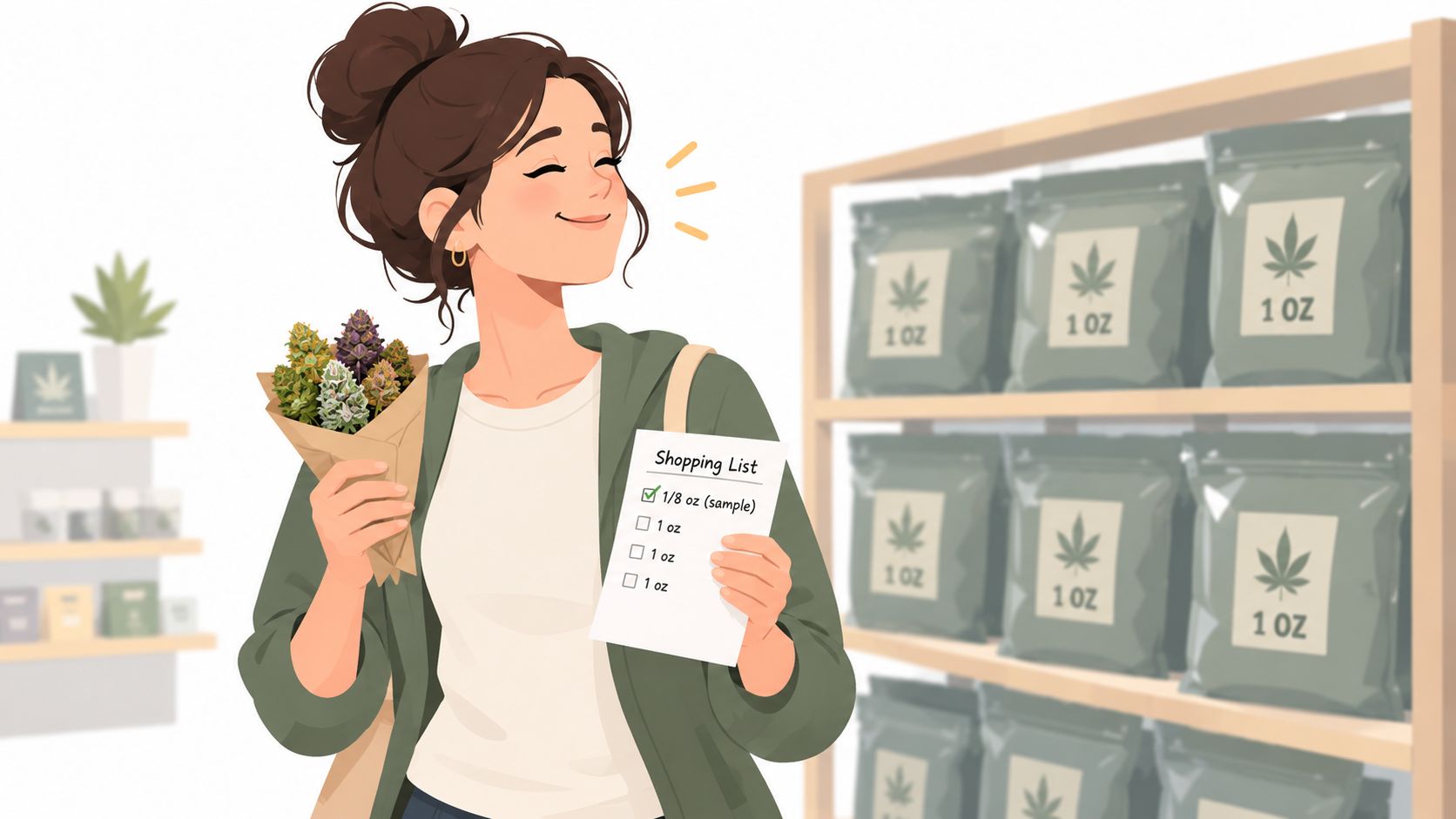
Ordering a tasting flight instead of committing to one beer. A bundle can include fruit-forward flower, earthy cultivars, and more resinous options, giving you a practical way to learn what you prefer. That variety is useful for experienced buyers too, especially when a familiar strain has become repetitive or when different sessions call for different profiles.
A good bundle isn't just several bags placed in one shipping box. The seller should explain whether the collection is curated, mix-and-match, or put together from available inventory. Curated products can make discovery easier, while mix-and-match offers more control. The latter is usually preferable when you already know which aroma families or flower textures you enjoy.
Buyers interested in smaller, less dense pieces can also compare bundle options with guidance on THCA flower smalls. The important point is to compare the actual contents, freshness, and testing documentation, not just the bundle label.
Practical rule: Treat the bundle as several separate products until the seller proves that the testing, labeling, and storage history apply consistently across the whole collection.
Bundles can offer better value than buying comparable quantities separately, but value only exists when you'll use the contents. A low price on strains you dislike isn't a saving. Before ordering, check the selectable strains, packaging format, test dates, and whether each portion has its own batch identity.
Raw THCA flower and intoxicating delta-9 THC aren't the same chemical state. THCA is the acidic precursor, and heat removes part of that structure through decarboxylation, allowing it to become delta-9 THC. That transformation is why unheated flower and heated flower can produce very different experiences.
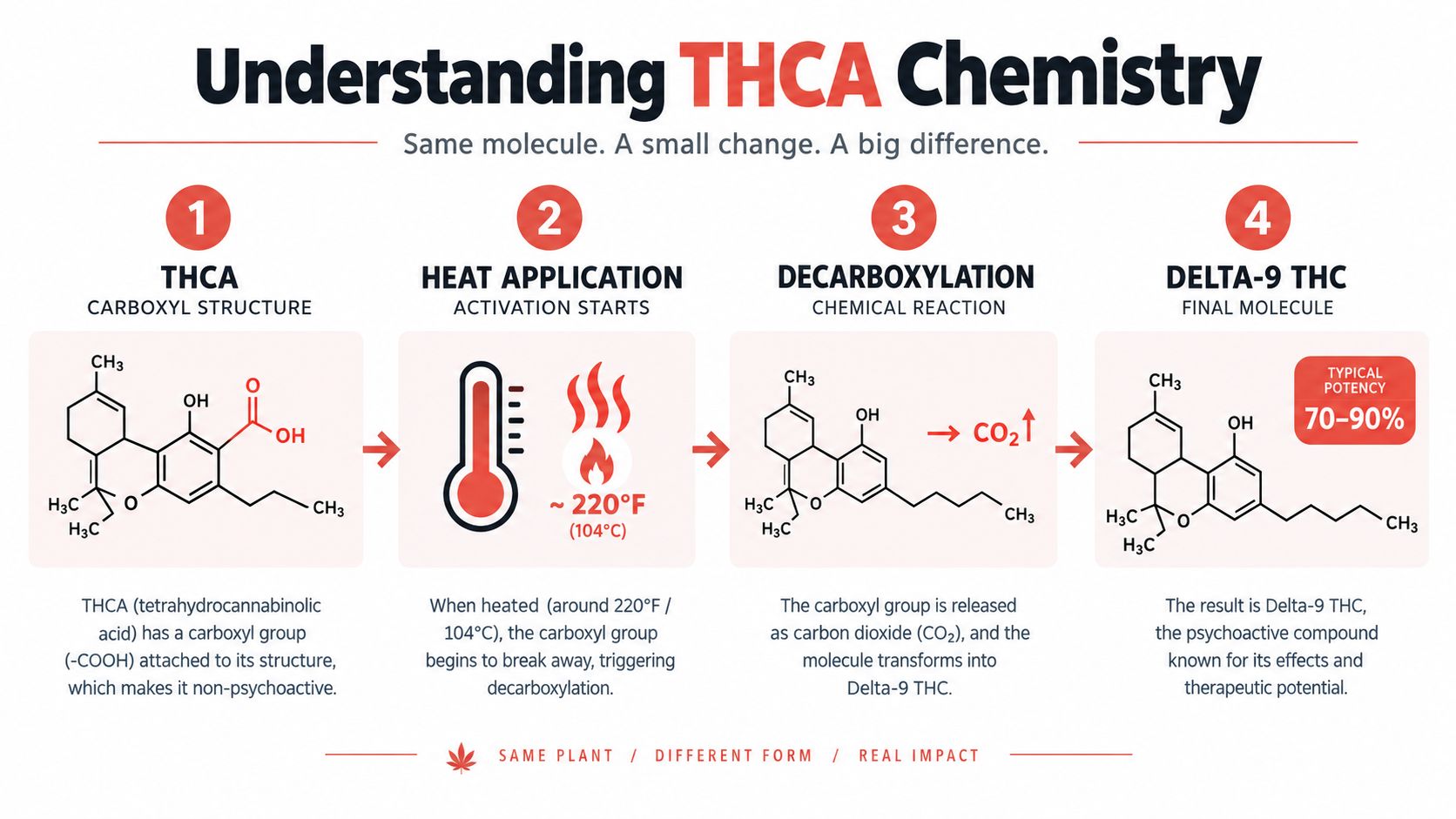
The label should therefore be read in two layers:
A laboratory does not effortlessly convert every molecule perfectly in a consumer's device. The useful result depends on heating temperature, duration, grind size, moisture, airflow, and the accuracy of the device. A THCA versus THC percentage guide can help you interpret the label without treating a headline percentage as a guaranteed dose.
Peer-reviewed research found that THCA-A conversion followed first-order or pseudo-first-order kinetics. At temperatures below 100°C, conversion didn't finish within 60 minutes. THCA approached zero in approximately 30 minutes at 110°C, 9 minutes at 130°C, and 6 minutes at 145°C. Complete conversion was observed at 160°C, but oxidation products, including CBN, were also detected at 160°C and 180°C. The published decarboxylation study supports a cautious conclusion: faster conversion isn't automatically better preservation.
For a bundle, this distinction matters because different flowers may have different moisture levels and densities. Two portions with similar THCA results can behave differently when heated. Read total THC as a potential-yield measure, not as a promise of the exact amount delivered during a session.
The legal question isn't answered by the THCA percentage alone. Federal hemp-testing guidance requires laboratories to use post-decarboxylation analysis, or an equivalently reliable method, and calculate total THC from measured THC plus the THCA contribution on a dry-weight basis. The USDA hemp laboratory testing guidance also describes dry-weight analysis and sample preparation procedures designed to represent the tested lot more accurately.
That procedure has direct consequences for bundled flower. USDA guidance calls for grinding the entire sample and determining moisture on a dry-weight basis, which helps reduce the risk that a selectively sampled dense flower portion misrepresents the packaged material. A seller that displays only a prominent THCA figure leaves out information you need for a meaningful potency assessment.
A certificate of analysis should be connected to the product you're buying, not merely to the brand in general. Look for:
A practical guide to reading a certificate of analysis is useful when laboratory layouts differ. Don't assume one report covers every strain in a bundle. Ask whether the result applies to each item, the complete collection, or a representative composite sample.
Buying checkpoint: If the seller can't identify which batch a COA covers, you can't confidently compare the bundle's stated potency with another product.
The central comparison is simple. A single ounce gives you depth and consistency, while a bundle gives you breadth and discovery. Neither format wins automatically, because the right choice depends on whether you already know what you want and whether the seller provides enough information about each included portion.
| Feature | THCA Bundle | Single Ounce |
|---|---|---|
| Variety | Several cultivars or selectable options | One cultivar |
| Discovery | Helps compare aromas, textures, and experiences | Limited to one profile |
| Consistency | May vary across lots and strains | Easier to track from one batch |
| Testing review | May require several COAs or a clear composite report | Usually simpler to match to one lot |
| Storage | Multiple packages may need separate labeling | One primary container |
| Value | Can be attractive when every portion is usable | Better when you already know your preferred strain |
The bundle is strongest when it lets you choose the contents. A mix-and-match structure can prevent unwanted inventory, but only if the available strains have current testing and clear identifiers. A fixed collection may offer a more deliberate progression, yet it can also include a portion you wouldn't have selected alone.
Start with the usable quantity and compare the cost of equivalent single purchases. Then subtract the practical costs of variety, including extra containers, more COA review, and the possibility that one cultivar doesn't suit you. Those aren't reasons to avoid bundles. They're the details that separate a real bargain from a large package with uneven appeal.
A premium collection may justify a higher price through fresher handling, better-selected cultivars, or stronger documentation. A value bundle can be sensible when the seller gives you transparent lot information and lets you choose strains. What doesn't work is treating a discount as proof of quality.
Choose a bundle by aroma family and session purpose, not by strain name alone. Names can be useful shorthand, but they don't guarantee the same terpene balance across growers or harvests. Read the terpene panel when it's available, then compare it with the aroma you enjoy.
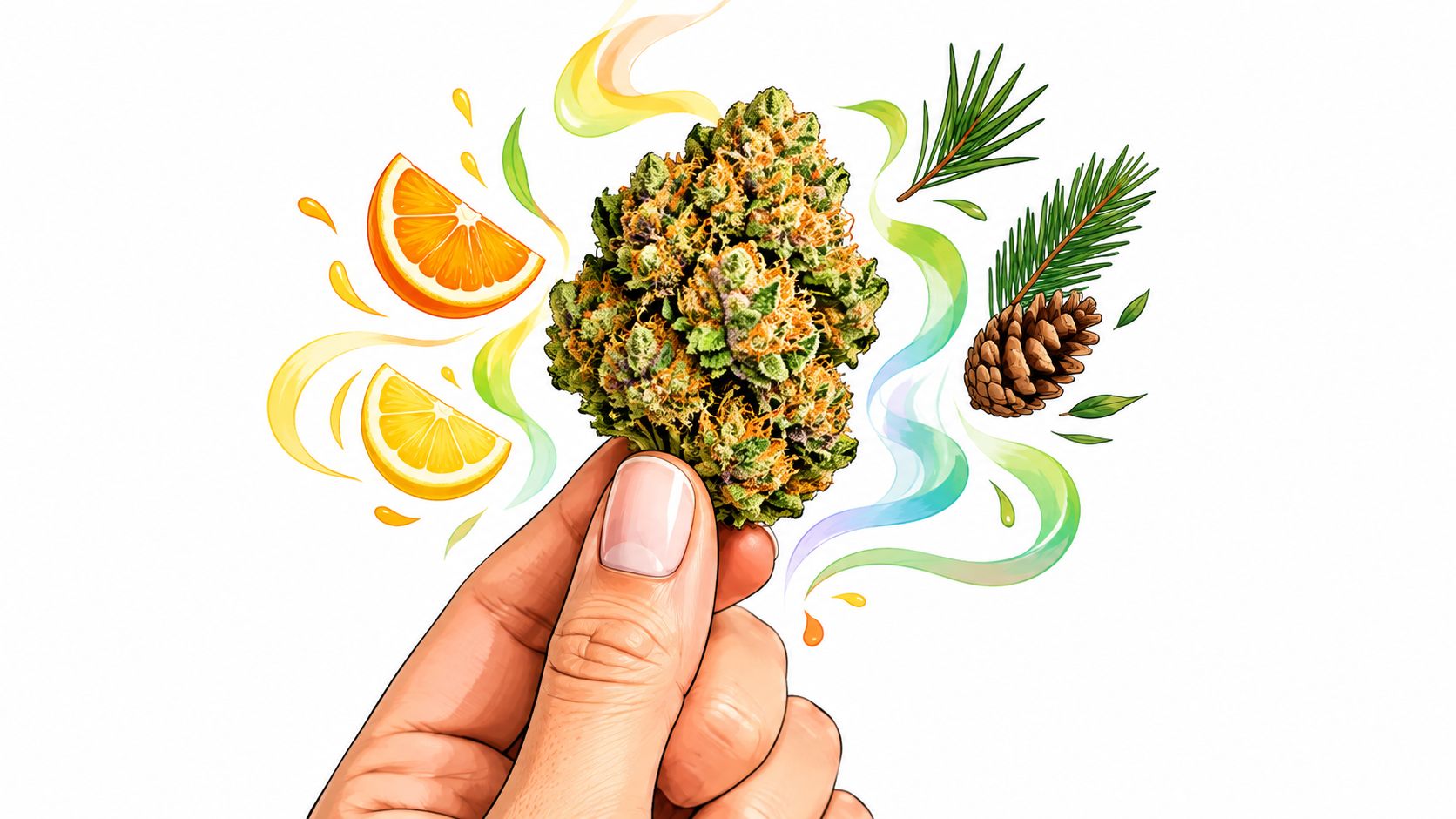
A straightforward selection process looks like this:
Place the image early because visual inspection helps, but don't let appearance replace documentation. The video below can provide another visual reference for evaluating flower and terpene presentation.
Keep notes after each session. Record the strain name, aroma, texture, heating method, and response. That personal record becomes more useful than generic indica or sativa labels when you build your next bundle.
A bundle creates a storage problem that single-strain purchases often avoid. Several cultivars can lose aroma at different rates, and repeatedly opening every package exposes more flower to air. Keep each portion in an airtight, opaque container, store it in a cool and dark place, and avoid frequent temperature swings.
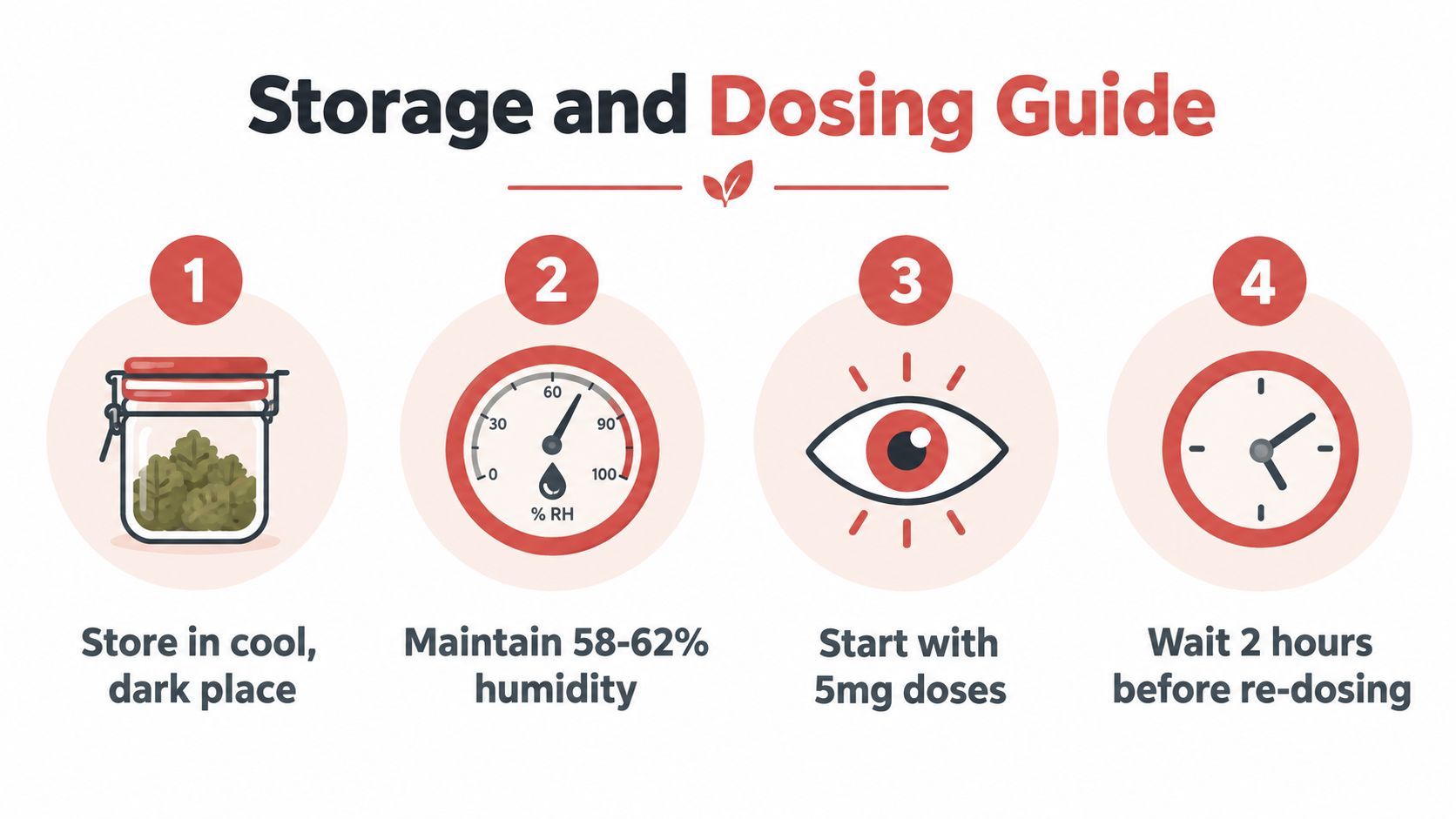
Use separate labels for strain, batch, and opening date. A small hygrometer can help you monitor the container environment, while visual checks can catch unusual moisture, odors, or signs of contamination. Don't combine different cultivars into one jar unless you're comfortable losing the ability to identify which flower changed over time.
THCA flower becomes intoxicating after heating, so treat an activated session cautiously. Start with a small amount, use a consistent device or method, and wait before increasing. Avoid translating a lab percentage directly into a personal dose, because flower mass and actual transfer efficiency vary.
The safest routine is to test one cultivar at a time. That keeps the comparison clean and helps you identify whether a strong response came from the strain, the amount, or the heating method. Don't mix several bundle portions in your first session with a new collection.
Can a bundle ship everywhere? No. Shipping rules can differ by destination, and products may be restricted where prohibited. Check the seller's current policy and local requirements before ordering.
Does a lower-priced bundle mean lower quality? Not necessarily. Price can reflect packaging, inventory strategy, cultivar selection, and quantity. Quality depends more on freshness, traceable batches, complete testing, and accurate descriptions than on the bundle label.
Can one COA cover the whole bundle? Sometimes, but you need to know what the report represents. Ask whether it covers each strain, the complete package, or a representative composite sample.
Is indoor flower always better than outdoor flower? No. Growing environment can influence appearance, aroma, and consistency, but it doesn't replace the need for batch-linked testing and careful storage.
How long will a bundle stay fresh? It depends on moisture, packaging, light exposure, temperature, and how often each portion is opened. Buy quantities you can store properly rather than assuming every sealed package will remain identical indefinitely.
Should I trust a high THCA headline? Treat it as one data point. Total THC methodology, moisture, sampling, and heating conditions determine how useful that figure is.
Melt offers THCA flower in multiple strain and quantity formats, with third-party testing and transparent lab reports described as part of its online product approach. If you want to compare a curated collection against individual options, visit Melt, review the available COAs, and choose a bundle whose batch information matches what you plan to buy.
Your cart is currently empty.