


Free Shipping All Orders Over $95
Brown weed isn't automatically bad, and it's often safe aging or oxidation. It becomes unsafe when brown color appears with a musty odor, fuzzy patches, or damp texture, which can indicate mold, so verify the product with a batch-specific certificate of analysis whenever possible.
Have you ever rejected a brown cannabis bud on sight, or assumed it was fine because it didn't look obviously moldy? Both reactions rely too heavily on one visual clue. Color can tell you that flower has changed, but it can't tell you by itself whether that change is harmless aging or dangerous contamination.
The useful question isn't “is brown weed bad?” It's whether the flower is uniformly dry and faded, or whether it has localized discoloration accompanied by unusual smell, texture, moisture, or visible growth. That distinction matters because oxidation, dehydration, aging, heat, and ultraviolet exposure can all reduce freshness and alter cannabinoid and terpene quality without proving that mold is present. Controlled storage research also shows that storage conditions materially affect cannabinoid stability.
Brown cannabis is not automatically unsafe. Flower may turn brown as it dries, ages, oxidizes, or experiences heat or ultraviolet exposure. These changes can reduce aroma, affect flavor, and alter cannabinoid quality, but a brown surface alone doesn't establish that the product is toxic or contaminated.
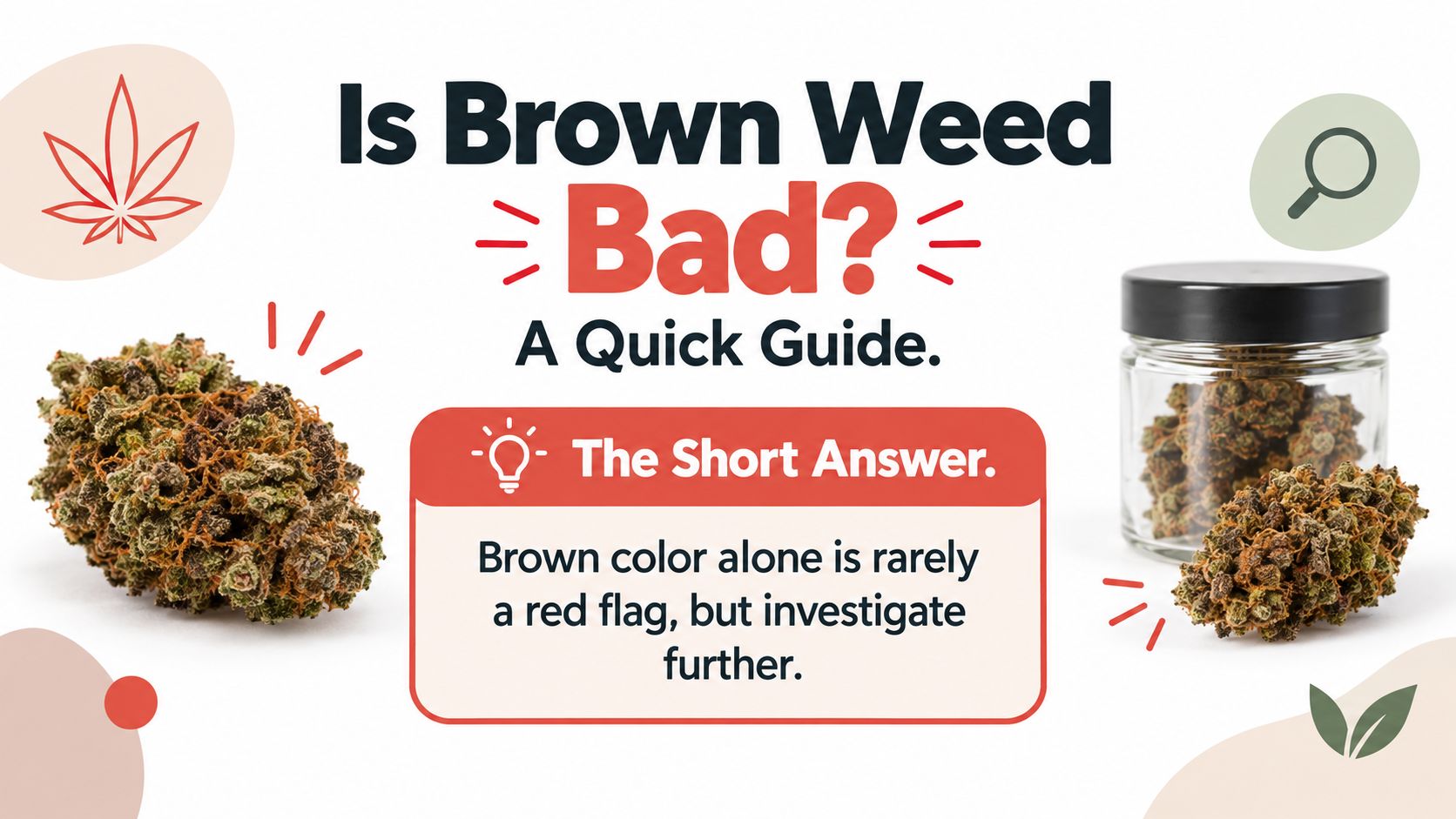
Think of color as a reason to inspect the flower, not as a final verdict. Uniform fading across a dry bud is more consistent with age or storage-related degradation. By contrast, isolated brown, gray, or white patches deserve caution when they appear with fuzzy growth, webbing, dampness, soft tissue, or a musty or ammonia-like odor.
The source and handling history also matter. A sealed, regulated product with a recent batch date and microbial test results gives you more information than loose flower with unknown storage conditions. A certificate of analysis, or COA, can support the inspection, but it shouldn't replace it.
Practical rule: Brown color means “investigate further.” It doesn't mean “safe” or “discard” without the other clues.
Use four checks together:
If the flower has only mild, uniform browning and retains a normal aroma and dry structure, the main concern is likely reduced freshness rather than acute contamination. If it shows multiple warning signs, don't smoke it, vape it, grind it, heat it, or turn it into edibles. Moldy material should be discarded.
Why does cannabis turn brown even when no mold is present? Several ordinary aging processes can change flower's color. Oxygen reacts with exposed plant tissue, moisture leaves during drying and storage, and heat or light can accelerate changes in pigments, cannabinoids, and terpenes.
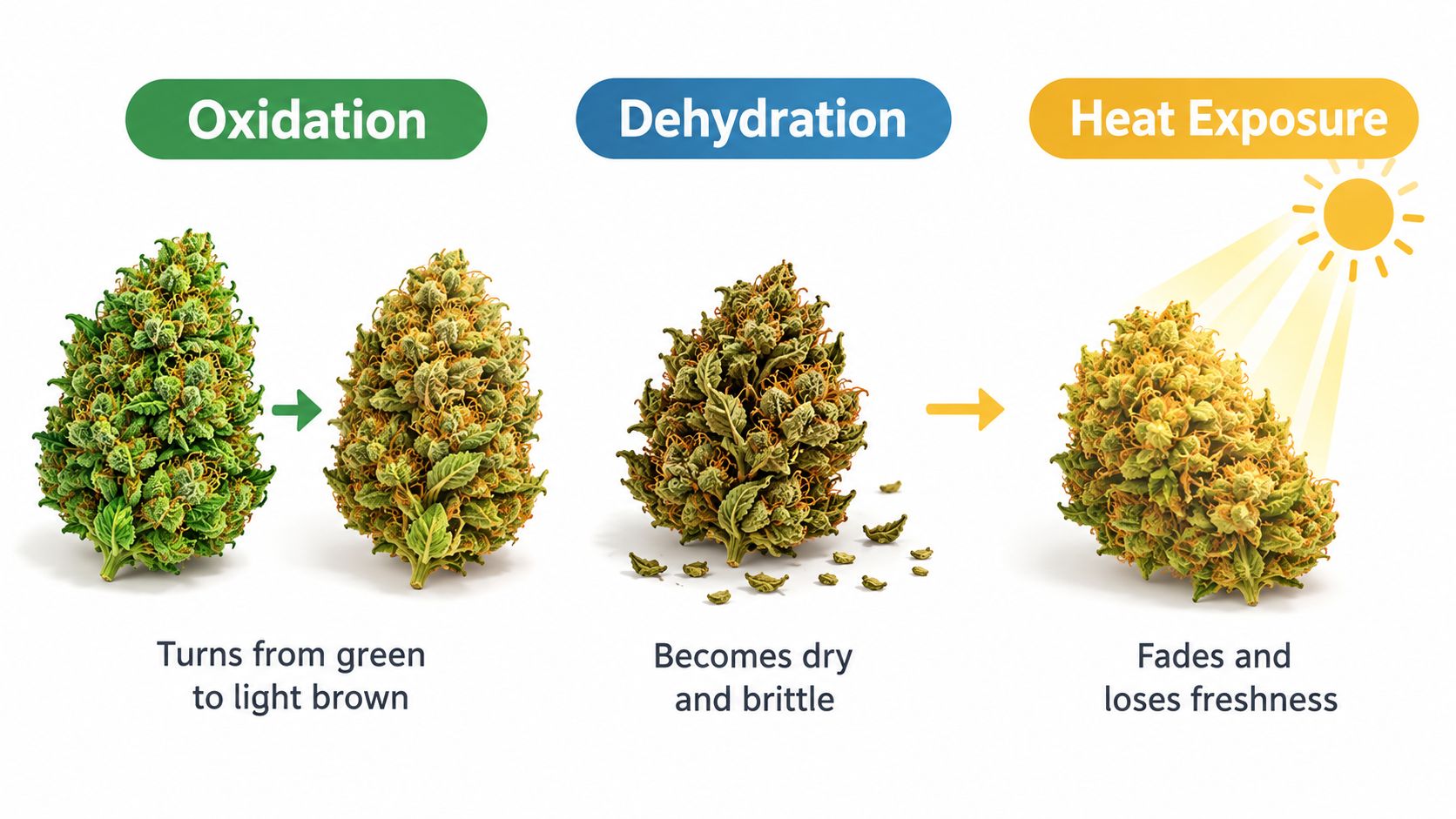
As oxygen reaches flower in packaging that offers limited protection, green tones can fade toward tan or brown. Aroma often becomes less vivid as terpenes evaporate or degrade, and the smoke may taste flat, harsh, or stale.
A controlled storage study found a 34.3% loss of total Δ9-THC over 127 days without added vapor-phase terpenes, compared with an 18.0% loss when terpenes were present. The terpene treatment reduced measured degradation by 47.4%. Those results came from controlled conditions, so they do not predict the exact performance of every household container. They do show why brown, tired-looking flower can reflect chemical aging. The published study also reported a 4–23% decrease in THCA over four months, depending on storage conditions.
Overly dry flower feels brittle and may crumble during handling. Its color can look dull or faded, and the loss of volatile terpenes may make the experience harsher. Dehydration alone does not create mold.
Drying and curing can also darken sugar leaves and other plant material. A slightly brown leaf that is flat, dry, and free of unusual odor is less concerning than a localized patch with an abnormal texture or smell. Judge the whole bud, not one leaf in isolation.
Heat speeds chemical reactions, while ultraviolet light can degrade sensitive compounds. Flower left near a sunny window, in a hot vehicle, or beside a heat source may lose aroma and color faster than flower stored in a cool, dark place. Research on commercial cannabis storage found that ultraviolet exposure accelerated degradation and that storage conditions affected cannabinoid stability.
The ACS study cited earlier concluded that THC flower should be refrigerated when consistent cannabinoid concentration is the goal, while CBD was more stable and could suit room-temperature storage in finished products. Refrigeration can preserve cannabinoids, but temperature changes may create condensation when humidity is uncontrolled. For a purchase decision, combine color with texture, odor, packaging history, and available microbial testing. That combination separates likely age-related change from flower that warrants rejection.
Mold changes the decision entirely. Unlike ordinary oxidation, fungal contamination is a biological problem associated with moisture and poor handling. Flower with suspected mold shouldn't be smoked, vaporized, or eaten, even if the affected area looks small.
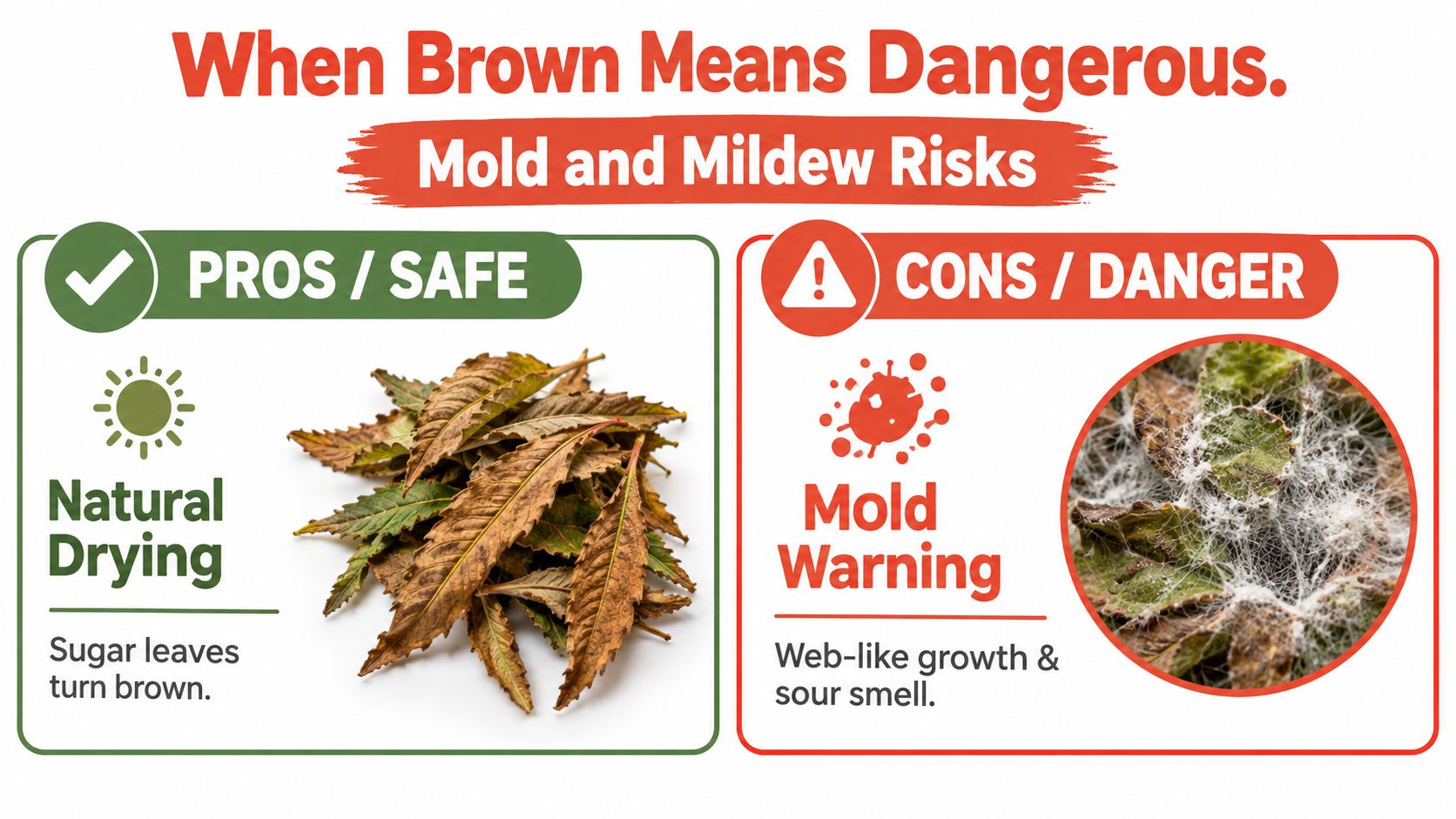
Natural brown sugar leaves tend to look dry and integrated with the bud. Mold is more likely to appear as localized gray, white, brown, or greenish patches, powdery material, fine fuzz, or web-like strands. The texture may become damp, soft, or unusually dusty. A musty, sour, or ammonia-like smell is another reason to stop.
Trichomes can confuse newer buyers because they're naturally pale and crystalline. They should look like discrete, glistening structures, not like a spreading film or cottony growth. A dense bud can also hide contamination inside, so an apparently clean exterior isn't conclusive.
For more odor examples, compare suspected material with this guide to what moldy weed smells like. Don't rely on a single sniff, but treat an abnormal smell as a serious warning when it appears alongside discoloration or moisture.
Inhalation delivers contaminated particles directly to the respiratory system. Heating may change some organisms, but it doesn't provide a dependable way to make moldy flower safe, and it won't reliably eliminate harmful microbial by-products or spores. Grinding the material can also distribute contamination through the rest of the batch.
A U.S. commercially insured-population study reported mold infections among cannabis users at a prevalence of 0.03%, compared with 0.01% among nonusers. The adjusted odds ratio was 4.6, with a 95% confidence interval of 2.9–7.3. The CDC-published study emphasized that these infections were uncommon but could cause severe illness or death, particularly among people with cancer, organ transplants, HIV, or other conditions that weaken immunity.
If brown flower also feels damp, smells musty, or shows fuzzy growth, treat it as contaminated and discard it.
People with chronic lung disease or weakened immune systems should be especially conservative. Anyone who develops respiratory symptoms after exposure should seek medical advice rather than trying to diagnose the cause from the flower's appearance.
A reliable inspection takes more than a quick glance at the top of the bud. Use bright light, handle the flower carefully, and compare what you see with the product's expected aroma and condition.
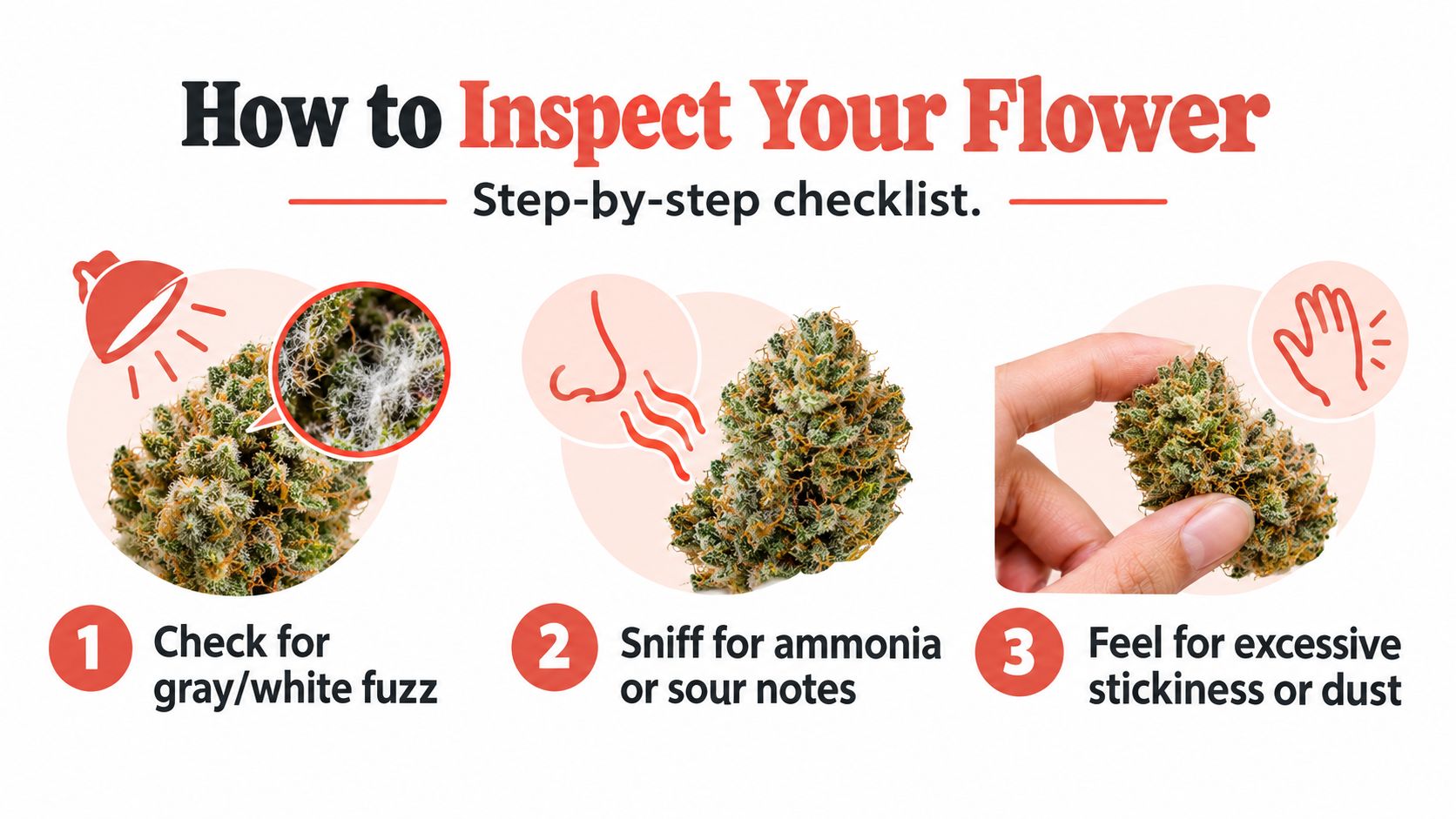
Hold the flower under bright, neutral light. Rotate it slowly and look for whether the color is evenly faded or concentrated in suspicious patches. Healthy-looking trichomes may sparkle, but fuzzy, dusty, web-like, or spreading material is different.
Then check the texture. Dry, slightly brittle flower may have lost freshness. Dampness, soft spots, collapsing tissue, or unexpected residue raise the risk of microbial growth. Don't mistake ordinary stickiness from resin for wetness. Resin feels tacky and aromatic, while moisture can make plant tissue feel clammy or structurally weak.
A normal terpene profile can be earthy, citrusy, fruity, piney, gassy, or herbal, depending on the flower. A musty, sour, or ammonia-like odor doesn't fit a normal freshness profile, especially when it persists after the package has aired briefly.
Next, break open dense buds over a clean surface. Inspect the inner calyxes and central structure for hidden patches, webbing, powder, or abnormal moisture. Independent reporting on cannabis testing notes that contamination may be hidden inside dense buds and that trimming only visible material isn't a dependable safety measure.
| Inspection result | Practical decision |
|---|---|
| Uniformly faded, dry flower with a familiar aroma | May be aged or oxidized. Check testing and storage history before use. |
| Harsh smoke, weak aroma, and stale flavor without visible growth | Likely degraded quality. Don't expect storage to restore lost freshness. |
| Musty or ammonia-like odor, fuzzy patches, webbing, or damp tissue | Discard the flower. Don't salvage, heat, grind, vape, or cook it. |
| Clean exterior but suspicious interior after breaking apart a dense bud | Treat it as contaminated and discard the affected material and surrounding batch. |
Use a magnifying glass if it helps you inspect structure, but magnification can't replace odor, texture, or laboratory testing.
Good storage won't reverse browning, but it can slow oxidation, protect terpenes, and reduce the moisture swings that encourage spoilage. The target environment is cool, dark, stable, and airtight, without trapping excess moisture against the flower.
A clean glass jar generally provides a better barrier than a thin plastic bag. Glass also lets you inspect the contents without repeatedly handling them. A suitable Mason jar for weed should be appropriately sized, clean, dry, and closed securely, with enough room to avoid crushing the buds but not so much empty air that the flower sits in a large oxygen pocket.
Opaque storage adds another layer of protection from light. If you use a clear jar, keep it in a dark cabinet rather than on a windowsill. Avoid storing flower beside radiators, electronics that produce heat, or in a vehicle.
Keep buds whole until use. Grinding increases exposed surface area and makes it easier for oxygen and moisture to affect the material. Open the container only when needed, close it promptly, and don't handle flower with wet hands.
Humidity packs can help stabilize moisture when they're designed for cannabis and used correctly, but they aren't a rescue tool for moldy flower. Never place a moisture product into material that already smells musty or feels damp. Added humidity can worsen a contamination problem.
Cold storage can preserve cannabinoid and terpene profiles under controlled conditions, but moving flower between cold and warm environments may create condensation. That's why a cool, stable cupboard is often simpler for everyday storage, while refrigeration requires a well-sealed container and careful temperature management.
If the flower has already developed fuzzy growth, abnormal odor, or wet patches, storage changes won't make it safe. Discard it rather than trying to dry it out.
Sensory inspection catches important warning signs, but it can't identify every contaminant. A clean-looking bud may still have a testing problem, while a brown bud may just be old and oxidized. The most useful final check is a current, batch-specific certificate of analysis from a credible laboratory.
A COA should connect to the exact batch or lot you're buying and include microbial testing for organisms such as mold, yeast, and bacteria. THC potency alone doesn't answer the safety question. Review the product identity, test date, laboratory information, and pass or fail results rather than relying on a marketing claim printed on the package.
Testing can also provide context for a product that looks different from expected. If the flower has mild discoloration but the batch documentation is current and microbial results pass, you still need to judge aroma, texture, and storage history. A lab report supports the decision, but it doesn't excuse obvious fuzzy growth or a musty smell.
For a practical walkthrough, use this guide on how to read a certificate of analysis. Reputable sellers should make the report accessible and identify the relationship between the document and the package in your hand.
The safest answer to “is brown weed bad?” comes from combining appearance, texture, odor, storage history, and batch-specific microbial testing. Uniformly faded flower may have lost quality. Brown flower with moisture, unusual odor, or visible growth belongs in the discard category.
Melt offers THCA flower and other hemp-derived cannabinoid products with third-party lab reports that can help you review potency and contaminant results before buying. Visit Melt to browse the current collection and check product documentation for a more informed purchase.
Your cart is currently empty.